BEIJING – The discovery of a Burberry jacket she does not recall buying proved to Chen Rui that she was right to have brought in experts to manage her out-of-control luxury wardrobe.
"How did you find this?" the 32-year-old asked the crack team of "home organisers" who unearthed the jacket from a heap of clothes pulled from her closet in a slick Beijing apartment.
China's breakneck growth over the past four decades has led to a surge in conspicuous spending, with the newly monied lavishing cash on coveted labels to emboss their status.
A third of all luxury spending globally is by Chinese consumers, according to McKinsey's 2019 China Luxury Report.
So far the pandemic appears not to have dulled their desires but "Single's Day" on November 11, the world's biggest shopping day, will be closely watched for an idea about the state of Chinese consumer sentiment.
In the era of the couch-shopper, however, there is also a downside to chasing fashion.
Housewife Chen says her walk-in closet, which brims with brands from Louis Vuitton and Chanel to Prada and Gucci, used to cause frequent arguments with her husband.
"I never abandon any of my collection, I just add to it," the former art teacher admitted, saying she just loves to indulge. "I see no need to restrict myself."
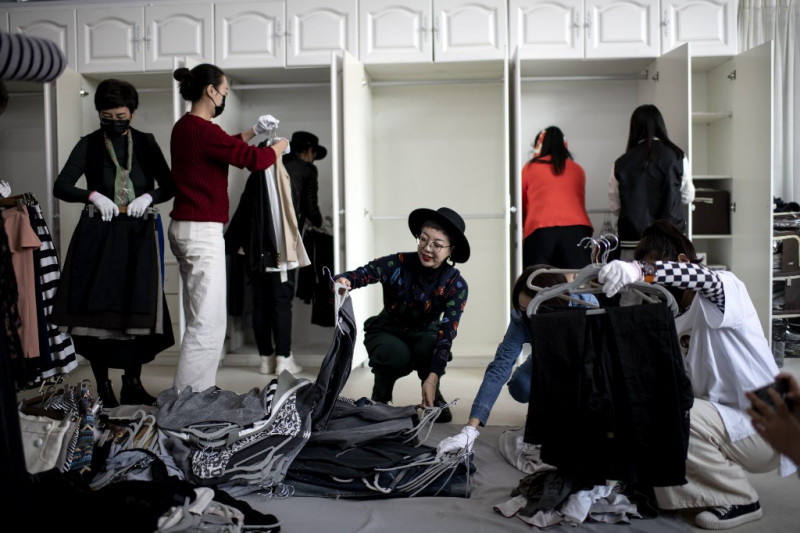
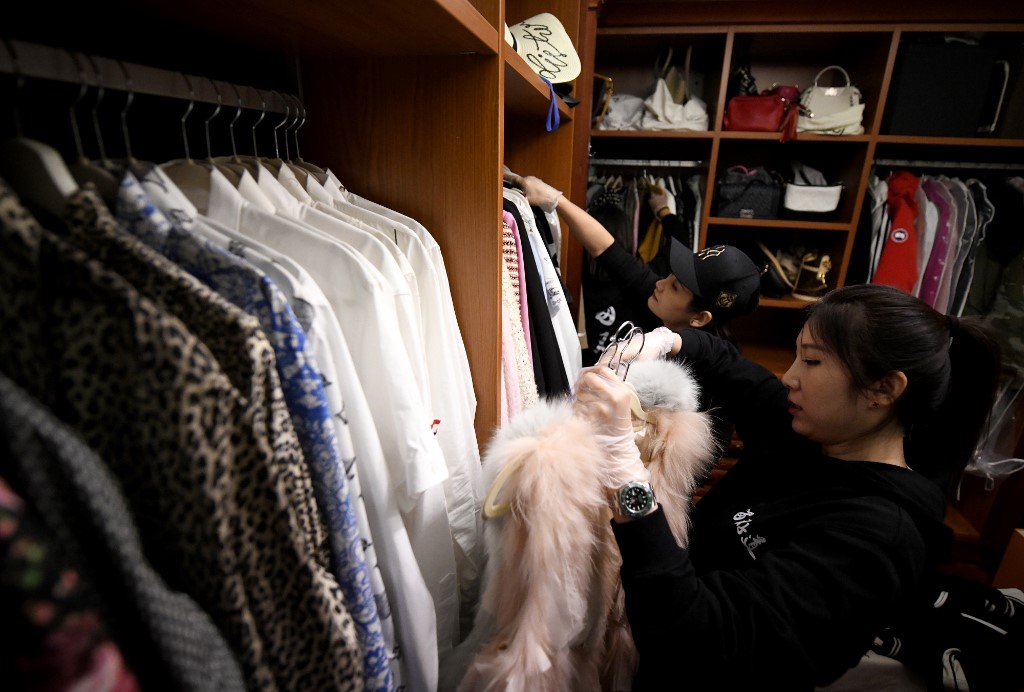
So in desperation, she hired a four-strong team of home organisers to rescue her wardrobe.
The experts in smart black uniforms whisk around her high-end apartment, emptying more than a thousand pieces of clothing and dozens of luxury handbags from her closet.
The team is led by Yu Ziqin, one of thousands of graduates from a home-organising school called Liucundao, which teaches the art of bringing order to the chaos of China's rich shoppers.
School founder Bian Lichun said there were now more than 3,000 professionals in the emerging industry, which state broadcaster CCTV has projected could reach ¥100 billion (RM61.23 billion) this year in terms of market turnover.
Anytime, anywhere
During the pandemic, Bian says business surged by up to 400% as people spent more time at home scouring the internet and assessing where to put all their new acquisitions.
Home organiser Han Yonggang says his clients – who pay upwards of US$2,000 each for a process that can take a couple of days – usually have annual income exceeding one million yuan a year.
"I'm earning more than I did when I was a graphic designer," Han explains.
But unlike the advice of Japanese guru Marie Kondo – whose world-famous decluttering ethic has inspired millions to tidy up – Bian and her team never persuade clients to throw things away, or ask them to buy less.
Instead, they teach "the way to retain", Bian says, through storage and canny design – such as extra-thin coathangers.
"There is nothing useless in the world."
Bian founded her company 10 years ago after seeing a gap in the market for the upwardly mobile classes.
"People used to think that we are cleaners – but now they respect us very much," Bian says of what is now seen as an essential service to some of their clients.
"We even know how many pairs of underwear they have... and we have created a good life for them."
E-commerce and mobile commerce have also turbocharged spending habits.
The transport ministry says the number of express packages delivered per person in China this year will be nearly 60 – about twice the global average.
Liu Wenjing, from the school of economics and management at Tsinghua University, says e-commerce has created a culture of "online shopping at any time and anywhere".
But Bian argues the issue is not one of over-consumption or the psychology of spending, but more about the challenge of finding somewhere to hoard clothes in China's densely populated cities.
"Our aim is to sort out space, not fix people," she said. – AFP, November 9, 2020