.jpg)
SINCE the first movement control order in March this year, our children’s education has been a hot topic. We’ve talked about the pros and cons of online learning since the coronavirus have forced schools to close physically and move online.
Conversations on the advantages and disadvantages of online learning have become the subject of interest for many educators, students and parents. Discussions and articles on how the underprivileged are the worst hit because they don't have the technology to attend classes online and complete their homework have also been raised.
We have even seen the efforts of individuals to help bridge that gap with WiFi on Wheels. However, none of these conversations would take place if there wasn’t a basis of what education looked like before the pandemic.
From a survey carried out by local social enterprise Project ID, the majority of students still prefer physical lessons because they struggle with communicating with their teachers online. On the other hand, students who prefer online learning do so because they feel more in control of their own learning.
However, let us not forget that these surveys can only be realised with students who have years of learning experience. What about students who have yet to go through the process?
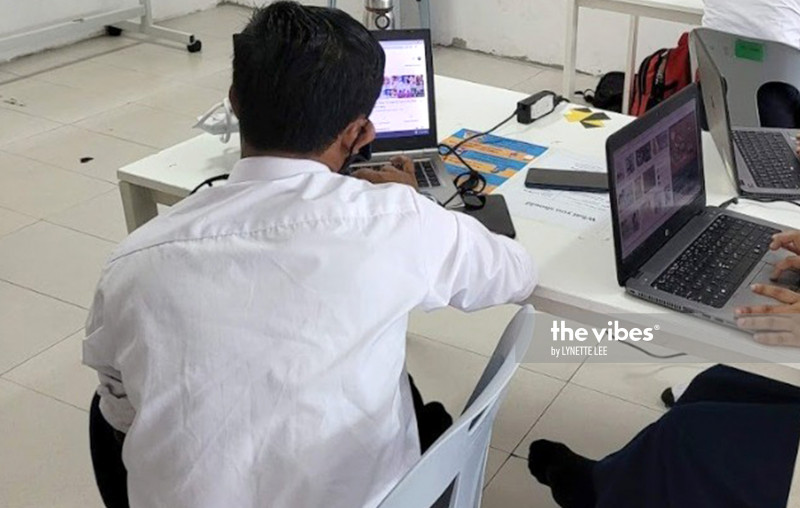
Ali*, an 18-year-old who has never had the privilege of attending school until this year for formal education, shared his frustrations with The Vibes.
“I have waited 18 years to attend school, and the first year I am able to, this (pandemic) happens. School is on then off, then on again, and now off. I feel like giving up.”
Imagine running a 100m race where you have to wait until your competitors reach the end before you are able to start; and when you start, obstacles now stand in your way.
For Ali, this pandemic has not only put a damper in his first year of school, but it also risks his future chances to continue his education.
As legal citizens of a country that provides proper education at almost no cost – not counting school supplies and uniforms – we often take our education for granted. We sit with our phones in our hands hoping that the government will order schools to close so that we can attend school in the comfort of our homes.
Yet, we are only able to do that because we have gone through years of school before this pandemic to be able to navigate the world of learning on our own. We have learned how to learn.
It is not to say that only the underprivileged are struggling with online learning, surely everyone is struggling no matter what their social-economic status, but privilege comes with knowing we have years of education beforehand to compare our online learning with. We have the privilege of knowing that beyond this pandemic, we are still able to move forward with our education because unlike Ali, we have had a solid foundation in our education.
There is a whole community around us, such as the refugees and Orang Asli community, who have not had the privilege to obtain the extended education most of us have had.
Learning in a formal setting is not instinctual, and as a trained teacher myself, I can attest to that. For a student who has not been in a classroom setting until the age of 18, online learning – without adequate resources and guidance – becomes extremely frustrating as the skills of learning have not been taught, and being self-driven is simply not enough to keep the spirit of learning alive. – The Vibes, November 21, 2020
*not their real names