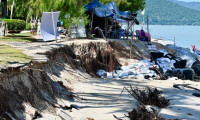

“CHINA’S sea levels touched new high in 2021”. “Fifth of world’s reptile species deemed threatened”. “Emperor penguin in serious risk of extinction”. “Frequent floods show Malaysia not ready to tackle climate change”. “It’s now or never to avoid climate catastrophe warns UN”.
These are banner headlines from newspapers all over the world – screaming out that a potential climate apocalypse might be imminent. As I type this story, another climate summit is sitting in Stockholm – while another chainsaw is bringing down a tree in Kalimantan.
Stockholm+50 is the newest among a string of climate summits that the world has seen in the last few months, years, and decades. It is nicely and neatly labelled 'Stockholm+50' and it has been timed to be hosted on June 2 and 3 as a prelude to World Environment Day, which is today, June 5.
Stockholm+50 means, that 50 years after the 1972 United Nations Conference on the Human Environment held in Stockholm – bureaucrats are sitting again at the same conference tables to take stock of what transpired in the last 50 years or rather, what didn’t.
Stockholm+50, according to its website was convened to act as a springboard in order to accelerate the implementation of the 'UN Decade of Action' to deliver the Sustainable Developmental Goals including the 2030 Agenda, the Paris Agreement on Climate Change and the Post-2020 Global Biodiversity Framework.
The website hypes: “Fifty years later, we have a unique opportunity to make Stockholm another turning point for the sake of our planet. It’s time for bold choices. It’s time for urgent action. It’s time for a better future on a healthy planet.”
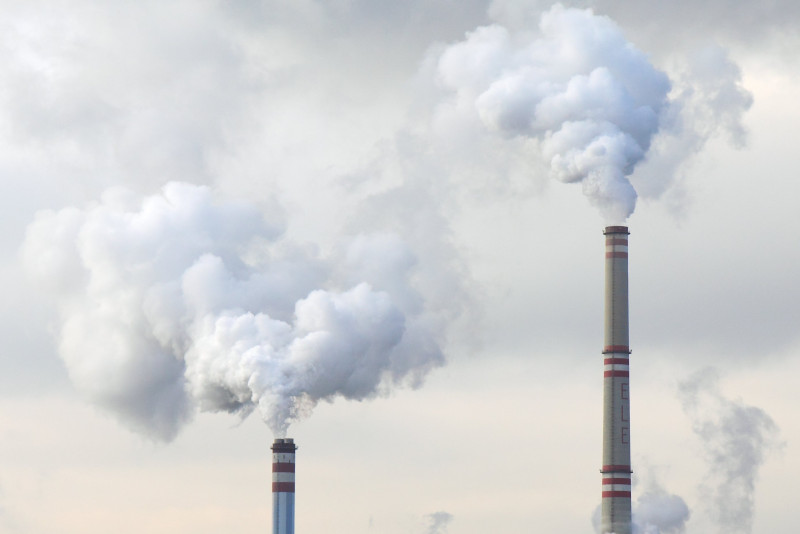
Inaction and inertia
Is it “the time now, to make bold choices” or was the opportune moment long before, but lost to inertia, to commence that urgent initiative to begin saving our planet?
Should not all this hype in world climate summits today, be spoken and acted upon, since 1975 – when American geochemist Wallace Smith Broecker first ordained the term 'global warming'?
It was Broecker who first warned of rising carbon dioxide levels in the atmosphere and raised alarms about climate change. The red lights have been ticking since Broecker’s scientific pronouncement then.
And one wonders why it takes 50 years later to audit what was put on the table 50 years ago and convene another “springboard summit” to “accelerate” a 50-year-old agenda into reality.

Stockholm+50 uses nice and choicest words like “springboard and “accelerate” but why the inertia when the world has been tirelessly crying out for that urgent need to act and repair a seriously bruised planet – the only one that we have.
Perhaps, it is this slow or no action stance by climate bureaucrats that prompted activists Greta (Thunberg) and our very own pro-environment guru Gurmit (Singh) to describe these summits as nothing but “blah…blah…blah”.
When contacted Gurmit said: “Why Agenda 2030, why 2050? By that time, we will all be probably scorched by surface temperature in an unliveable world. The time to act is not now, it was then, 50 years ago. But what choice do we have now?
“We better start acting now, instead of talking and talking and talking. Perhaps, we can try to save the day for our future generations at least by redeeming whatever we can within the little window period we have. It is now a case of better late than never.”
Fifty years is a long time in the life of our planet. Would 50 years not be “50 years too late” to halt another plant and animal species from going extinct?
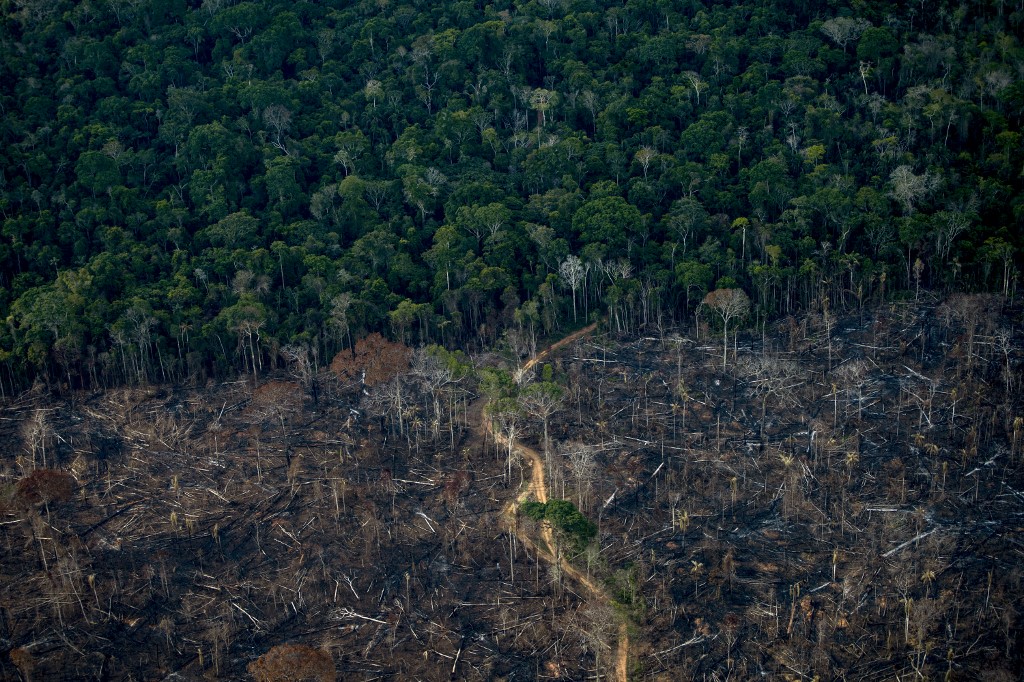
According to writer and founder of Raintree Group, Leslie Taylor, in the last 50 years, more than half of the world's tropical rainforests have fallen victim to fire and the chainsaw – and the rate of destruction is still accelerating.
“Unbelievably, over 200,000 acres of rainforest are burned every day. That is over 150 acres lost every minute of every day, and 78 million acres are lost every year! The latest statistics in the Brazilian Amazon, show a 34% increase in deforestation since 1992,” says Taylor, the American author of The Healing Power of Rainforest Herbs.
Looking back today, many of the malefic agents that threatened the environment 50 years ago still prevail and even newer ones have come to the fore. Plant and animal species continue to be lost and threatened with extinction, while air pollution has increased in regions like China and India.
We continue to poison our food chains around the world with harsh chemicals that we scientifically concoct in our laboratories. The buzzword is now global climate change, which continues to trigger unexpected floods, droughts, and scorching heat waves. The onset of an increase in surface temperature is causing melting ice caps and a rise in water levels along coastlines.
We are our own grave diggers!
Stockholm+50 comes on the heels of COP 26 hosted in Glasgow last year.
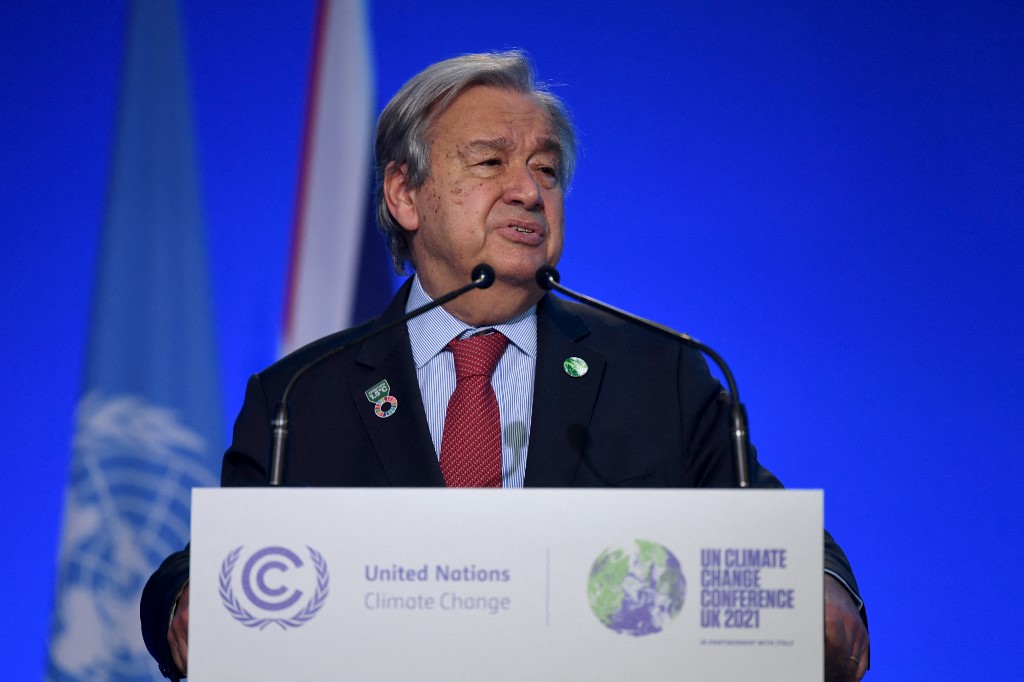
From the podium there – the whole world heard the impassioned plea UN Secretary-General, Antonio Guterres, made to British Prime Minister Boris Johnson: “The six years since the Paris Agreement on climate change (2015) have been the six hottest years on record.
“Our addiction to fossil fuels is pushing humanity to the brink. We face a stark choice: either we stop it – or it stops us.
“It’s time to say ‘enough’. Enough of brutalising biodiversity. Enough of killing ourselves with carbon. Enough of treating nature like a toilet. Enough of burning and drilling and mining our way deeper. We are digging our own graves.”
Guterres continued: “Our planet is changing before our eyes – from the ocean depths to mountain tops; from melting glaciers to relentless extreme weather events.
“Sea-level rise is double the rate it was 30 years ago. Oceans are hotter than ever – and getting warmer faster.
“Parts of the Amazon rainforest now emit more carbon than they absorb. Recent climate action announcements might give the impression that we are on track to turn things around. This is just an illusion,” Guterres cautioned the assembly.
Nations, states take the bull by the horns
While global summits seem to be hit by a case of callous malaise, individual nations and state are putting their nose to the grindstone – with the dissenting voices of activists rising a notch higher everywhere, including in Malaysia.
Away from the rostrum in Glasgow, coastal conservationist, Dr Chee Su Yin agrees with Guterres that our addiction to fossil fuels is pushing humanity to the brink.

She tells The Vibes via phone from her Tanjung Bungah home in Penang, that we in Malaysia have carried out ambitious models of development that had brought about climate change over the years.
Pointedly she says: “It is those who do not have access to these models of development who will be suffering the brunt of the first consequences of the impact of climate change.
“Small islands, vulnerable territories, and indigenous people, as well as fishing communities, will be the first victims of the consequences of climate disturbances such as coastal flooding.”
She said the people living on the frontline in the Caribbean, Africa, Latin America, Asia, and the Pacific will be the first to feel the impact of climate change as sea levels rise to pummel their homes.
Borrowing a line from Guterres, she adds: “We now face a critical choice. Either we stop climate change or climate change stops us. This is a challenge of our collective lifetimes.
“The existential threat to human existence is here as we know it, and for each day we delay, the cost of inaction increases. We are now living that ‘one minute to midnight on that ‘Doomsday Clock’ and we need to act now and fast.
“We need to do whatever it takes, now, to limit global warming to 1.5°C. And we can do it. Because climate change is man-made as science tells us. Therefore, we can do something about it.”
On a philosophical note, she says: "Our opportunity to write history is here and in our hands. If working apart, we are a force powerful enough to destabilise our planet, but surely, working together, we are powerful enough to save it.”
‘Shift dependency on natural timber’
.jpg)
Speaking to The Vibes, Assoc Prof Mohd Azlan Jayasilan put it quite pointedly when asked what was the most malefic force hurting the environment in Malaysia?
“There is an urgent need to shift our dependence on fossil fuels as well as our greedy exploitation of natural timber,” he said bluntly.
“Logging of natural forests is not sustainable both economically and ecologically,” said the expert in wildlife biodiversity and conservation from the Institute of Biodiversity and Environmental Conservation Universiti Malaya Sarawak (Unimas).
According to him, deforestation is badly impacting on the natural habitats of Borneo island’s largest mammals – the orangutan in Sarawak and pygmy elephants in Sabah.
“But remember, when an entire forest is destroyed, precious biodiversity including plant and insect species are also lost and gone forever."
Asked what are his personal thoughts on World Environment Day 2022, Azlan said: “We just have one Planet Earth. It is everybody’s responsibility to strive and protect the planet at all costs.
“We are the environment and the environment is us,” he said.
Renowned environment activist Peter Kallang puts the blame squarely on human activities as the major contributor to the deterioration of the environment locally, regionally, and globally.
“There is an urgent need, therefore, for a concerted effort by each individual and every nation to stop global warming. Efforts in reducing emissions, carbon capture, and carbon storage must be accelerated,” says Kallang, who is the current chairperson of the Southeast Asia Regional Council of the ICCA Consortium.

Kallang says industrial-scale monoculture plantations and large-scale livestock businesses must be replaced by sustainable methods like agroforestry, or techniques which have minimal impact on the ecosystem.
“The endeavour for clean, cheaper, affordable, and sustainable energy sources must be accelerated in order to change from traditional sources like fossil fuel.”
According to him, nature-based solutions like reforestation and sustainable land and usage must be part and parcel of the solution.
He pointed out that the role of the indigenous peoples in caring for the environment and biodiversity must be highlighted in every climate meeting and summit.
“The indigenous peoples and local communities play an outsized role in sustaining a healthy planet. They do so because of the deep relationships between their cultures, territories, governance systems, and other species and spiritual beings.
“One of the biggest opportunities to address both the biodiversity and climate crises is to support indigenous peoples and local communities to secure their rights and their collective land and territories,” he added.
Last year while addressing the Southeast Asia ICCA Consortium during the closing session of the third Asean Conference on Biodiversity, Kallang called on the Asean member states to:
- Recognise the outsized contributions of Indigenous peoples and local communities to biodiversity, including by expediting the appropriate legal recognition of their rights and collective lands and territories of life.
- Recognise human rights as central to an effective and equitable post-2020 global biodiversity framework and ensure minimum safeguards to prevent human rights violations in the name of conservation.
- Protect Indigenous peoples and local communities against violence when they are defending their territories of life against threats, and halt the industrial drivers of biodiversity loss.
- Support communities’ self-determined initiatives to strengthen and sustain themselves and their territories.
Gurmit Singh, director of the Centre for Environment, Technology and Development Malaysia (CETDEM), says: “We cannot wait for mega world summits to make their declarations. There is an urgent need for action and Malaysia must act, leveraging on the many resources that it has.”
Gurmit asked: “Is there a need for mega-dams to be built in Sarawak? Why not micro and mini dams that can also serve our need to generate power. With these smaller dams, entire communities can benefit and deforestation can be minimised.”
Gurmit emphasised that Malaysia must shift to using biomass which is abundant in the country and to stop depending on fossil fuels.
“We must look to renewable sources of energy to propel our industries. I have always been a proponent of natural alternative sources of power such as the use of solar power.
“We have a huge resource of biomass from our oil palm plantations and agricultural waste that can be converted into a major source of power. Why have we not rolled out these environment-friendly initiatives? I am aware that in Sarawak, they have rolled out hydrogen-fuelled busses as a pilot project, my question is from where is the hydrogen coming from? From a renewable source?"
We can go on talking about the environment, climate change, and global warming till the cows come home. Efforts to halt the planet from slipping away into nothingness are an uphill task. And for now, the slope is getting steeper. We have very little time to make things right.
When asked if new scientific discoveries on a planet that is on the verge of vanishing still surprise him, Professor Indraneil Das of Unimas, lent a sarcastic rebuke: “Discoveries here are no longer a surprise. I think we know about the moon and planet Mars better.”
.jpg)
Das’s frustration is understandable. The herpetologist (a scientist who studies amphibians and reptiles) has over the years witnessed the negative impact of global warming on frog populations over the decades.
Studies have established that a deadly frog disease is spreading worldwide due to warmer temperatures – and in the next 50 years could cause entire populations to vanish.
Four out of 10 species are on the edge of extinction globally due to factors such as disease, habitat loss, and climate change. – The Vibes, June 5, 2022