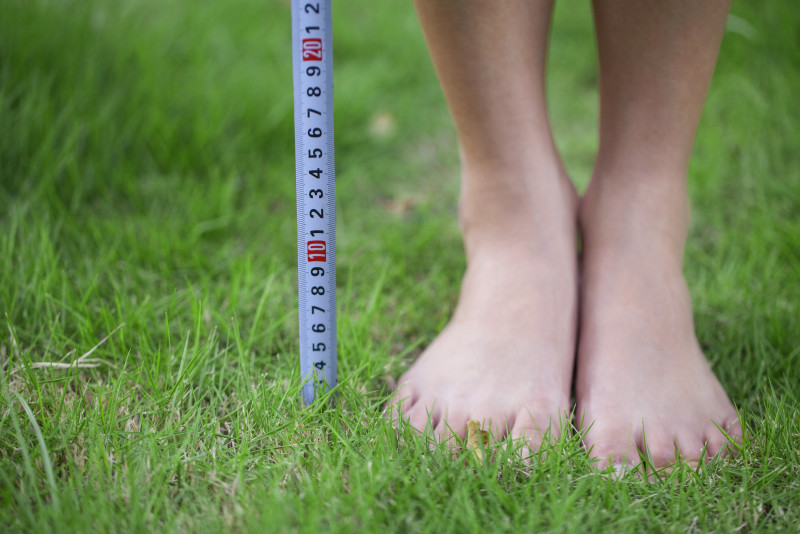
JUST as some animals have done before us, humans could shrink in size to adapt to rising temperatures caused by climate change. At least that's the theory put forward by a palaeontologist at the University of Edinburgh in Scotland.
Mammals that live in warmer regions are often smaller in size than those living in colder areas. This notably appears to have been the case for early horses, which lived about 55 million years ago.
"The reasons are not entirely understood, but it is probably, in part, because smaller animals have a higher surface area relative to their volume than plumper animals and can thus better shed excess heat," explains Steve Brusatte, a palaeontologist at the University of Edinburgh, quoted by The Guardian.
According to the researcher, these elements may suggest that it is "plausible" that humans could shrink in size in order to adapt to rising temperatures due to global warming.
This theory is of interest to other scientists. In July 2021, researchers from the University of Cambridge (UK) and the University of Tübingen (Germany) published a study in the journal Nature Communications.
The authors analysed the body and brain sizes of more than 300 fossils from the "Homo" family – the family to which modern humans belong.
According to their estimates, temperature is one of the main factors causing the change in human body sizes over the last million years. In short, a warmer climate could lead to a decrease in body size, while a colder climate could lead to larger bodies.
However, the impact of global warming on human body size could have other causes, such as the availability of food and resources.
This is the counter-argument formulated by some researchers, including Professor Adrian Lister of the Natural History Museum in London, also quoted by The Guardian. – ETX Daily Up, June 10, 2022