_with_the_guests.jpg)

RAMADAN is not just confined to a period of prayers, food galore and the breaking of fast customs – it is also an occasion to propagate peace to humanity.
This is what participants to the special buka puasa event at the Acheen Street Mosque found out over the last weekend.
The event was brought together by old friends in the Penang Gandhi Peace Centre and the Penang chapter of the Malaysian Consultative Council of Buddhism, Christianity, Hinduism, Sikhism and Taoism.
The event was unique in many ways from Penang Tour Guides Association chairman Clement Liang bringing in Taiwanese tourists to experience the breaking of fast to the presence of many Sikh, Buddhist, Taoist and Christian faith leaders.
Penang Gandhi Peace Centre president Datuk Anwar Fazal and Parti Amanah Nasional vice-president Datuk Seri Mujahid Yusuf Rawa were instrumental in bringing back the event after a hiatus of three years due to the impact of the Covid-19 pandemic.
Both were smiling broadly at the encouraging number of attendees at the mosque which was historical and significant to those of Achehnese descent – a semi-autonomous region of Indonesia where the great tsunami quake of 2004 originated.
Mujahid said that Ramadan is not just about Muslims coming together to pray and to dine as they break fast at dusk.
It is about promoting the virtues of the holy month – peace, said Mujahid, who had followed in his late father Yusuf Rawa's footsteps to become an Islamic scholar.
Yusuf was a former president of the Islamist PAS political party.
Politics aside, Mujahid spoke about the need to promote peace in an era rocked by conflicts and the spread of ill will at the expense of those seeking the truth and peace.
And Islam offers the preconditions of peace, it is indeed a religion of peace, said Mujahid, as he greeted the rows of non-Muslims who had gathered for the event.
Buoyed by the turnout, Mujahid said that the event should continue annually.
Mujahid, who used to be the Parit Buntar MP, said that the interfaith event was key to fostering understanding, especially in the face of extremist elements which threaten to ruin the country’s interracial harmony.
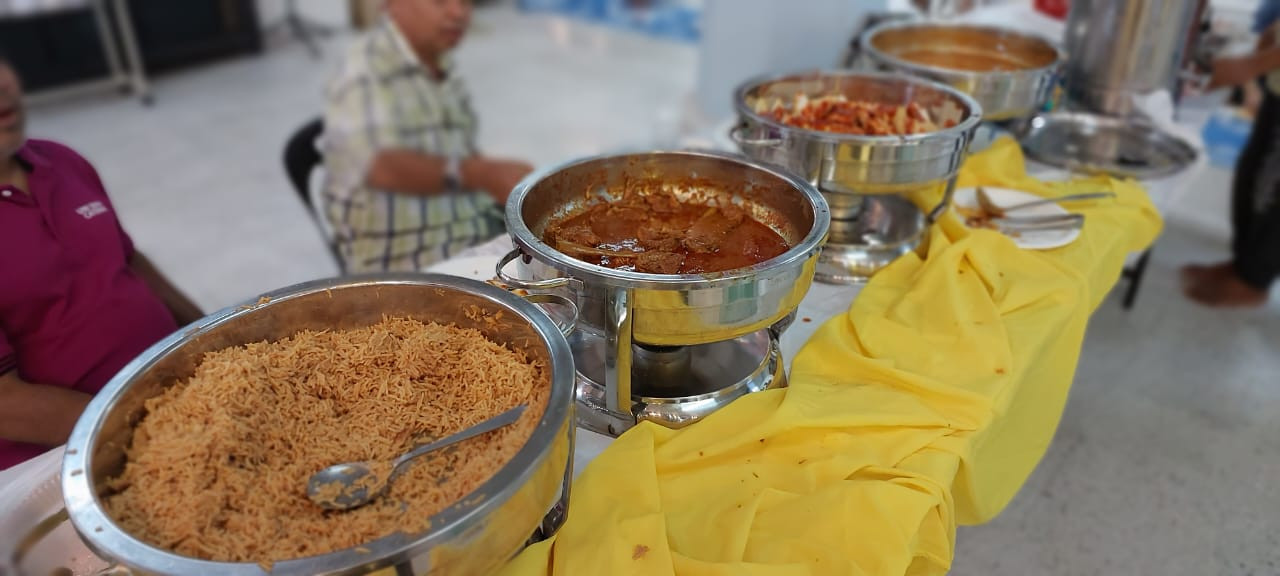
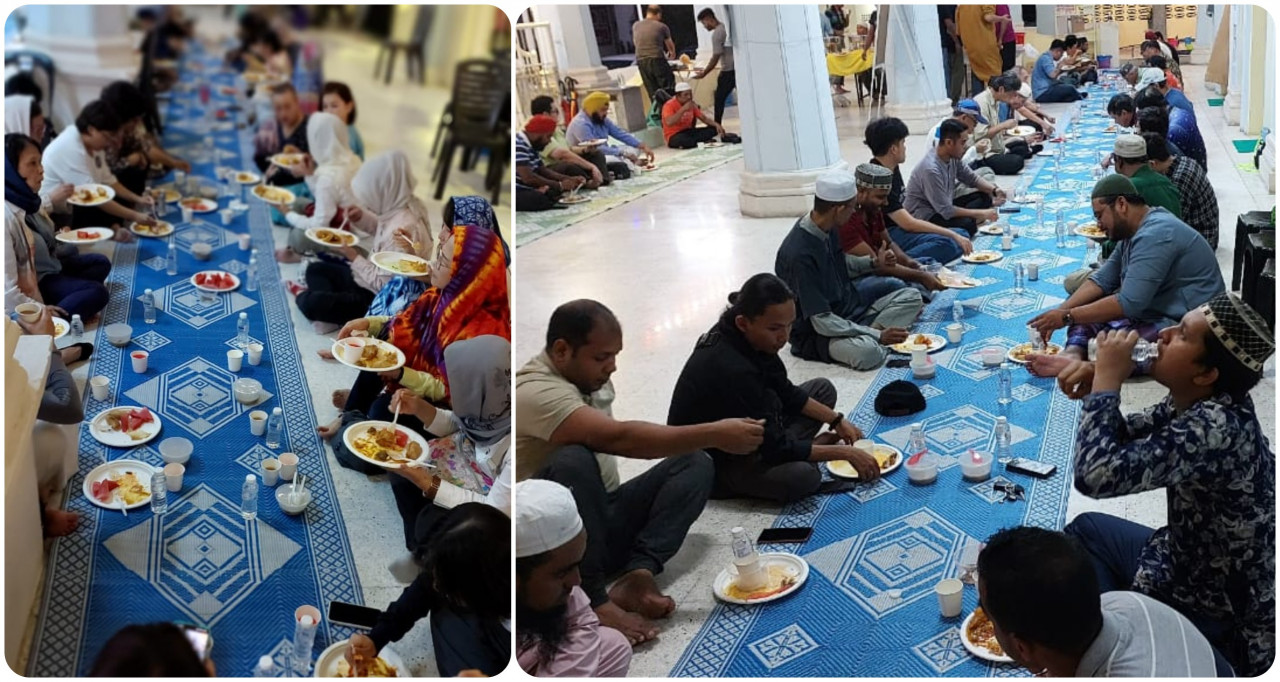
“In a world full of hate, we try to overcome this by spreading love and taking the path of peace. We show others an example of how Malaysians get along with others,” he said, illustrating how the Muslims and the non-Muslims sat together on the floors of the mosque to break fast together in a symbolic but powerful image.
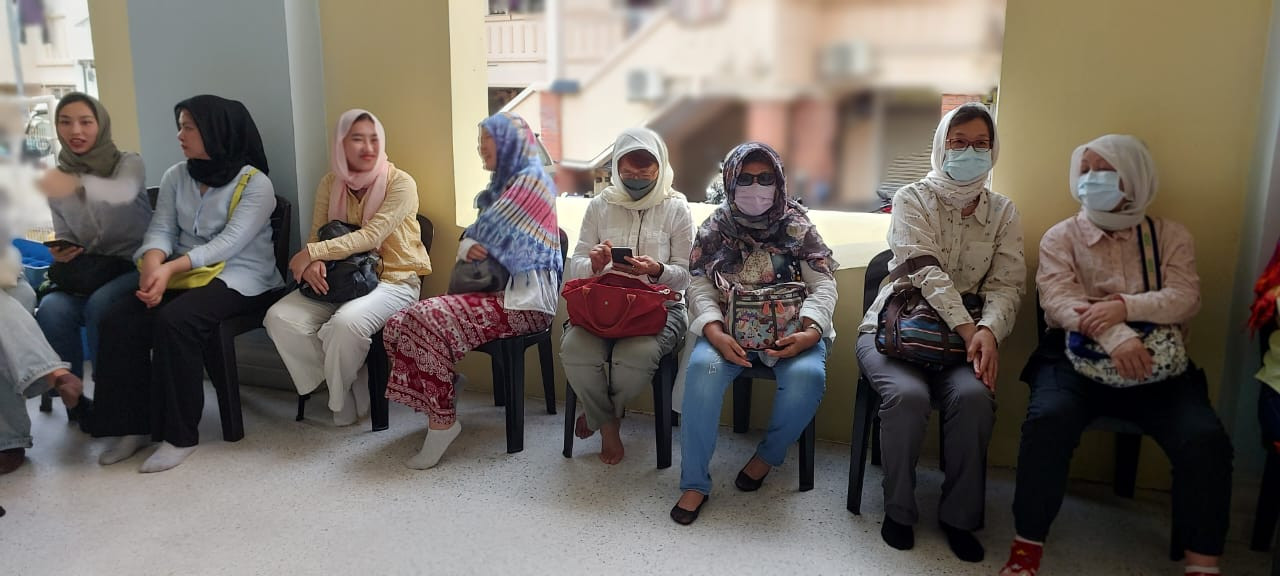
The Taiwanese women visiting Penang wore headscarves as a sign of respect and enjoyed the spread of delicacies to mark the occasion.
Liang said that he was proud to showcase the Muslim way of breaking fast, while inculcating Penang's rich diversity in culture and heritage.
The tourists and foreign students here took their cameras to capture this permanent feature of Malaysian society as people from different walks of life broke fast in the mosque together.
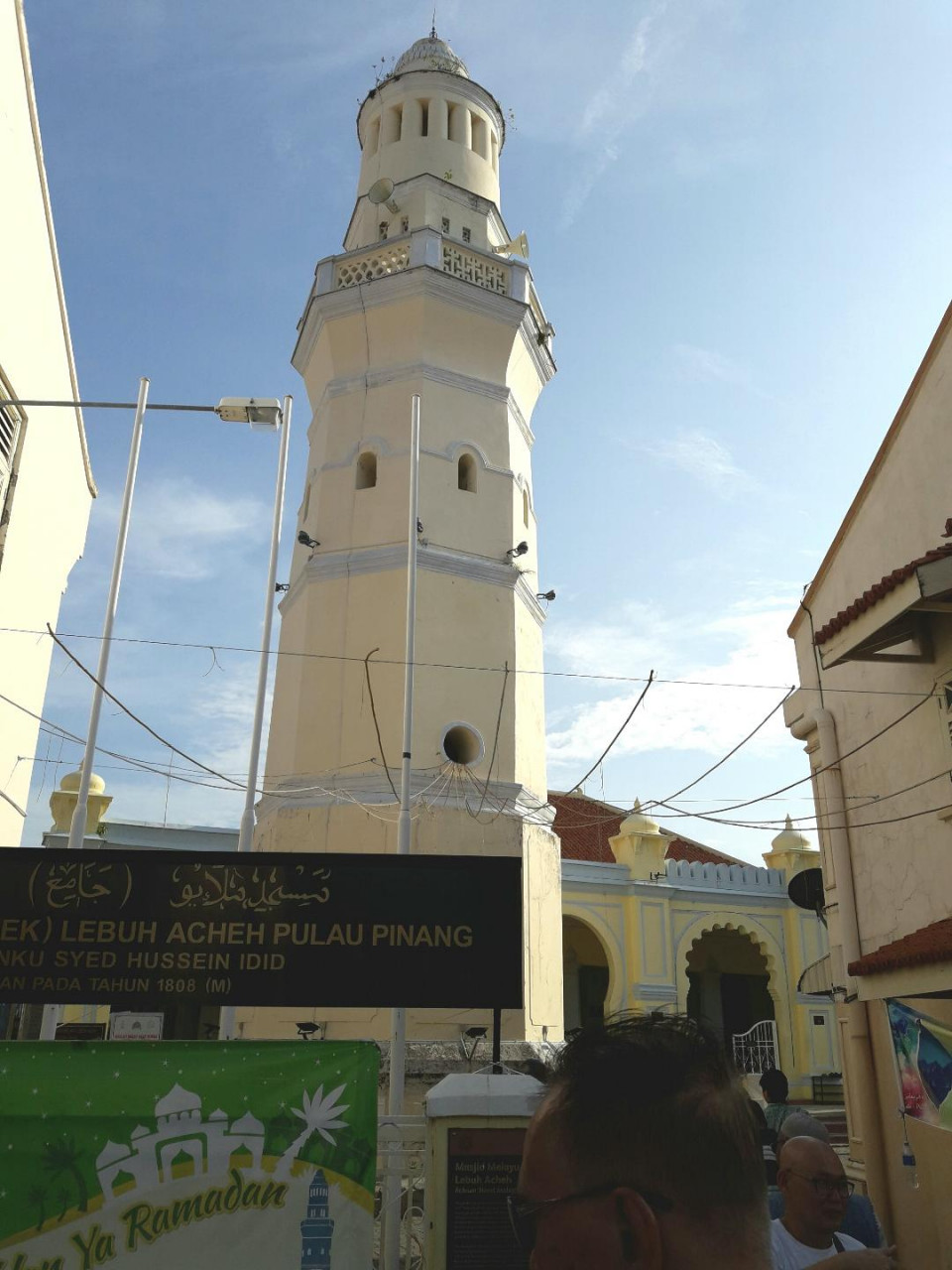
The Taiwanese were given a tour of the historic mosque by Mujahid, who underlined that the pillar of the Unesco-accredited World Heritage Site in George Town, is the "street of harmony". The Acheh Street Mosque is located on the fringes.
Just across the mosque are the major places of worship for Taoists, Christians, Muslim and Hindus along Jalan Masjid Kapitan Keling.
It is the beacon for the heritage's outstanding universal values, and another milestone as Penang celebrates in July, the 15th anniversary of its heritage site status.
Event co-organiser Anwar noted that the late India president, APJ Abdul Kalam, had praised the diversity and unity in the street of harmony when he went on a walkabout during his visit in 2008.
Among the leaders of different faiths were Anglican Bishop Datuk Rev Charles Samuel and Roman Catholic Bishop Datuk Rev Sebastian Francis.
Anwar also gave a history lesson about the mosque, of how it sheltered non-Muslims fleeing fears of racial strife in the infamous 1969 riots.
The mosque was erected in the 19th century by the Acehnese community, led by its founder Tengku Syed Hussain Al-Aidid and members of his family.
The houses surrounding the mosque are part of the original Muslim settlement, and it is among the oldest Muslim places of worship in Penang.
The mosque became the centre of Islamic studies here, frequented by traders from the Malay Sultanate states, Arab and India. – The Vibes, April 3, 2023




.jpeg)