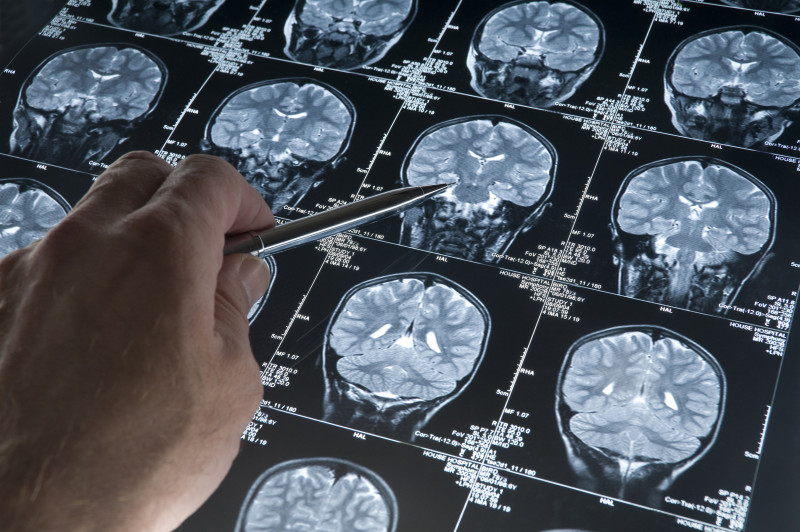
A certain protein builds up in the brains of most Parkinson's patients, a study confirmed on Thursday using a new technique hailed as a potential 'game-changer' that could point towards a way to test for the debilitating disease.
Parkinson's is the second most common neurodegenerative disease after Alzheimer's and affects more than 8.5 million people worldwide, according to the World Health Organization.
There is no cure or way to test for the disease, which is usually diagnosed by a doctor only once symptoms appear.
However several factors have been linked to Parkinson's, including that in patients' brains there are often accumulated clusters of the Alpha-synuclein protein which are 'misfolded' – or incorrectly folded.
The new research, published in the journal Lancet Neurology, uses a technique to amplify then analyse clusters of the tiny protein.
The largest study of its kind included more than 1,100 participants, nearly half of whom had previously been diagnosed with Parkinson's disease, while others were deemed at risk, as well as a healthy control group.
Samples of cerebrospinal fluid, which surrounds the brain and spinal cord, were taken from each participant.
The technique, called αSyn-SAA, came back positive for 88% of all those previously diagnosed with Parkinson's disease.
The study's lead author, Andrew Siderowf of the University of Pennsylvania in the US, said in a statement that the technique "could have profound implications for the way we treat the condition, potentially making it possible to diagnose people earlier".
The technique was less successful for patients carrying a gene variant known as LRRK2 linked to certain forms of the disease, identifying just 68% of diagnosed patients.
A simple test to diagnose Parkinson's disease is still a long way off. And it remains to be seen whether the technique works when using a blood sample, which is far easier to extract than cerebrospinal fluid.
Daniela Berg and Christine Klein, neurologists at Germany's University Hospital Schleswig-Holstein not involved in the research, said the finding "lays the foundation for a biological diagnosis of Parkinson's disease".
The technique "is a game-changer in Parkinson's disease diagnostics, research, and treatment trials," they added in a linked comment piece.
Parkinson's disease causes uncontrollable movements such as shaking, as well as sleep and mental health disorders. The symptoms get worse over time, and eventually patients can struggle to walk or talk. – AFP, April 14, 2023















.jpeg)