CONGESTION at the state's main ports and a slew of other supply chain chokepoints have left manufacturers in Sabah with no choice but to take cost-push measures to sustain operations.
They said this could drive the prices of goods in Sabah up further in a market where most imported items already cost 30% more than in peninsular Malaysia.
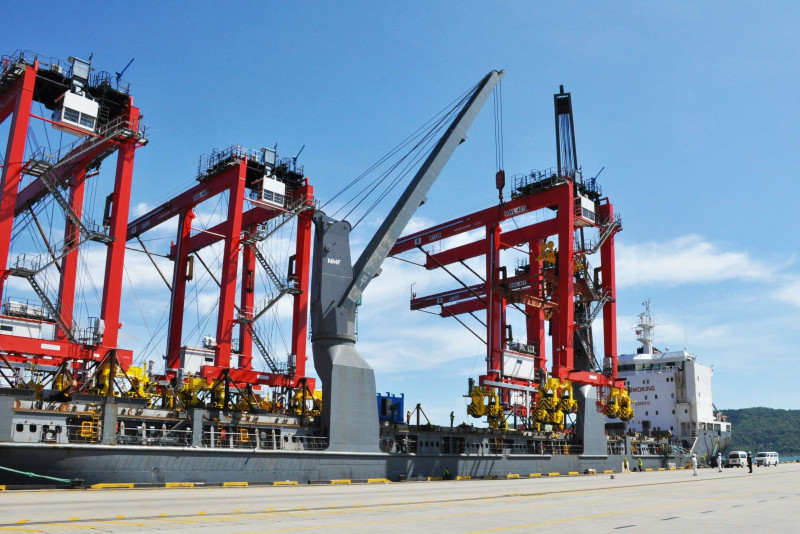
The Sabah chapter of the Federation of Malaysian Manufacturers (FMM) reported heightened activities at the Sepanggar Bay Container Port which has pushed laytime for goods and supplies up to 13 days since April.
Typically, laytime takes around five days.
The body also noted a 37% increase in maintenance costs for logistic operations due to increases in items like spare parts.
Sabah FMM chairman James Ha Haw Yew said shipping traffic increases regularly occur around this time as trading companies replenish the inventory.
"There are around six ships on average waiting to berth. Sepanggar Port is congested with a lot of ships but it has only two wharves," Ha explained, citing limited infrastructure as the cause of laytime delays.
The prolonged laytime results in extra demurrage fees, with some ships could deciding to bypass the port in favour of Port Klang in Peninsular Malaysia to maintain tight schedules, he said.
Ha said the congestion will continue until September.
He said ships rerouting to the major port would also incur additional costs to the traders if items were redirected back to Sabah.
Ha said shipping traffic could be alleviated if port operator Sabah Ports Sdn Bhd considered redirecting the shipments to Kota Kinabalu Port that has four additional wharves.
In July, Malaysian shipping companies are already increasing surcharges for shipments around RM500 per twenty-foot container unit and double the price for forty-foot containers.
He also noted that companies face a 37% increase in logistics fleet maintenance costs due to rising spare part prices, a consequence of Covid-19.
He said freight distribution costs in Sabah are already high in comparison to the peninsula due to the state’s elevated terrain and lengthy delivery times.
The cost for logistics in Sabah is three times higher than in West Malaysia.
"For instance, sending a box from Kota Kinabalu to Tawau costs RM15, whereas sending a similar item from Johor to Perlis in the peninsula costs about RM5," he said.
Despite raising these issues to the state government for years, Ha said Sepanggar Port Sdn Bhd has indicated expansion plans for the main port, but nothing has come out of it yet.
Ha said there is a joint venture between WCT Holdings Bhd and China Communications Co (M) Sdn Bhd to expand the port, including extending the present wharf to allow one more vessel to berth.
The project was offered by the Sabah Economic Development and Investment Authority (Sedia) and accepted by the joint venture in 2021 and expected to complete in February 2025.
However, observers claim the project could not commence due to some technical matters and they fear it could push its completion later than the expected date.
This was not the only effort to boost the port’s efficiency. Sabah Ports Sdn Bhd had also inked a strategic collaboration with an United Arab Emirates-based firm, DP World to bolster handling capacity of the Sepanggar Bay Container Port from 500,000 TEUs to 1.25 million TEUs by 2025.
The collaboration has yet to commence, yet the partnership is expected to optimise terminal workflows, accelerate digitalisation, and increase the port’s connectivity, positioning Sabah as a key transshipment hub in the region.
Economic analyst Yap Cheen Boon said businesses may choose to pass these costs on to customers when faced with the rising logistical costs.
“Higher logistic costs be it from sea and land will eventually lead to higher business operating costs. Eventually, hitting consumers via higher costs of living,” he said.
Chartered Institute of Logistics and Transport (CILT) chairman Daniel Doughty acknowledged the bottlenecks' impact on trading companies and manufacturers.
He expressed hope that the newly established Sabah Logistics Council could mitigate these impacts.
The SLC plans to engage with Sabah Port Sdn Bhd and other stakeholders to find viable short-to-medium-term solutions until the port upgrades are completed.
Doughty said Sabah requires a logistics masterplan to enhance efficiency and reduce costs while boosting connectivity within the state and with other regions.
"CILT Sabah hopes that the establishment of the SLC and its segmented clusters related to logistics and transport will significantly advance data collection. These initiatives will facilitate organised data gathering and cross-communication, enhancing planning and execution capabilities," he said.
The council had its first meeting on June 28. – July 7, 2024