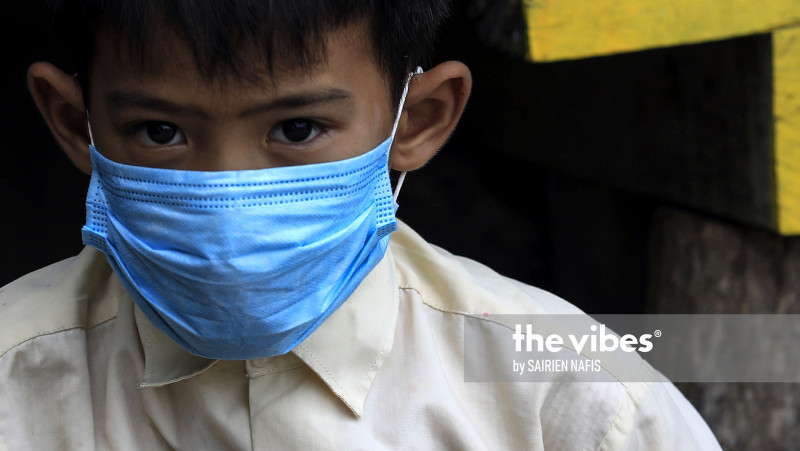

KUALA LUMPUR – Lessons had to continue despite schools being ordered shut amid the Covid-19 pandemic, leaving teachers in Sabah and Sarawak’s interior scratching their heads over how to make it work.
Unlike their peers in urban areas who are easily able to set up virtual classrooms, a stable internet connection is a privilege that teachers like Muhammad Nazmi Rosli do not get to enjoy.
“In the interior, our smartphones are basically just alarm clocks,” said Nazmi, who teaches at SK Long Sukang in Lawas, during a webinar hosted by Teach for Malaysia recently.
Initially, he and his colleagues would deliver learning materials to pupils’ villages daily, and collect them to be marked the following day.
One day, however, the pupils did not show up at the meeting point.
“We hacked our way through the jungle to get to the next village, just in case they went there. But, we could not find them.
“After two hours, we made our way to a nearby river, just in case they were playing by it. Still, no sign of them.”
Tired, sweaty and hungry, Nazmi and his fellow teachers were on the verge of giving up.
“It was so hot that day. We were standing on this one hill overseeing padi fields... and then, we saw something running towards us from afar, across the padi fields.”
They were his pupils.
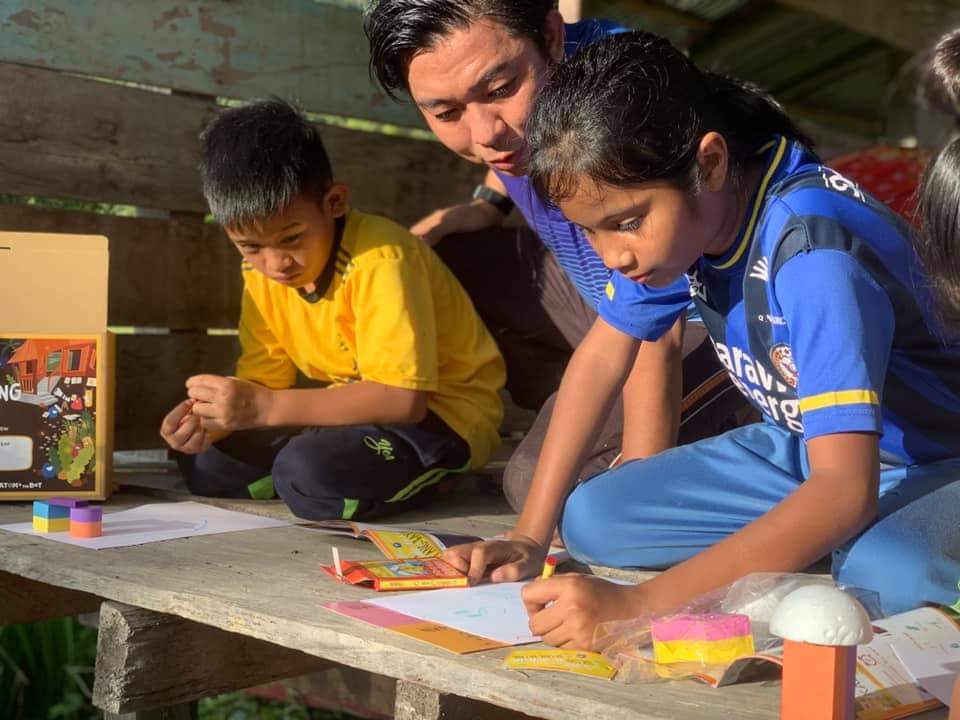
“‘Cikgu dah sampai! Cikgu dah sampai!’ (Teachers are here!), one of them shouted,” said Nazmi.
It turned out that the children were late as they were helping their grandparents toil the padi fields.
“When they finished, they immediately ran to us to deliver their homework. One of my friends, who was demotivated at that time, had a moment of clarity,” said Nazmi.
“At that moment, we realised that this pandemic wanted us to learn something, to appreciate something – the things that we took for granted when we were in class with the kids.”
The setback faced by Heidy Quah, an activist for refugee children’s education, was more basic.
“Our focus has always been education, but when the pandemic hit – the refugee community was hit the hardest – we realised that we had to make sure that these kids had food on their table.
“We had to ensure that we met their basic needs before we pushed them to pursue learning, because they could not learn on a hungry stomach.”
To feed 2,000 refugee families during the virus crisis was no easy task, the Refuge for Refugees founder told the webinar.
“There was a lot of heavy lifting involved.
“But the most memorable experience for me was our (refugee) students coming together to point us to other families that we were not in contact with, that also needed help.”

Word of Quah’s food distribution programme got around, and Malaysians started to lend her team a much-needed helping hand.
“Before this, our circle was very limited. All young people. Within the KL bubble. But this time, we saw faces from different races.
“Seeing Malaysians as a whole coming together to support the community, I think I have never seen such a united front in such a long time.”
Students were not the only ones who needed help adjusting to the new norms in education brought on by the coronavirus.
Alina Amir, co-founder of Arus Academy, a Penang-based social enterprise that helps underprivileged students from a high-needs school, said most teachers were struggling just as much as their young charges to adapt to the changes.
“We were running a lot of teacher training programmes virtually, and we were dealing with teachers who are very good teachers in person, but had a lot of trouble with technology.”
It was when they thanked her for showing them how to use Google Slides and Google Meet that it dawned on Alina that these teachers were the best chance that their students have of continuing their education in these troubling times.
“I realised that we were not there just to equip the teachers with technological skills. We were there as morale boosters. We were their biggest cheerleaders.
“I met so many good Malaysian teachers, like this one teacher who literally had only one student attend his Google Meet (virtual classroom).
“And you know what? He went on for a full two hours, teaching his student the lesson scheduled for the day.
“Our teachers are the best.” – The Vibes, December 18, 2020