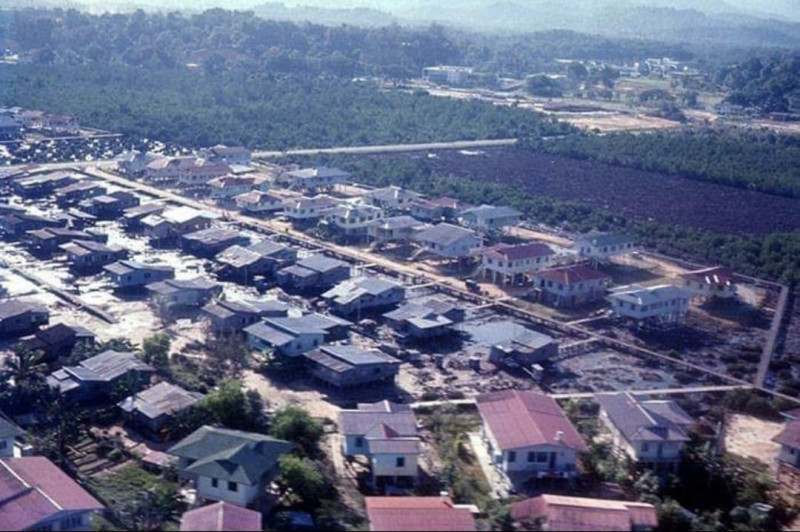

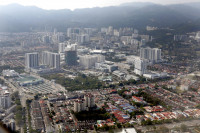
ONCE a bustling water village known for its vibrant supper scene, Sembulan Tengah now finds itself at the crossroads of history and gentrification.
As developers target this prime land in the heart of Kota Kinabalu, the community that has called it home for generations faces an uncertain future.
Sembulan Tengah, situated to the south of the historic Sembulan Lama, has long been an integral part of Kota Kinabalu’s identity.
While the Sembulan Lama dates back to the 18th century, Sembulan Tengah began its journey in the late 19th century when 27 families were displaced from nearby Karamunsing due to the expansion of Jesselton, now Kota Kinabalu.
These early settlers, granted land by the Sembulan Lama Village chief, established their homes in what would become Sembulan Tengah.
In 1959, the British Crown colony government introduced a settlement scheme to accommodate those displaced by Jesselton’s rapid development, which stretched down to the popular Tanjung Aru beach.
The scheme called the Jesselton Town Board Low Cost Housing Scheme at Kampung Sembulan was officially opened in 1960.
A total of 205 lots were distributed under this scheme: 71 to the Chinese community and 105 to residents from Sembulan Lama and neighbouring districts like Putatan, Papar, and Tuaran.
These settlers were drawn by the burgeoning economic opportunities in the expanding town.
Decades of growth and change
The resettlement, which began in 1959, led to a steady increase in population and development until 1977.
The expiration of town leases around 2019 signalled the beginning of a new chapter for Sembulan Tengah.
Economic and political factors started to reshape the once tight-knit community, leading to shifts in its landscape.
Political manoeuvring, social fragmentation, and the rise of crime
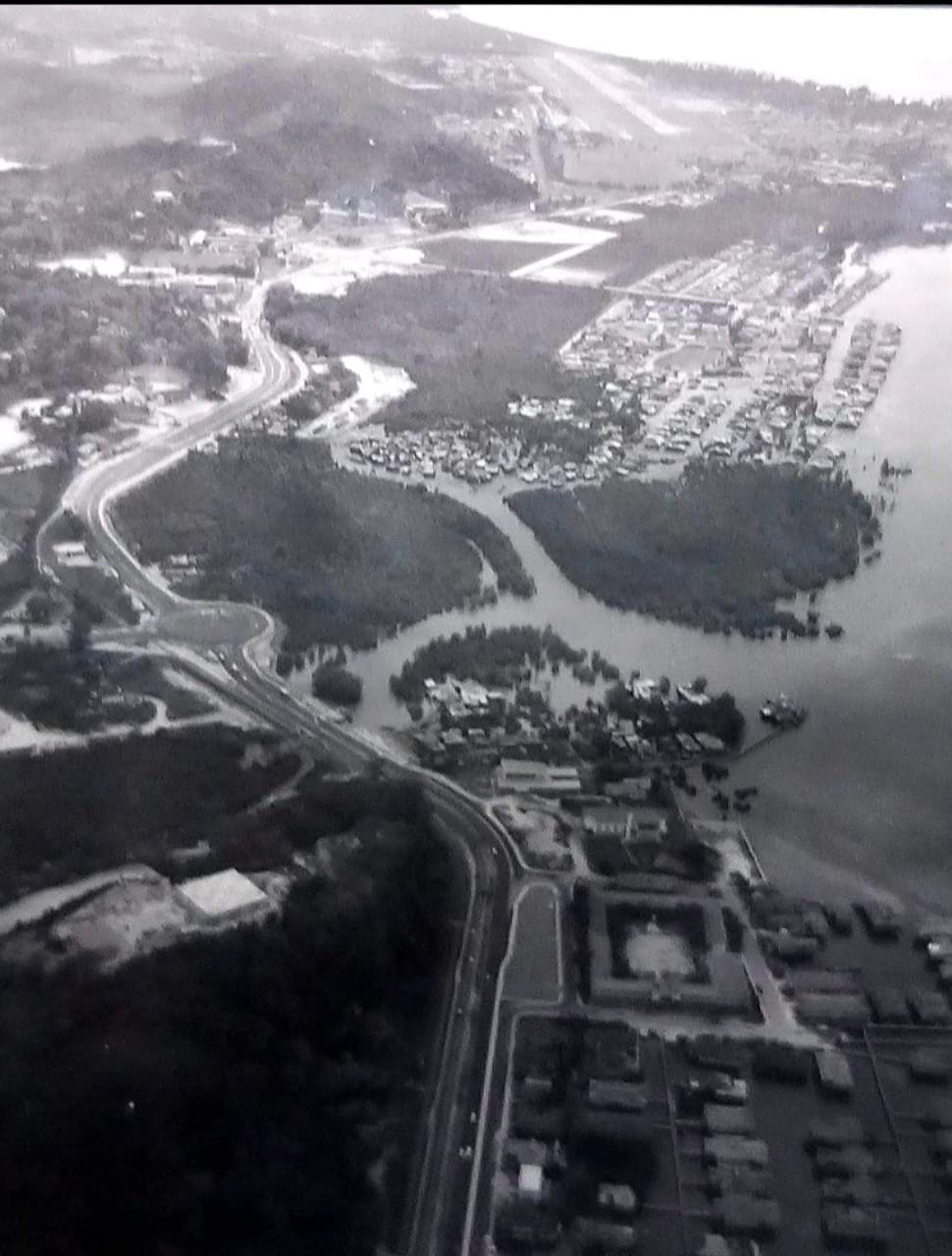
The 1980s and 1990s were transformative decades for Sembulan.
Political instability in Sabah and an influx of Filipino refugees fleeing civil unrest in the Southern Philippines changed the area’s demographic balance.
The once-quiet village saw an overcrowding of migrants, and Sembulan expanded into three distinct areas: Sembulan Lama, Sembulan Tengah, and Sembulan Baru.
This division was partly a result of local political strategies allowed by leaders in the area.
As the number of migrants increased, Sembulan began to lose its charm as a popular supper spot among Kota Kinabalu residents.
The entire Sembulan area soon earned a notorious reputation as a "black area"—a hotbed for drugs and crime.
What was once a favourite destination for night owls became a place that locals avoided, further isolating the community.
In the 90s, reports emerged of the controversial “Projek IC,” an alleged covert operation to issue identity cards to migrants, increasing the number of voters favourable to certain political interests. Unofficial estimates suggest around
2,000 new names were added to the local population, overwhelming the community’s governance structure.
Many of these new settlers, now possessing identity cards, were said to have become phantom voters, altering the political landscape.
However, they did not own the lots but rented homes from those who held town lease titles. They just don’t rent the homes but also extend their structures and build squatter homes.
It was during this period that the Sembulan became infamous for being a crime spot to what many local Sabahans view the area until today.
Economic Pressures and Land Speculation
As Sembulan Tengah’s population grew, so did the demand for land. Property values skyrocketed, prompting many original residents, especially from the Chinese community, to sell or rent out their properties. The anticipation of further development and the expiration of land titles in 2019 only fueled the speculative environment.
In 1998, an alleged staged arson incident forced Sembulan residents to take drastic action.
In the wake of the fire, local leaders compiled a list of legitimate landowners under their own names, effectively reclaiming ownership and forcing out a portion of the migrant population. Those who were not listed as landowners were expelled from the village, many of whom relocated to makeshift settlements near Gaya Island, such as the illegal Kampung Pondo.
Despite their displacement, these so-called phantom voters are reportedly still able to vote in constituencies like Putatan, Likas, Kota Kinabalu, Sembulan, and Tanjung Aru, according to sources.
By 2000, large companies began showing interest in the area, recognizing its potential for lucrative development. The government, wary of renewing leases on such valuable land, opted to let them expire, paving the way for potential reclamation and redevelopment.
By 2012, the estimated land value had reached around RM 130 per square foot, making it economically viable for the government to consider such a move. The lot holders were offered up to RM650,000 compensation at the time.
Urban Renewal and Future Prospects
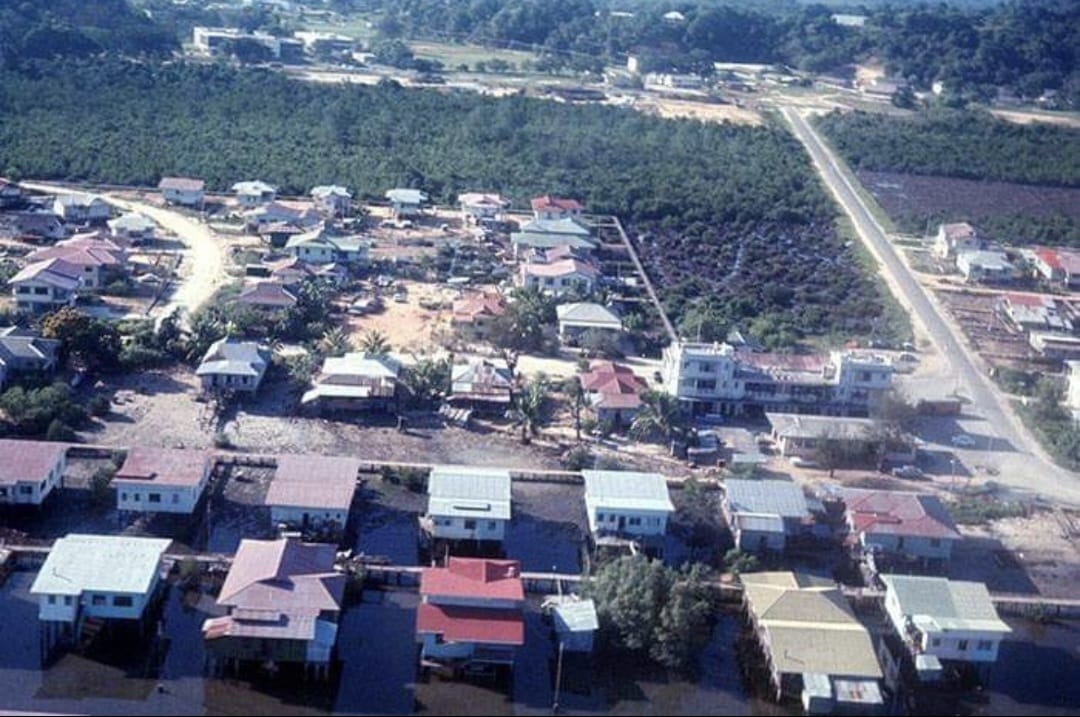
In 1980, the Sabah State Government initiated the Tanjung Aru and Sembulan Urban Renewal Scheme as part of a broader state-wide development project aimed at revitalising urban areas. This ambitious plan was discussed during a meeting chaired by the Chief Minister on November 29, 1980, where it was decided that urban renewal would extend from Tanjung Aru to Kota Kinabalu.
The Ministry of Local Government and Housing was tasked with coordinating this scheme, consulting with the Chief Town Planner, the Director of Land and Survey, and various consultants. Despite the policy being formally considered by the State Cabinet only in early 1981, a contractor had already been nominated by December 1980, underscoring the urgency and political will behind the project. The project was then revised in May this year.
The Uncertain Road Ahead
Today, as Sembulan Tengah stands on the brink of transformation, its residents grapple with the possibility of being displaced once more. For many, the struggle is not just about losing their homes but also about preserving a community that has endured for generations. As developers and the government eye the area for redevelopment, the fate of Sembulan Tengah remains in limbo, reflecting the broader challenges faced by traditional communities in rapidly modernising cities. – September 29, 2024
Note: All facts and figures were extended to The Vibes by Historical researcher, banker and Sabah Society member Shari Jeffri














.jpg)