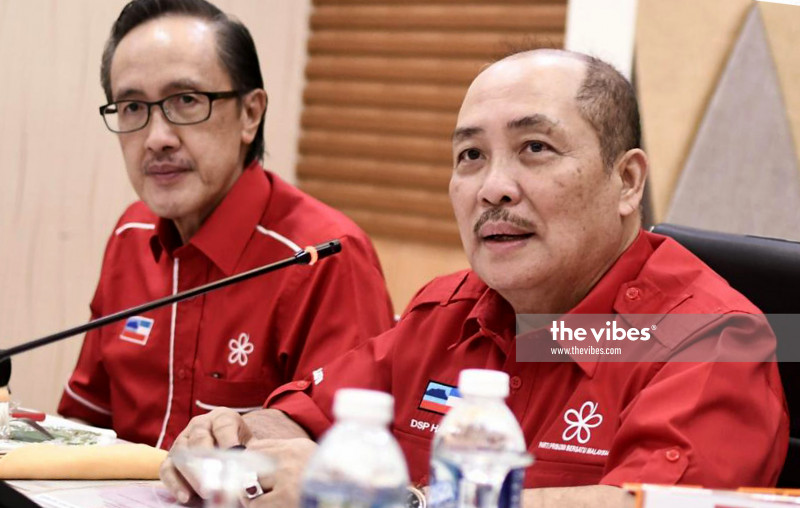
SABAH has proposed the number of parliamentary seats it requires to achieve one-third representation for the Borneo states to Putrajaya, said Chief Minister Datuk Seri Hajiji Noor.
He said this was made during the recently concluded MA63 Implementation Action Council Technical Committee meeting, chaired by Prime Minister Datuk Seri Anwar Ibrahim, on September 12 in Kota Kinabalu.
Hajiji noted the matter had already been discussed twice at the officers' level before being brought to the technical committee.
“Sabah has already met all the criteria to conduct a redelineation study to increase the number of its parliamentary seats,” he told reporters in Kota Kinabalu.
When asked whether Sabah had proposed how many seats it requires, Hajiji confirmed this but said, “I won’t disclose the number now.”
He added that implementing this would require the introduction of a constitutional provision, and the redelineation exercise would also require consideration of the population ratios.
Hajiji’s comments follow his Sarawak counterpart, Premier Tan Sri Abang Johari’s call for East Malaysia to have one-third, or 35%, representation in Parliament.
During a recent event in Kapit, Sarawak, Abang Johari said that the non-Malayan states must be granted the power to veto policies made in the Dewan Rakyat to protect its rights.
Anwar was also present at this event when Abang Jo said this.
At present, Sabah and Sarawak account for 25% of the 222 parliamentary seats.
The Federal Constitution was originally designed to give Singapore, North Borneo (now Sabah), and Sarawak a veto over Malaya.
Chapter 3, paragraph 9 of the Malaysia Agreement 1963 (MA63) outlined the parliamentary seat distribution: 104 for Malaya, 16 for Sabah, 24 for Sarawak, and 15 for Singapore.
However, after Singapore's exit from the Federation in 1965, its 15 seats were not redistributed evenly between Sabah and Sarawak.
Furthermore, Paragraph 19 of the Inter-Governmental Committee (IGC) Report and Article 46(1) of the Federal Constitution ensured that Sabah, Sarawak, and Singapore could prevent Malaya from dominating constitutional amendments by holding over one-third of the parliamentary seats.
This has become a historical issue for Sabah and Sarawak where certain policies formulated in parliament eroded its rights, such as when it was downgraded to mere states when they formed Malaysia as equal partners with Malaya. – October 2, 2024