THE government is expected to introduce five new taxes in Budget 2025 to promote healthier lifestyles, support sustainable living, and address economic inequality.
According to reports in Utusan Malaysia, the taxes are unhealthy food tax, carbon pricing tax, inheritance tax, high-value goods tax (HVGT), and Artificial Intelligence (AI) tax.
Economic analysts predict that the unhealthy food tax will be introduced to address the increase in obesity rates and lifestyle-related diseases.
The National Health and Morbidity Survey (NHMS) 2023 report revealed that 54.4 per cent of Malaysians are overweight.
The Carbon Pricing Tax is to support the country's economic agenda and efforts to deal with climate change in line with the goal of zero carbon in 2050.
Meanwhile, the introduction of Inheritance Tax to prevent the accumulation of unproductive wealth in a family thus helping to reduce the wealth gap.
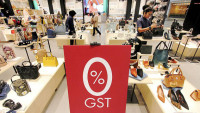
High-Value Goods Tax (HVGT) enables the government to collect revenue from high-income earners who can afford luxury goods, thereby reducing the gap between the rich and the poor.
The Artificial Intelligence (AI) tax is to drive the growth of the high-tech industry to support the country's economic development.
Analysts are also of the opinion that, based on the current economic situation, the government will continue to commit to implementing a more progressive tax system including expanding the use of e-invoicing which has the potential to increase revenue collection.
Senior Lecturer of the Faculty of General Studies and Advanced Education of Sultan Zainal Abidin University (UniSZA), Dr Farah Roslan said the introduction of the unhealthy food tax complements the implementation of the existing sugar tax to address the increase in obesity rates and diseases related to unhealthy lifestyles.
"The revenue from these two taxes can be utilised by subsidising healthy foods such as fruits and vegetables as well as implementing nutrition education programs in schools and communities," he told Utusan Malaysia.
Dr. Farah said that several countries have succeeded in proving the effectiveness of Fat Tax implementation including Hungary which introduced a public health tax in 2011 on food with high sugar, salt and fat content with a tax rate of between four and 10 percent depending on the product.
Meanwhile, a Lecturer at the Faculty of Economics and Management (FEP), Universiti Kebangsaan Malaysia (UKM), Prof. Associate Dr. Mustazar Mansur said carbon tax is implemented by charging a direct fee on carbon emissions based on the carbon content of fossil fuels.
"As of 2023, there are 75 carbon pricing methods that have been successfully implemented around the world in reducing carbon emissions to increase the country's revenue for green investment," he said. - October 5, 2024