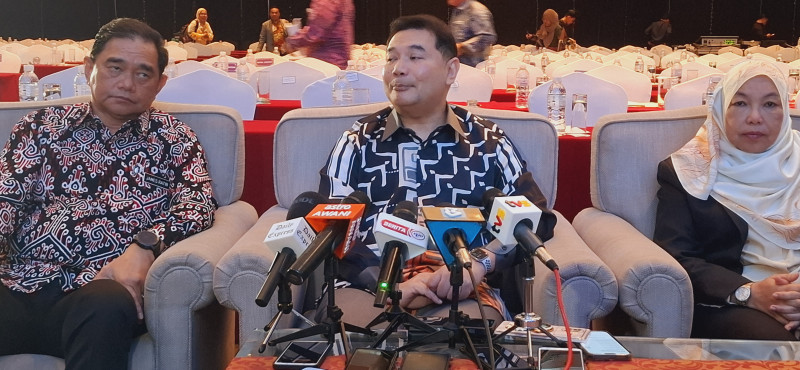
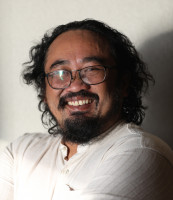
ECONOMIC Minister Rafizi Ramli has dismissed claims that Sabah is being shortchanged in federal development allocations.
He revealed that Sabah has been among the top recipients of federal development funds for five consecutive years, receiving over RM6 billion annually.
“Sabah gets one of the largest allocations every year. Over five years, that’s around RM30 billion,” Rafizi said during a town hall session on the 13th Malaysia Plan in Kota Kinabalu.
Many Sabah leaders expressed scepticism about the Malaysia Plan during the dialogue, citing unfulfilled promises, decades-old incomplete projects, and persistent logistical and utility gaps stalling the state’s progress.
Projects like the Sepanggar Port upgrade remain unfinished, despite being initiated 27 years ago under RMK7 (1996-2000).
Industrial parks and infrastructure developments across Sabah have also faced delays spanning multiple Malaysia Plans, highlighting long-standing execution challenges and inadequate logistical support.
Rafizi also refuted accusations that only RM1.5 billion reached the state as “not true” after Ranau MP Datuk Jonathan Yassin explained how he arrived at the figure.
According to Yassin, the Finance Ministry clarified that while RM6 billion is allocated annually, only RM1.5 billion is directly managed by the Sabah state government, with the rest handled by federal agencies for operations and projects.
“The problem isn’t with the allocation—it’s about execution,” Rafizi said.
He highlighted that Sabah’s high number of sick projects often stems from unresolved land issues and operational bottlenecks.
“Projects are approved, but land is either unavailable or unsuitable. These delays turn into sick projects,” Rafizi explained.
Rafizi said reforms under RMK13 aim to tackle these issues by introducing mandatory feasibility studies and land verification before project approval.
“We’re introducing mandatory checks with federal and state land banks to avoid duplication and delays,” he said.
He also warned that framing Sabah’s allocation as insufficient could spark political polemics between states.
“If we go down this road, other states like Selangor or Penang will question why they don’t get more, despite contributing higher tax revenues,” Rafizi cautioned.
He stressed that federal allocations are based on need, with Sabah prioritised due to significant development gaps.
“Sabah receives the largest share because it needs it the most. The focus is to close gaps and reduce poverty,” he said.
Rafizi called for greater cooperation between federal and state governments to address execution challenges.
“We need to ensure that every ringgit allocated delivers value to the rakyat. Turning this into political polemics won’t help anyone,” he said.
He also emphasized the need for targeted strategies to elevate Sabah’s manufacturing sector and improve its industrial infrastructure.
“Sabah has immense potential, but we must address logistical and utility challenges to attract high-impact investments,” Rafizi said.
He concluded that RMK13 is critical to Sabah’s progress and must focus on resolving long-standing issues.
“This is the most important plan for our future. Let’s get it right,” he said.
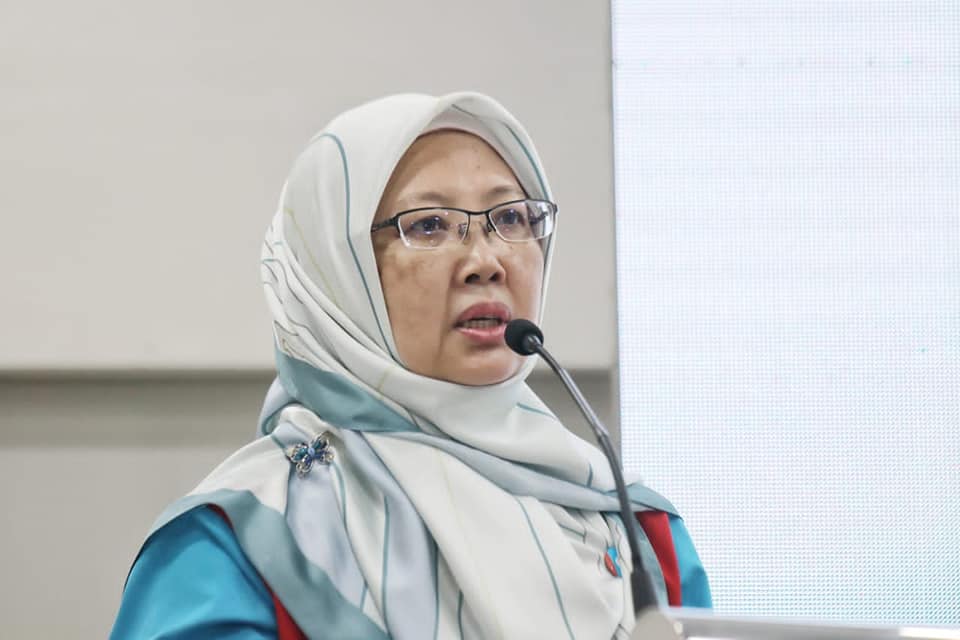
Separately, it was noted in Parliament last month that Sabah ranked among the lowest in development project execution.
According to Minister in the Prime Minister’s Department (Federal Territories) Dr Zaliha Mustafa, Sabah received RM6.67 billion in allocations, but its expenditure performance was only 46.70%, below the national average.
Sabah also has the highest number of development projects in the country, with 1,244 projects currently underway. - December 19, 2024





.jpeg)