
THE Sabah government’s plan to crack down on household water pumps after Ramadan has triggered a wave of public anger, with an assemblyman now threatening to take to the streets in protest.
The Sabah Water Department (JANS) is set to enforce Section 56 of the Sabah Water Supply Enactment (Amendment) 2022, which prohibits installing water pumps before water meters.
Officials say the rule is necessary to prevent disruptions in water distribution, but many argue that it is a misguided response to a much deeper crisis.
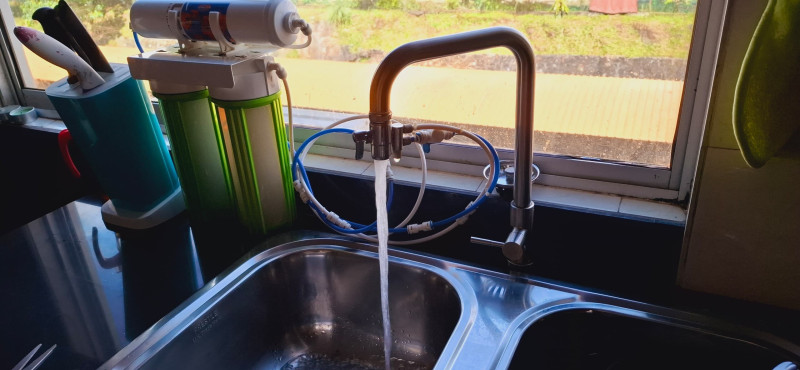
For many households, particularly those in high-rise buildings and remote areas, low water pressure has made daily life a struggle.
Many residents install water pumps just to get a consistent flow—a move that JANS says could now lead to fines or legal action.
JANS argues that when too many consumers install pumps, it creates a vacuum effect that disrupts pressure balance in the main distribution system, making it harder for other homes to receive an adequate water supply.
The department warns that unregulated pump use worsens shortages rather than solving them.
Elopura assemblyman Calvin Chong has vowed to challenge the enforcement, accusing the authorities of punishing the public instead of solving the chronic water shortages.
“If they continue to ignore this problem, I will bring the voice of the people and hold a demonstration to demand justice!” Chong warned.
The proposed ban has ignited political opposition, with consumer groups and political leaders criticizing the government’s failure to resolve Sabah’s water woes before enforcing restrictive measures.
Sabah Progressive Party (SAPP) vice youth chief Yong Yit Jee said the water department should focus on fixing treatment plants and pipelines instead of going after ordinary consumers.
“People are installing pumps because they don’t have a choice,” he said.
The National Consumer Foundation’s Sabah chairman David Chan agreed, arguing that fines are not the solution.
“The water department should first ensure that water pressure meets the required standards,” he said.
The controversy comes amid wider concerns over Sabah’s aging water infrastructure and widespread illegal connections.
UMNO Sabah chief Datuk Seri Bung Moktar Radin has called out the government’s lack of urgency, particularly as residents prepare for Aidilfitri, a period of high water demand.
“How far has JANS investigated illegal connections? How many people have been prosecuted?” Bung Moktar asked.
He accused officials of using illegal tapping as a convenient excuse while failing to address the **real causes of water shortages.
“This problem has been going on for years, and yet there is still no clear solution,” he said.
Sabah’s non-revenue water (NRW) rate remains one of the highest in Malaysia, at 56–60%.
Reports show that 70–75% of water loss comes from leaks and burst pipes, 15–20% from illegal connections, and 5–10% from metering issues and billing errors.
Under Section 56 of the Sabah Water Supply Enactment 2003, consumers who modify their plumbing systems to obtain a greater supply of water than prescribed commit an offense and may face a fine of up to RM10,000.
Bung Moktar has urged the government to adopt a long-term strategy to improve water supply efficiency instead of focusing on punitive measures.
“The people should not have to suffer inadequate water supply, especially during festive seasons,” he said.
JANS has yet to respond to the mounting criticism, but for now, enforcement of the pump ban remains on track.
With public anger growing, the state’s failure to address its water crisis risks spilling beyond political debates—and into the streets.
A RM300 million federal loan meant for short-term fixes to Sabah’s water issues remains with the Sabah Finance Ministry and is still in the procurement phase.
Deputy Chief Minister Datuk Shahelmey Yahya said 18 water projects have been identified under the funding, but work will only begin once procurement is completed. – March 5, 2025