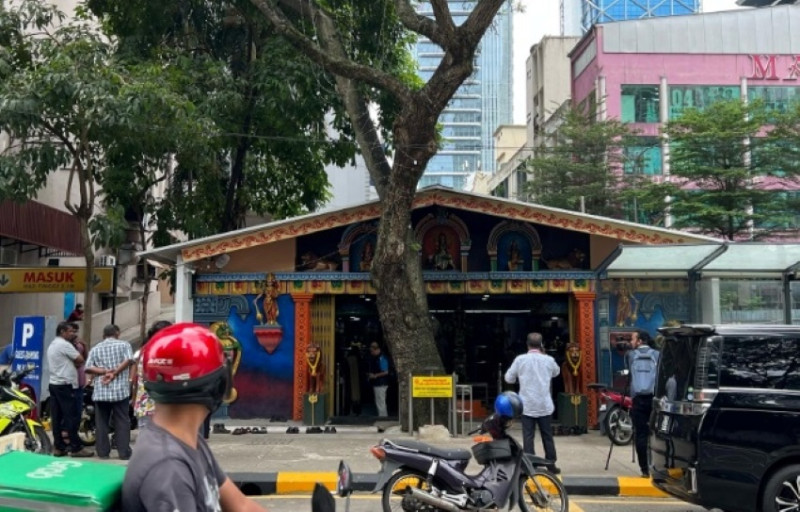

THE recent standoff between the temple committee of the Dewi Sri Pathrakaliaman Hindu Temple (pic) in Masjid India, Kuala Lumpur, and the landowner, Jakel Trading Sdn Bhd, has once again highlighted the urgent need for a regulatory body to manage Hindu religious affairs in Malaysia.
While the Malaysian Hindu Sangam (MHS) has proposed leading such a body, UrimaiI Chairman P. Ramasamy holds a different view based on his 13 years of experience managing the Penang Hindu Endowments Board (PHEB).
Penang is the only state in Malaysia with a statutory body dedicated to managing Hindu endowments. Established in 1906 under colonial legislation, the PHEB was part of a broader initiative that also saw the formation of similar boards in Singapore and Melaka, the former Penang deputy chief minister II said, in a statement today.
He explained that after Singapore gained independence, it enacted the Hindu Endowments Board Act to govern its affairs.
However, the fate of the Melaka Hindu Endowments Board remains unclear.
Despite it being a federal body, the PHEB operates under the jurisdiction of the Penang state government. It is subject to federal audits and submits annual reports to Parliament.
“As a statutory entity, it possesses wide-ranging enforceable powers, including the ability to compulsorily acquire temples and properties for the benefit of the Hindu community. The core purpose of the PHEB is to manage and acquire endowment properties to support the Hindu community,” Ramasamy said.
He said, while the PHEB has proven its effectiveness, it remains confined to Penang. Previous appeals to the federal government to enact a Hindu Endowments Act—expanding the board’s jurisdiction nationwide—have been ignored.
“A national Hindu Endowments Board, with branches in different states, would provide a structured and legally empowered mechanism to address issues concerning Hindu religious affairs,” he said, adding, such a board would function as an official administrative body, overseeing Hindu endowments, temples, and related matters.
Unlike MHS or other Hindu NGOs, a statutory board would have the legal authority necessary to enforce regulations and manage disputes, he said, citing historically, the British introduced the Hindu Endowments Board in the Madras Presidency in the 1920s, following the model of the Straits Settlements.
This demonstrates the practicality and effectiveness of such a structure in administering Hindu affairs.
“During my tenure as Deputy Chief Minister II and Chairman of PHEB, I worked with senior legal experts to draft legislation for a national Hindu Endowments Board. However, without political will, such an initiative will not materialise. With the ongoing controversy surrounding the temple in Kuala Lumpur, the government now has an opportunity to seriously consider establishing a statutory regulatory body for Hindu affairs,". – March 25, 2025