
THE Malaysian Association of Hotels (MAH) believes there is room for improvement in attracting more tourists to the country as hoteliers brace for next year's "Visit Malaysia (Year) 2026" campaign.
MAH vice-president Datuk Khoo Boo Lim said recent reports on unfavourable arrivals during the Hari Raya Eid Fitri period, particularly among Penang hoteliers, is testament to a need to ramp up arrival rates.
"We have to face up to the fact that after a the Covid-19, it takes time for the leisure industry to recover."
Khoo called for an extensive marketing campaign, both in traditional and online platforms to encourage more people to visit and spend more to help the industry cope with escalating operating costs.
Penang is believed to be among the top inbound destinations in the country with an uptick in arrivals detected in hotels and the Penang International Airport, as well as the Penang Port operator, who handles the international cruise market.
Khoo's views were echoed by Langkawi restaurateur Oli Khalid, who said that despite impressive rebound numbers since last year, the food and beverage business is not near pre-Covid-19 numbers.
The food and beverage business is also reeling from an acute shortage of local workers, who prefer semi-formal jobs available online such as ride sharing rather than serving guests in food outlets and hotels, he pointed out.
A downturn was also detected among hoteliers during the long Hari Raya break early last month despite reports that some 2.1 million vehicles were expected to hit the roads in Penang.
Khoo said that MAH stands ready to collaborate closely with all stakeholders in the tourism sector to boost arrivals, especially since there is now a mushrooming of hotels in the state - some 10 new hospitality properties over the past 18-months.
Khoo's counterpart - Tony Goh, who chairs the Penang MAH chapter, said that there are now 17,000 rooms registered with the association here compared to 14,000 in 2022.
Last year, overall occupancy was 62%. while similarly, the accommodation sharing service provider - AirBnB also had a similar occupancy rate of 62% in Penang.
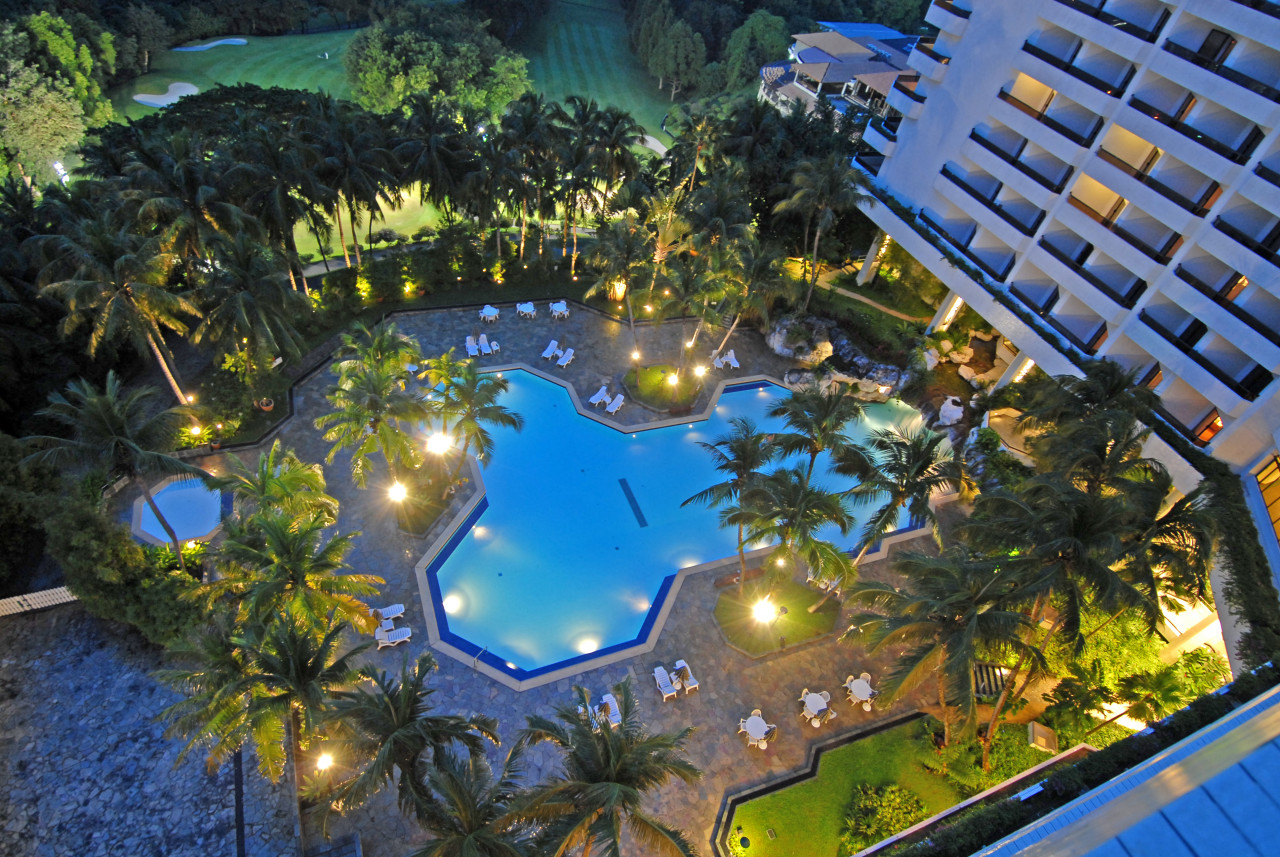
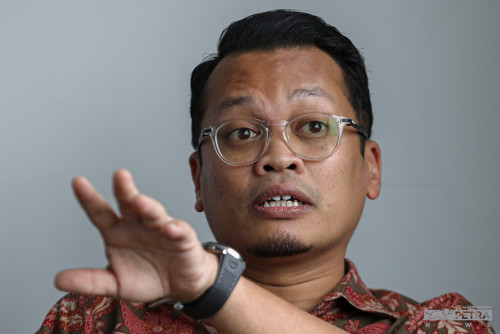
Picture for illustration purposes only - May 10, 2025
Some quarters within the hospitality industry in Penang are concerned over an oversupply of rooms despite reports of robust tourism activities.
Hotelier Adrian Praveen who manages the Arrowood (Hospitality) Group, said that too many rooms could be emerging in the state.
Praveen said that Penang does regulate short-term stays such as licensing the Airbnb accommodation sharing operators, which is a good thing.
"But it is no longer about regulating but the issue of supply and demand."
He urged the authorities in Penang, including the local city council to incorporate a monitoring system called accommodation development rights (ADR).
ADR is a framework that helps the authorities to increase bona fide rooms at the right pace; not too fast or too slow, said Praveen.
"Whether an operator runs a five - star property to a boutique, guesthouses or Airbnb or budget hotels, the ADR applies to each one."
ADR works when the authorities can use it to review the annual average hotel occupancy rate in Penang.
If such rate is below 80% then it is obvious that the hotels are not fully utilising their room inventories.
If Penang has around 13,000 rooms and the annual occupancy rate was below 72%, it means that nearly 3,600 rooms went unoccupied every night. - May 10, 2025.




.jpeg)






.jpeg)