
THOUSANDS of children in Sabah’s palm oil estates remain vulnerable to exploitation despite progress in reducing child labour in the sector, several international organisations have warned.
The International Labour Organization (ILO), the United Nations Children’s Fund (UNICEF) and the European Union (EU) issued a joint call for intensified and sustained action to protect children’s rights — particularly their right to education and a life free from exploitation as it mark the World Day Against Child Labour on June 12.
The coalition said poverty and limited access to education were key drivers behind child labour in Sabah.
Malaysia’s latest available estimates in 2018, 60% or approximately 20,000 of the 33,600 children between the ages of 5 and 17 work in the palm oil industry in Sabah.
“Child labour denies children their right to safety and education and threatens their future. This day serves as a reminder that no child should be left behind,” said EU head of cooperation at the EU Delegation to Thailand Tom Corrie.
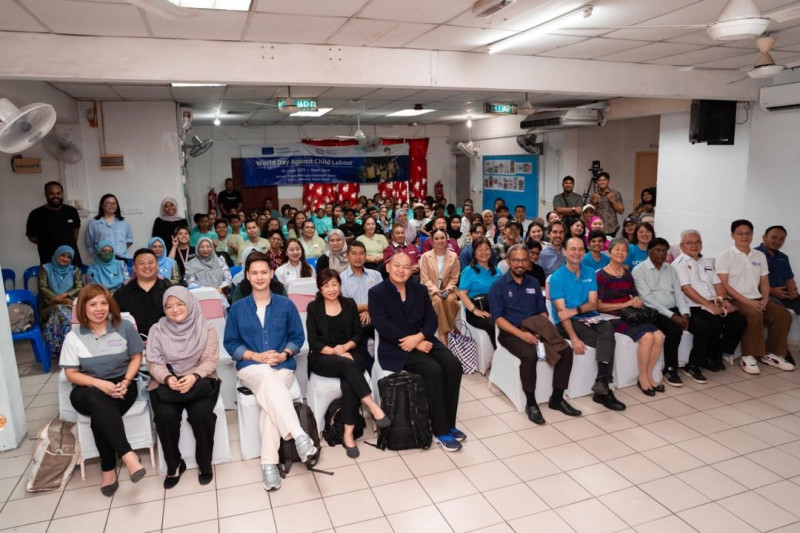
He said this during the World Day Against Child Labour observed in Tawau in the east coast of Sabah.
ILO and UNICEF are now piloting a series of integrated community programmes in Sabah backed by EU funding.
In Tawau alone, over 150 children and youth have taken part in vocational training and life skills programmes to widen their employment options beyond plantation work.
Additionally, 228 smallholder farmers have joined outreach sessions discussing the challenges children face in accessing education and protection services.
The organisations also launched a social narrative campaign — the Tuai Cerita Fellowship — to counter harmful norms and amplify children’s voices.
Fifteen local content creators were trained under this initiative in partnership with Project Liber8, ANAK, and Global Shepherds.
A separate policy study, conducted with the Social Policy Research Institute (SPRI), is underway to identify barriers to basic services such as education — with findings expected to shape the next phase of government-industry-civil society collaboration.
Such efforts are proof that Malaysia is not tolerating to any form of child labour, said ILO Deputy Regional Director for Asia and the Pacific, Tuomo Poutiainen.
“But progress can only be sustained through stronger family support systems, dignified employment for adults, and private sector responsibility across supply chains,” he said.
The organisations stressed that the issue is far from over — and urged deeper investments in social protection, stronger child welfare systems, and universal access to education, especially in rural and underserved areas.
UNICEF representative to Malaysia Robert Gass said Child labour is a fundamental violation of a child’s right to simply be a child.
“Often rooted in outdated beliefs and economic desperation, it deprives children of their voice, education, and potential. We aim to change that — through empathy, awareness, and firm action.”
This year also marks the 30th anniversary of Malaysia’s ratification of the UN Convention on the Rights of the Child.
The milestone, the organisations said, should serve as a renewed commitment to uphold every child’s right to education, protection, and opportunity. - June 13, 2025