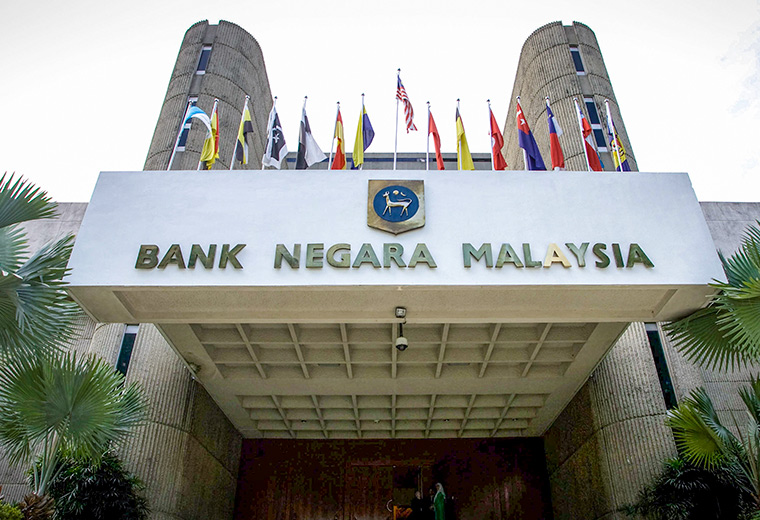
BANK Negara Malaysia (BNM) has lowered the Overnight Policy Rate (OPR) by 25 basis points to 2.75%, citing mounting global uncertainties and a benign inflation outlook as reasons for its pre-emptive policy move.
The decision, announced following the Monetary Policy Committee (MPC) meeting on Tuesday, also sees the ceiling and floor rates of the OPR corridor adjusted to 3.00% and 2.50% respectively.
“While the domestic economy is on a strong footing, uncertainties surrounding external developments could affect Malaysia’s growth prospects,” BNM said in a statement. “The reduction in the OPR is, therefore, a pre-emptive measure aimed at preserving Malaysia’s steady growth path amid moderate inflation prospects.”
The global economy, BNM noted, continues to expand, supported by firm consumer spending and front-loaded activity in some sectors. Labour markets remain healthy, and policy conditions in key economies have turned less restrictive. Nevertheless, the central bank cautioned that “uncertainties surrounding tariff developments, as well as geopolitical tensions” may introduce greater volatility in financial and commodity markets.
At home, economic indicators point to continued momentum in the second quarter, underpinned by strong domestic demand and resilient export activity. Growth is expected to remain supported by employment and wage gains, fiscal support for households, and sustained investment in public and private infrastructure.
“Employment and wage growth, particularly within domestic-oriented sectors, as well as income-related policy measures, will support household spending,” the bank said.
Malaysia's export outlook may also benefit from robust tourism, increased demand for electrical and electronic goods, and improved outcomes from trade negotiations. Still, risks to the growth outlook remain skewed to the downside, particularly from global trade slowdown, weaker business sentiment, and lower-than-expected commodity output.
On inflation, BNM reported that headline and core rates averaged 1.4% and 1.9% respectively during the first five months of the year. “Inflation in 2025 is expected to remain moderate, amid contained global cost conditions and the absence of excessive domestic demand pressures,” it said. The impact of domestic policy reforms on inflation is expected to be manageable.
The ringgit’s performance, BNM said, will continue to be largely driven by external developments. However, “Malaysia's favourable economic prospects and domestic structural reforms, complemented by ongoing initiatives to encourage flows, will continue to provide enduring support.”
The MPC concluded by affirming it would remain vigilant, closely monitoring developments and “assess the balance of risks surrounding the outlook for domestic growth and inflation.” - July 9, 2025














.jpeg)