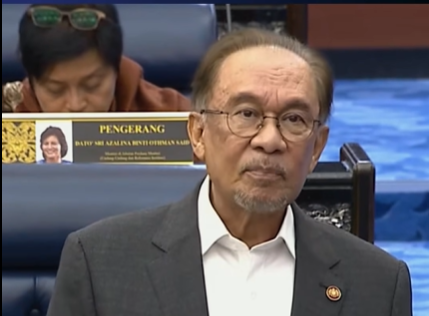

KUALA LUMPUR – The Electoral Reform Committee (ERC) did not make any recommendation regarding electronic voting because it took into consideration Malaysians living in rural areas who lack good internet access and basic telecommunications infrastructure.
ERC chairman Tan Sri Abdul Rashid Abdul Rahman told The Vibes that the committee cannot cater to only one demographic – particularly privileged urban folk, who have made demands for such a voting system.
“We have a multiracial setting in this country, and geographical factors to take care of – rural, urban, semi-urban and semi-rural – a very sharp difference here. These are the factors that we look into before adopting something.
“That is why, when people talk about electronic voting, I go around and see what people do. In fact, I have been told not to venture into that field because electronic voting is something – when talking about social order – rural folk may not be able to participate in as well as urban folk.
“It’s easy to say that we have the digital technology. I know it very well. We can do it. But who are you serving? Are you serving the whole population? No. That is why I am reluctant when people talk about this.”
He referred to the incident involving Universiti Malaysia Sabah student Veveonah Mosibin, who was forced to climb a tree in her rural Sabah village to get Wi-Fi access when she had to sit her examinations in June.
Rashid, who was once the longest-serving Election Commission chairman, said the country needs to develop better telecommunications infrastructure and services before it can consider recommending an electronic voting system.
In more technologically advanced countries such as India, he said, such a system has opened up a can of worms, as opposition political parties are suspicious of it or the devices used, and have objected against it.
“I went to India, for example, and they have electronic machines. You have to press to vote for your candidate. That created havoc right from the beginning. The opposition parties do not trust the machines or the party in power.
“They say that the electoral body is helping the party in power win by programming the machines to do what it wants. The machines are man-made; you can make them do what you want. There are a lot of allegations on that account alone, right from the beginning.
“I see no country using that now, not even the United States. The US is facing a problem. It used the electronic system, and now, there are a lot of controversies. The loser will not accept the results just like that. There will always be complaints.”
Asked whether the ERC will come up with recommendations on an election standard operating procedure during a pandemic, he said the committee has left it to professionals in the Health Ministry and National Security Council.
He maintained that it should not be a permanent feature of how elections are conducted, adding that present legislation is enough.
“They are handling it very well. It is okay, but people do not behave. The problem with elections is that people must be free to campaign. Campaigning is the cause (of the spread of a pandemic), not the process of voting. The voting process is very well done.
“Voting is okay, but campaigning is not okay. People gather here and there without conforming to the SOPs. The matter can be solved by ensuring that the manner in which people are allowed to campaign is programmed and enforced properly.” – The Vibes, December 26, 2020
This is Part 2 of a two-part series based on interviews with ERC chairman Tan Sri Abdul Rashid Abdul Rahman. Read Part 1 here