RESIDENTS of Bukit Damansara staged a peaceful protest against the proposed redevelopment of the landmark Wisma Damansara into two 60-storey towers.
The proposed project had come under fire from residents and lawmakers who warn it would severely strain infrastructure and violate Kuala Lumpur’s draft city plan.
Segambut MP and Minister for Youth and Sports, Hannah Yeoh, said the project’s proposed plot ratio of 1:9.6 is "excessive" and unjustifiable under existing conditions. She argued the scale far exceeds the 1:6 ratio permitted under the Kuala Lumpur Local Plan 2040 (PTKL 2040) for the Bukit Damansara area.
“This project is not aligned with the Kuala Lumpur Local Plan 2040,” Yeoh said.
“Redevelopment alone is not a sufficient basis for such high-density approvals. Planning decisions must be based on a full evaluation of the area’s character, infrastructure readiness and long-term sustainability.”
The redevelopment, proposed by BRDB Developments after acquiring the site in March 2025, would replace the long-vacant 16-storey Wisma Damansara, built in 1970 and regarded as the first commercial building in Damansara Heights.
In a series of engagements with city officials and residents, Yeoh said she had submitted formal objections together with the Bukit Damansara Home Owners’ Association following a Rule 3 notice from Kuala Lumpur City Hall (DBKL) in August.
In subsequent meetings with the mayor and DBKL’s executive director of planning Nazri Abdullah, Yeoh reiterated calls for strict adherence to PTKL 2040 and demanded a halt to all new highway proposals in the vicinity. In a letter dated 2 October 2025, she stressed the importance of involving residents from the outset in all impact assessments.
“The residents’ association must be involved from the beginning,” she said.
“We cannot afford another repeat of planning failures that have left Segambut grappling with chronic congestion.”
She pointed to the 2017 redevelopment of Pusat Bandar Damansara, approved despite widespread objections and now burdened by severe traffic, even with an MRT station and elevated highway. A 2021 high-density proposal at Plaza Batai was blocked following similar community resistance.
Residents were spotted holding placards with the words “Save Bukit Damansara” and “No to Skyscrapers” during the protest.
Bukit Damansara Homeowners’ Association president Sufian Majid said residents only learnt of the project via a newspaper notice on Aug 1.
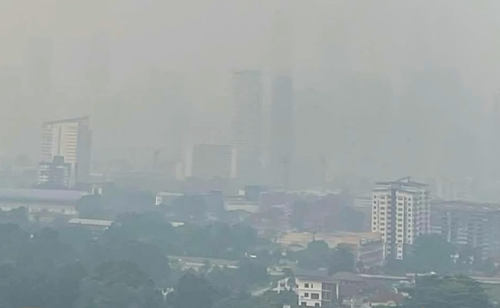
“Jalan Semantan is already choked during peak hours due to SPRINT Highway pass-through traffic. Office workers already park illegally on residential roads, choking neighbourhoods,” he said.
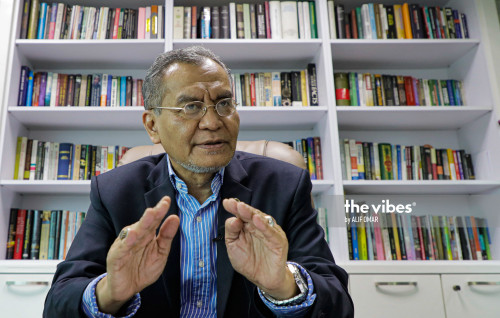
Former health minister Khairy Jamaluddin, a resident of Bukit Damansara, joined calls for the project to be halted. He described the proposal as “entirely unsuitable” for a predominantly low-density residential enclave.
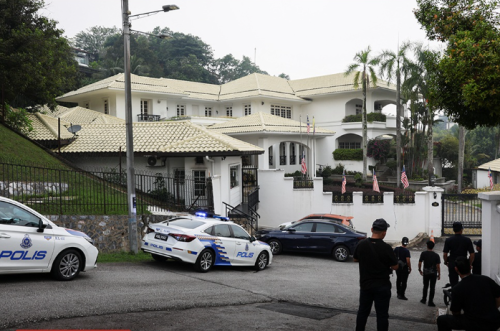
Khairy in his address at the protest today also thanked the police and Rela personnel who were on standby.
“Many asked me why I am so interested in Bukit Damansara … the answer is simple…I am a resident in this area too.
“I, along with Datuk Ambiga Sreenevasan and Datuk Sheila Majid and when Ambiga and KJ get together … there is bound to be trouble,” he said in jest.
KJ said they were concerned about their community and over the last 30 years, they have on numerous occasions given in to development.
“Offices started moving in. Long time ago, there was only Plaza Damansara.
“However, there are limits. Just look as how big Pavillion is. Enough is enough … no more development for us,” added Khairy.
Also present at the peaceful protest was Asean-BAC Malaysia chairman Tan Sri Nazir Razak and Opposition leader Datuk Seri Hamzah Zainudin.
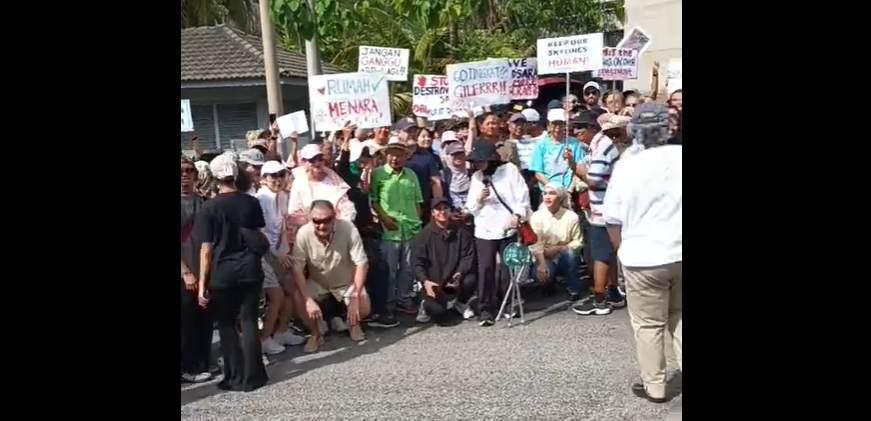
Khary also informed that there was an earlier height restriction for development in the area due to its proximity to Istana Negara.
“However, when I saw the latest map, this had magically disappeared. Who allowed this?
“There is something wrong with DBKL (Kuala Lumpur City Hall). How come skyscrapers are now being allowed in … 60 storeys, slightly shorter than the Petronas Twin Towers.
“Just imagine the traffic congestion,” he added.
Over 300 households in the area have submitted written objections to DBKL, with residents expressing fears that the development would worsen traffic on already congested routes such as Jalan Semantan and Jalan Tuanku Abdul Halim.
BRDB and DBKL have defended the project, citing redevelopment incentives and asserting compliance with the city’s planning framework. However, residents argue the incentives are being misused to bypass crucial planning safeguards.
Public consultation on the proposal concluded in mid-August. DBKL has yet to announce a decision, stating that feedback is still under review.
The dispute has reignited wider concerns over unrestrained urban densification in Kuala Lumpur. Yeoh warned that approving such projects undermines the credibility of the PTKL 2040 and erodes public confidence in city governance. - October 4, 2025