


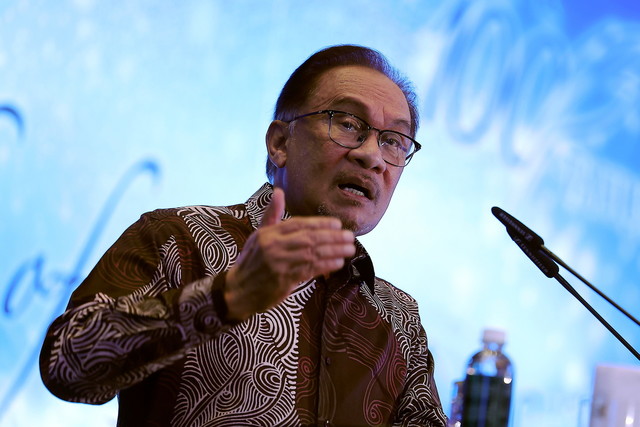
PRIME MINISTER Datuk Seri Anwar Ibrahim and his Singaporean counterpart Lawrence Wong underscored the importance of a hardline approach against drugs and deepening bilateral ties during the two-day 12th Singapore-Malaysia Leaders’ Retreat at The Ritz-Carlton, Millenia Singapore.
Wong emphasised Singapore’s longstanding policy, describing it as “very clear” and strongly supported by Singaporeans.
“It’s a position we take because we really want to ensure Singaporeans grow up in an environment where we are free from drugs, where parents and families and children would never be subjected to the fears and problems associated with drugs,” The Straits Times cited Wong saying.
“That’s the approach we have taken, and that’s the approach Singapore will continue to take.”
Singapore recently executed three individuals for drug offences last week, bringing this year’s total to 17 – the highest since 2003 – a move that has drawn criticism from human rights groups, lawyers, and activists.
Wong noted that Singapore’s strict anti-drug policy has not resulted in bilateral tensions, adding, “I hope all countries understand the rationale for our strong stance and respect the way we conduct our policies on this front.”
Anwar acknowledged that Malaysia, too, faces challenges with drug abuse.
“We have taken a strong stance although we have amended the mandatory death sentence,” he said.
“If the case is taken up through due process in Singapore … of course the families have the right to appeal, no question about it, for compassion… but for a government, the Malaysian government, we do recognise the importance of taking a very tough stance against the drug menace because it has created a lot of unbearable hardship and difficulties for many of our people.”
He stressed that his comments do not condone drug offences.
“But it cannot be turned into a major or any political issue or difference. If at all, I raise it, it is about representing the concerns of the families but in no way should I give any indication that I am condoning drug trade or issues,” he said, adding that Malaysia respects Singapore’s due legal process.
Beyond drug policy, both nations witnessed the exchange of memoranda of understanding covering health cooperation, digital health, public health, long-term care, and joint anti-drug initiatives.
The leaders also inked an additional agreement on the Johor Bahru-Singapore Rapid Transit System (RTS) Link, facilitating co-located customs, immigration, and quarantine (CIQ) operations and improvements to the cross-border taxi scheme.
Other areas of cooperation discussed included water management, airspace, maritime borders, energy trade, and the expansion of cross-border electricity interconnectors.
Wong highlighted the approval of low-carbon electricity imports from Sarawak and plans for a second electricity interconnector, aimed at creating economic opportunities, supporting ASEAN’s power grid, and advancing a low-carbon future.
The retreat also served as a platform to review prior agreements, including the Johor-Singapore Special Economic Zone and the opening of Singaporean consulates in Sabah and Sarawak.
Both leaders emphasised the potential to further grow bilateral relations while resolving outstanding complex issues, including airspace, water pricing, and maritime boundaries, “in a win-win sort of position,” Anwar said.
The 12th retreat marks the second annual meeting attended by the two prime ministers as heads of government, following the previous retreat in January 2025 in Putrajaya, Malaysia.
Anwar described the annual meetings as “an important platform for the leaders of both countries to enhance cooperation” and expressed confidence that stronger diplomatic relations with Singapore will benefit citizens of both nations. - December 4, 2025





.jpeg)
