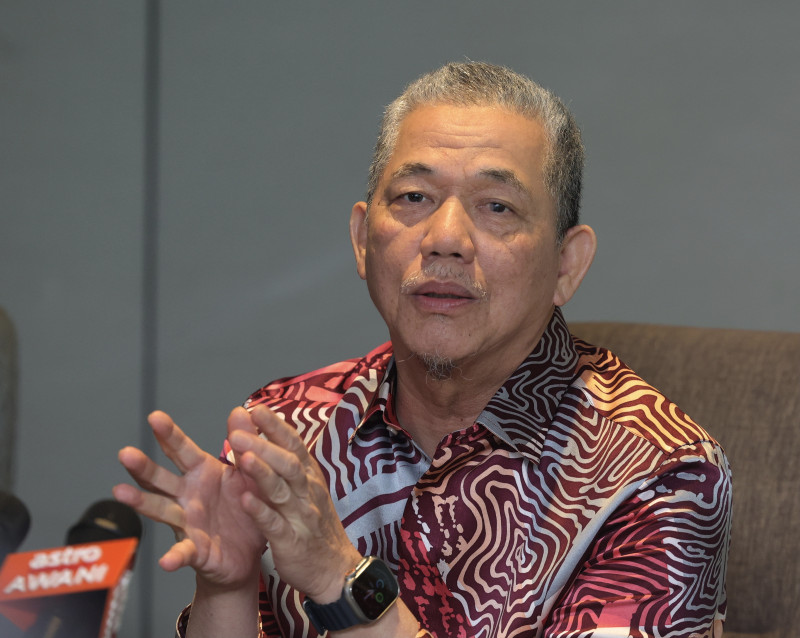
DEPUTY Prime Minister Datuk Seri Fadillah Yusof has underlined that development projects across Malaysia, including in Sabah and Sarawak, are implemented based on genuine local needs, ensuring that communities receive tangible benefits.
He emphasised that the MADANI Government’s development agenda is not politically motivated but focused entirely on improving the lives of the people.
“This is based entirely on the needs of each region or state, and on identifying who the intended beneficiaries are. That is why the perception that we are approaching development based on politics is completely untrue,” he said during a panel discussion titled ‘MADANI Government – Retrospective and Mapping the Way Forward’.
The forum was part of the 2025 National Convention on Public Service Reform, held in conjunction with the Rancakkan MADANI Bersama Malaysiaku programme, and featured Deputy Prime Minister Datuk Seri Dr Ahmad Zahid Hamidi as a fellow panelist.
Organised by the Prime Minister’s Office through the Performance Acceleration Coordination Unit (PACU), the Rancakkan MADANI programme took place over three days at Dataran Putrajaya, beginning on Friday, and has provided a platform for showcasing government achievements and engaging directly with the public.
Fadillah highlighted that the government has introduced targeted subsidy reforms to maximise efficiency and ensure benefits reach those most in need.
These measures include floating chicken and egg subsidies, restructuring electricity tariffs, and refining diesel and RON95 petrol subsidies, which together have saved approximately RM15.5 billion annually.
“The savings from these subsidy reforms were channelled towards providing cash aid to the people, strengthening the education and health sectors, and improving public infrastructure – ensuring that the benefits are felt directly by the people,” he explained.
He added that such reforms are part of a broader effort to revitalise Malaysia’s economy.
“Through the transformation or reforms we are implementing, we will be able to revitalise the country’s economy,” Fadillah said, echoing remarks made earlier by Zahid.
Looking ahead, the Deputy Prime Minister outlined the government’s commitment to propelling Malaysia into the digital era, particularly through advancements in artificial intelligence and semiconductor technology.
He noted that approved investments in these sectors for 2024 alone have reached RM378.5 billion, with the potential to generate more than 207,000 new jobs.
“With these new technologies, we want to ensure that our country remains competitive amid today’s global challenges, while positioning Malaysia firmly on the right development trajectory,” he said.
Fadillah also indicated that from 2026 onwards, national development would pivot around the 13th Malaysia Plan (13MP), prioritising an economy built on value creation, sustainability, and inclusivity.
He emphasised that achieving these goals requires close collaboration between the civil service and the public, supported by sound policies and effective planning.
“This is essential to realise Malaysia’s aspiration of becoming a developed nation with a sustainable economy and a high quality of life for its people, in line with the spirit of the MADANI Government,” he said.
Highlighting Malaysia’s regional and international engagement, Fadillah pointed to the successful hosting of the 47th ASEAN Summit and Related Summits last October, noting that the event enhanced policy coordination and facilitated collaboration among ASEAN member states and international partners.
“This achievement has also further elevated Malaysia’s standing on the international stage,” he added, underscoring the country’s growing diplomatic influence.
Through these initiatives, Fadillah reinforced the MADANI Government’s focus on people-centred development, strategic economic reforms, and a forward-looking approach that balances domestic welfare with global competitiveness. - December 7, 2025