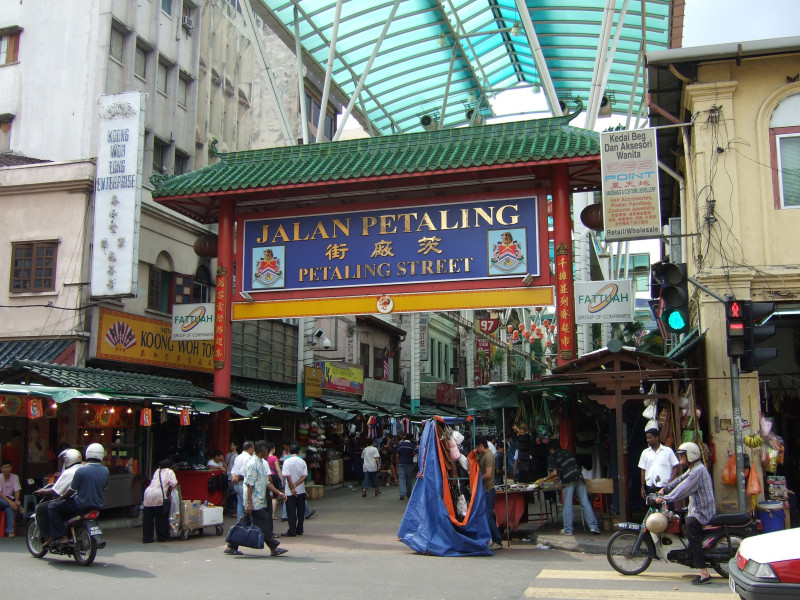
FOR more than three decades, Kuala Lumpur City Hall (DBKL), the police and the Immigration Department have carried out countless raids on vice dens across the capital. Yet the illicit prostitution industry entrenched along Petaling Street — a major tourist artery of the city — continues to function almost undisturbed, tarnishing Malaysia’s global reputation.
The strip has gained notoriety under names such as the “five-minute sin room” and a “low-cost brothel hub”, operating as though insulated from legal consequences.
The establishments predominantly rely on foreign women, especially from Indonesia, Bangladesh and India.
Despite DBKL officers repeatedly smashing through plywood partitions and carting off soiled mattresses, the syndicates behind these operations appear wholly unfazed. The rooms are swiftly rebuilt, and business resumes within days.
A two-day undercover investigation by this newspaper confirmed that prostitution remains rampant amid the neon lights and crowded pavements dotted with clothing stalls and souvenir vendors.
Harian Metor revealed today that observations exposed at least five premises functioning as brothels on both sides of a row of two-storey shoplots along Petaling Street.
Many of these locations stand only a short distance from the iconic Petaling Street arch, linking the area to Jalan Sultan.
Identifying the brothels is not difficult: one or two men usually sit outside each entrance, silently acknowledging potential male customers with a nod — as though fully aware of their purpose.
Peering through the main doorway, the scene becomes clearer. A red glow spills through a narrow five-metre corridor leading to a larger inner area lined with tiny plywood rooms. In front of each door, light-skinned women stand waiting, flashing rehearsed smiles at passing men.
The women wear deliberately revealing outfits, coupled with heavy make-up. Their intent is unmistakable: to entice and seduce.
“Come brother, cheap only. RM60,” one woman said, dressed in a red skirt and without a bra. Others were quick to negotiate when they sensed hesitation.
“Only 50 ringgit. Come quickly!” another petite woman added with a coy smile.
At one point, the journalist’s left arm was pulled by a woman attempting to drag him into a room. Only after he resisted was her grip released.
Shame seemed foreign in this environment; the women worked determinedly to secure business, with no lengthy discussion or bargaining required.
A minder stationed in a corner watched the journalist closely. When he sensed that the visitors were not interested in any of the women, he snapped: “You only want to look? If you want sightseeing go somewhere else. Don’t want to take woman… you can leave!”
His anger caused several foreign men inside the premises to hastily exit.
A second brothel, less than ten metres away, had three men guarding its entrance. “Just come in. Many choices,” one of them said, sounding far friendlier than the first.
Across the strip, the Harian Metro journalist estimated that more than 100 foreign women were working inside these hidden dens. Although tucked away from the main crowd, some foreign tourists wandering the back lanes appeared aware of the brothels' existence.
From past participation in enforcement operations at the same location, the journalist observed that the syndicates have grown desensitised to the risk. Once raided, they simply rebuild the partitions and restart operations, often within mere days.
Ultimately, this exposé is not merely about cheap prostitution thriving in the heart of the capital. It is a story of human exploitation, unrelenting vice and a stain on the nation’s image — especially as Malaysia prepares to welcome 47 million international visitors for Visit Malaysia Year 2026. - December 8, 2025