MALAYSIA is accelerating its digital and technological transformation with the official launch of the AI for Productivity 2025 programme, a move aimed at enhancing industrial efficiency, workforce skills, and national productivity.
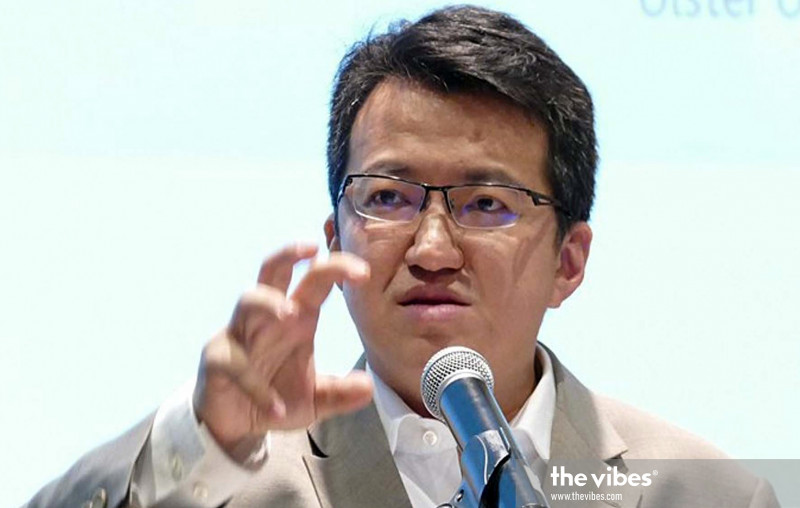
The initiative was inaugurated by Deputy Minister of Investment, Trade and Industry Liew Chin Tong at the Glenmarie Hotel & Golf Resort on Tuesday.
Addressing industry leaders, CEOs, government agency representatives, and manufacturing and service sector employees, Liew highlighted the urgency of leveraging artificial intelligence and digital technology to elevate Malaysia’s economic performance.
“IMD World Competitiveness Ranking 2025 shows Malaysia jumping 11 places to 23rd, but there are critical areas that require improvement, including our digital skills ranking at 40th and suboptimal adoption of digital technology by firms,” he said.
Liew noted that while Malaysia’s worker productivity rose 2.4% in 2024, reaching a value added per worker of RM99,265, the rate remains unsatisfactory compared with other Asian nations, citing the Asian Productivity Organization’s 2024 report.
“Productivity growth in Asia averaged 3.8% from 2015 to 2022, driven by countries like China, Vietnam, Bangladesh, and India. Malaysia’s growth of 2.4% is not competitive,” he said.
The Deputy Minister stressed that technology, rather than labour alone, drives productivity improvements.
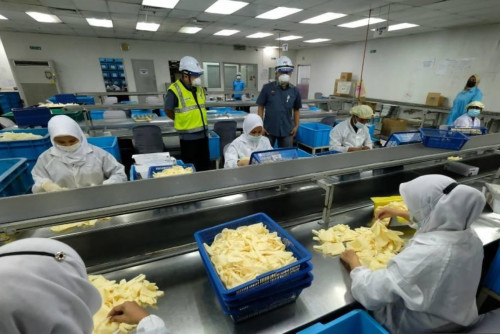
Overreliance on unskilled foreign labour has slowed progress, making strategic AI adoption crucial.
“Malaysia needs a leapfrog approach, shifting from low-cost to high-quality production,” he said.
AI for Productivity 2025 aims to share best industry practices, recognise companies achieving efficiency and profit gains through AI, and establish high-performing firms as models for broader adoption.
To date, 135 Proof of Concept (PoC) AI projects have been implemented, spanning factory automation, AI-driven production processes, workforce optimisation, and real-time customer analytics.
Aligned with the National Industrial Master Plan (NIMP) 2030, the programme seeks to strengthen workforce competencies, optimise company operations—including SMEs—through automation and data utilisation, and foster an organisational culture centred on innovation, analytics, and continuous improvement.
“We are at a peak moment for AI. It is more accessible, affordable, and user-friendly than ever, and Malaysia is now a regional focal point for AI investments and data infrastructure,” Liew said.
He emphasised that strategic AI deployment can replace unskilled foreign labour while creating higher-quality employment for Malaysian workers.
Liew expressed appreciation to Nexus Productivity and encouraged the Malaysia Productivity Corporation (MPC), MITI agencies, the Ministry of Finance, and the Ministry of Economy to collaborate on realising sectoral productivity gains.
“I hope MPC continues to stay ahead of trends and ensures its relevance in this new era. This is an excellent opportunity to transform MITI and its agencies,” he said.
With these initiatives, the AI for Productivity 2025 programme is positioned as a key catalyst for national productivity growth and Malaysia’s emergence as a regional leader in digital innovation and industrial excellence. - December 16, 2025