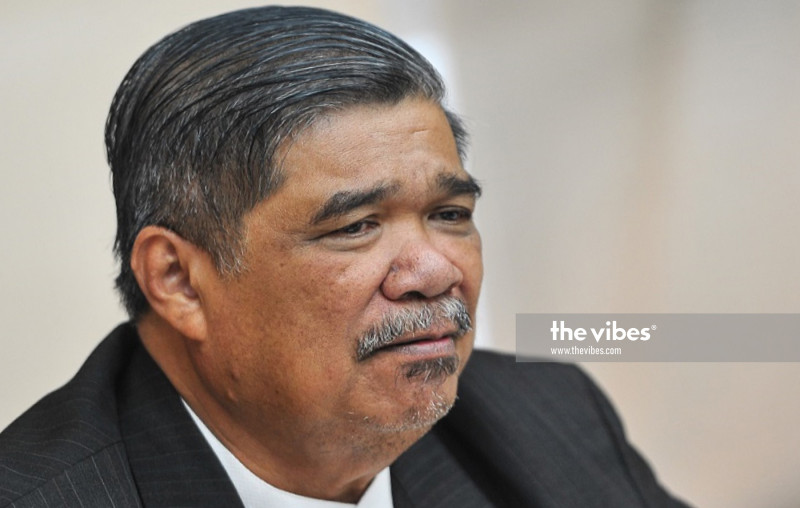
MALAYSIAN-grown white rice continues to struggle to capture the domestic market, Agriculture and Food Security Minister Datuk Seri Mohamad Sabu revealed on Tuesday, with consumer uptake remaining at only 10 to 15 per cent despite government efforts to increase accessibility and production.
Speaking after attending a recording of Podcast Utama Buletin TV3 at Balai Berita in Bangsar, Mohamad Sabu, popularly known as Mat Sabu, explained that relaxing purchase limits from a single 10kg sack per person to five had yet to significantly improve sales, as imported rice remains cheaper and more appealing to price-sensitive buyers.
“We are trying to produce local white rice, but it appears that purchases are still low. Only around 10 to 15 per cent,” he said.
Mohamad stressed that rice self-sufficiency is a top priority, warning that Malaysia’s self-sufficiency ratio (SSR) has fallen below 60 per cent, down from a previous national high of 71 per cent due to the conversion of padi land for housing and industrial development and the impact of climate change.
“For me, being below 60 per cent is an undesirable position, and we must find solutions,” he said.
The ministry is actively pursuing measures to expand cultivation, rejuvenate neglected padi fields, and enhance yields through modernisation, better field management, and targeted fertilisation.
Early results are encouraging, with Selangor achieving average yields of five tonnes per hectare, while Sekinchan and selected areas in Kedah have reported even higher production.
“We need to raise yields through modernisation, improved padi field management, fertilisation and other efforts from time to time,” Mohamad added.
While a recent dip in global rice prices has temporarily alleviated immediate concerns over the SSR decline, Mohamad cautioned that Malaysia remains vulnerable to international supply shocks.
“That is why focusing on rice SSR is my biggest priority in this ministry. This is our staple food, and we cannot compromise,” he said.
Comparing Malaysia with Indonesia, which aims to achieve self-sufficiency in strategic commodities, including rice, by 2026, Mohamad noted that Indonesia benefits from larger and more geographically diversified padi regions, while Malaysia’s cultivation remains concentrated in Kedah, Kelantan, Perak, and Selangor.
He emphasised that boosting average yields from 4.5 tonnes to seven tonnes per hectare is critical for meeting domestic demand and enabling potential rice exports.
“If we maintain the same padi land area but achieve an average of seven tonnes per hectare, we will be able to export rice,” he said, urging cooperation from all stakeholders to achieve this target.
The minister’s remarks underscore the government’s determination to strengthen Malaysia’s rice production capabilities, safeguard food security, and modernise the padi sector amid growing global uncertainties. - December 16, 2025