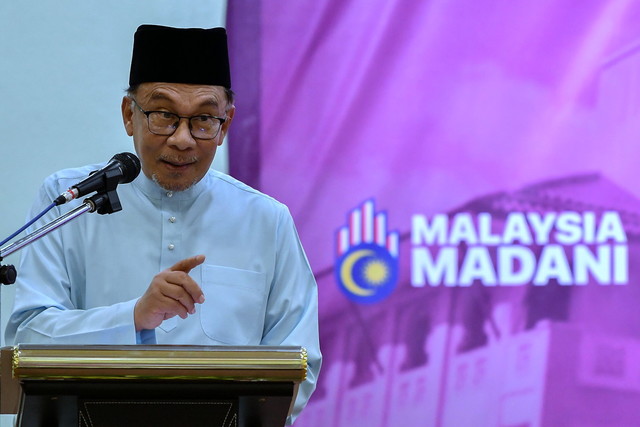
AFTER three years of steadying the economy through post-pandemic recovery and global volatility, the Madani Government enters 2026 under growing pressure to deliver reforms that translate stability into meaningful daily relief for Malaysians.
For much of its tenure, the Madani administration has been credited with stabilising the national economy and easing cost-of-living pressures during a turbulent global period.
Yet as the government moves into its fourth year, political observers, economists and markets alike are signalling that stability alone is no longer sufficient.
With the 16th General Election now less than two years away, 2026 is shaping up as a pivotal year in which policy decisions will be judged not just on intent, but on outcomes.
The central question is whether the government can convert its reform agenda into tangible benefits for households, or whether it risks being seen as overly cautious and focused on managing perceptions.
The cost of living remains the most pressing domestic concern, touching the daily lives of citizens across income groups.
The government has already committed significant resources to addressing this issue, allocating close to RM15 billion to initiatives such as Sumbangan Tunai Rahmah, Rahmah Sales and Sumbangan Asas Rahmah.
However, analysts note that the next phase will require bolder steps.
As 2026 approaches, attention is turning to whether the administration is prepared to pursue deeper reforms, including rationalising subsidies and improving wage structures, measures that may be politically sensitive but are widely regarded as necessary for long-term fiscal sustainability and social equity.
Chief economist of Bank Muamalat Malaysia Bhd Dr Mohd Afzanizam Abdul Rashid said that by its fourth year, the benchmark for success has shifted. The emphasis is no longer on preserving stability, but on how far reforms ease pressures felt by ordinary citizens.
In this regard, he pointed to the use of MyKad as a targeted subsidy mechanism as a notable achievement.
The system, he said, lays the foundation for a more precise and equitable distribution of assistance by ensuring support reaches the intended majority while limiting leakages to non-citizens and large corporations.
This approach protects essential aid for the public while creating fiscal room for phased subsidy reforms in the future.
From a broader economic standpoint, Malaysia’s performance in the current year suggests underlying resilience.
Gross domestic product expanded by 4.7 per cent in the first nine months, supported by strong domestic demand, a stable labour market and steady investment inflows into higher-value sectors.
Reflecting this momentum, HSBC Global Research revised its growth forecast upwards from 4.2 per cent to five per cent.
Yet stronger growth has also raised expectations.
Analysts caution that improved fiscal space should be used to advance difficult but necessary reforms, from subsidy rationalisation to reinforcing the social safety net.
Failure to do so, they warn, could undermine confidence despite positive headline numbers.
Clear communication will be critical in navigating this phase. Reforms that are not well explained risk public resistance, regardless of their long-term benefits.
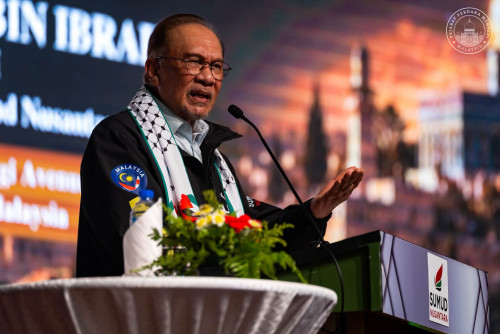
In this context, Prime Minister Datuk Seri Anwar Ibrahim has described the media as a strategic partner in conveying policy intent and scrutinising legislation that may affect civil liberties.
Such transparency, he has said, is essential to maintaining public trust while enabling informed debate.
Ultimately, 2026 represents more than continuity for the Madani Government. It is a decisive test of whether the administration can balance economic discipline with public expectations, and muster the political resolve to implement reforms that are tough but necessary.
Having laid the groundwork over its first three years, the government now faces the challenge of turning that foundation into policies that deliver real relief and strengthen Malaysia’s long-term resilience.
Madani Reforms Sharpen Governance and Lift Malaysia’s Global Standing - Anwar
Earlier, Anwar said that the government procurement overhaul and transparency measures in 2025 are delivering faster services, tighter controls on public spending and renewed investor confidence.
The Madani Government’s reform drive in 2025, anchored by legislation such as the Government Procurement Bill, has significantly strengthened public sector efficiency, improved audit transparency and enhanced Malaysia’s global competitiveness, he said.
Anwar added the reforms were designed to reinforce integrity in public administration by tightening oversight and reducing opportunities for leakages, while at the same time streamlining service delivery to the public and business community.
“At the same time, the efficiency of public services has been enhanced, and government audit transparency strengthened.
“These reforms safeguard the integrity of public spending, shorten administrative processes and close avenues of leakages from the outset,” he said in a Facebook post today.
According to the Prime Minister, the cumulative impact of the reforms is already visible across several fronts, including faster service delivery, more transparent financial monitoring and stronger early detection and prevention of corruption risks.
He added that these improvements have helped restore investor confidence and position Malaysia more competitively on the global stage, particularly as international investors place increasing emphasis on governance standards and institutional credibility.
The reforms form part of the Madani Government’s broader agenda to modernise public administration, strengthen accountability and ensure that economic growth is supported by clean, efficient and transparent governance. - December 25, 2025