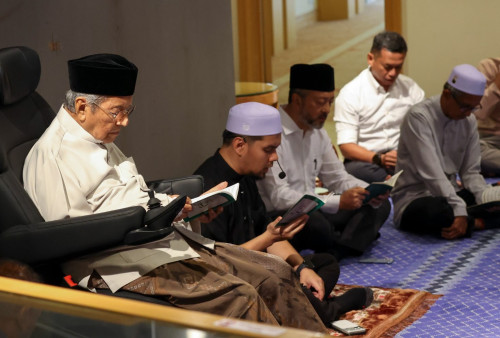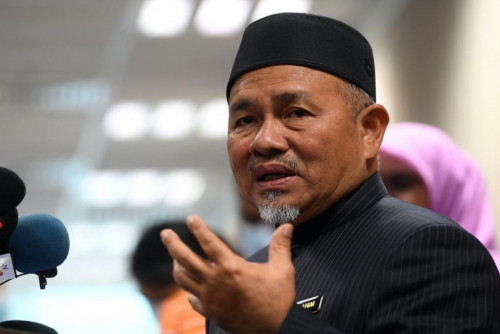
THE absence of PAS President Tan Sri Abdul Hadi Awang from a recent Perikatan Nasional (PN) pre-conference has reignited speculation over the widening fault lines between PAS and its coalition partner, BERSATU.
Political analysts say the development raises questions about the party’s continued presence within PN, and whether PAS intends to remain a steadfast member or chart a course toward leaving the coalition.
Historically, PAS has been cautious in following the lead of other parties within political alliances. The party’s decisions to remain in—or exit—a coalition have consistently been guided by one clear principle: adherence to Islamic policy.
“PAS rarely departs from an alliance merely due to disputes over electoral seats, distribution of political posts, or being outmaneuvered by coalition partners,” experts note.
Just as UMNO has steadfastly upheld its Malay nationalist narrative, PAS maintains an equally uncompromising Islamic agenda.
Should these principles be violated, PAS has been known to recalibrate its political path independently, without external provocation.
Despite being often labelled a party that forms and dissolves alliances with ease, a closer examination of PAS’s political history reveals a pattern driven less by opportunism and more by ideological commitment.
PAS joined the Parti Perikatan in 1972 after the upheavals of 13 May 1969, but this partnership lasted only until 1977.
That year, PAS was expelled from Barisan Nasional (BN) following an internal crisis concerning the Kelantan Menteri Besar post.
The exit was precipitated by twelve of fourteen PAS MPs rejecting the Emergency Act (Kelantan) 1977, enacted by Parliament the day after the declaration of emergency in Kelantan by the Yang di-Pertuan Agong, who was also Sultan of Kelantan at the time.
PAS maintained that the legislation, intended to enforce emergency rule in Kelantan, was a deliberate attempt by the federal government and PAS supporters within the Kelantan state administration to interfere in the party’s governance.
The episode cemented a decades-long narrative of federal intrusion in PAS-led Kelantan, which the party has continued to highlight in political discourse.
In 1999, PAS joined the Barisan Alternatif alongside DAP and PKR, but tensions over PAS’s pursuit of an Islamic state, including calls to enact the Syariah Courts (Criminal Jurisdiction) (Amendment) Bill 355, strained the alliance.
The disagreement led DAP to withdraw from the coalition in 2001, though it later returned to collaborate under Pakatan Rakyat ahead of the 14th General Election.
By 2015, PAS decisively severed its political cooperation with DAP and PKR, following a unanimous party congress vote in Alor Setar, Kedah.
Discontented leaders subsequently formed Parti Amanah Negara (AMANAH). In the 2018 general election, PAS led Gagasan Sejahtera, an alliance with IKATAN, BERJASA, and roughly 200 NGOs, but the coalition dissolved after limited electoral success.
Following the 2018 election, PAS again partnered with UMNO under Muafakat Nasional (MN), a collaboration that stalled after PN’s formation and UMNO’s decision to contest independently in 2022.
The future of MN remains uncertain, even as efforts to revive its spirit continue, with party operatives actively negotiating potential cooperation.
Current tensions within PN, stemming largely from internal disputes in BERSATU, may inadvertently afford PAS greater strategic freedom in determining its next political moves.
As Mursyidul Am Datuk Hashim Jasin has suggested, PAS could contest independently should negotiations over a new PN chairman, a position vacated by BERSATU President Tan Sri Muhyiddin Yassin, fail to reach a resolution.
Analysts argue that the recent turmoil in PN marks a period of uncertainty for the opposition, while positioning PAS to explore new alliances ahead of the 16th General Election. - January 31, 2026