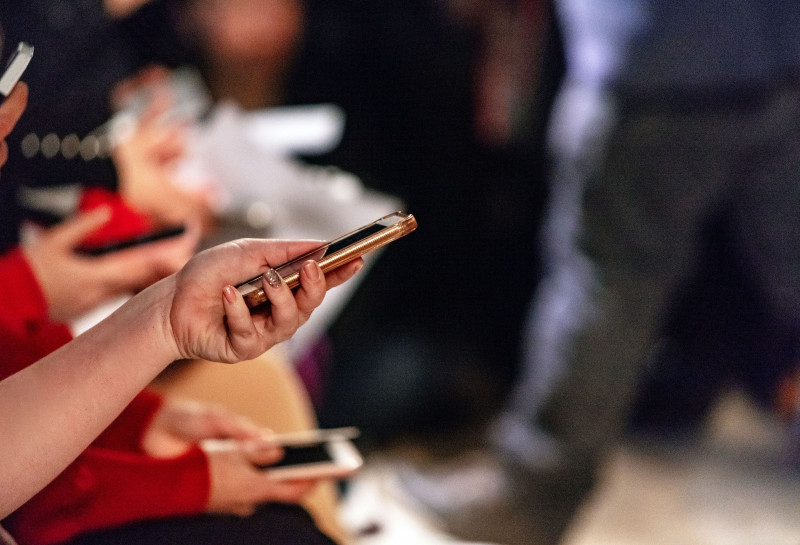
TEENAGERS and parents across Malaysia say they could adapt if social media access were restricted to users aged 16 and above, but many believe enforcing such rules may prove difficult as young people can easily find alternative ways to communicate online.
The discussion comes as technology giant Meta introduces stricter default safety protections for users under 16 across Facebook, Instagram and Messenger through its Teen Accounts system, while the Malaysian government considers broader regulatory measures to protect children online.
Fifteen-year-old Olivia Tan from Damansara said she would not be overly concerned if authorities imposed a minimum age of 16 for social media accounts, although she questioned how such a policy could realistically be enforced.
“It would be a little weird not to be legally allowed to have an account, but I’m not that upset.
“I’m just concerned about how they will actually enforce it,” The Star reported her saying.
Olivia explained that she mainly uses Instagram and YouTube to watch recommended content such as gaming videos and animation.
She added that the restriction would likely have little impact on her daily communication with friends, as most conversations and school-related exchanges already take place on WhatsApp.
However, she noted that some students who do not own mobile phones rely on social media messaging platforms to stay connected with classmates.
“I think if most students had the opportunity, they would try to find a loophole,” she said.
Her father, Tan Chin Tuan, 50, said children today are exposed to digital platforms from an early age, making it difficult to curb their use solely through legislation.
“It is already part of their lives. If you suddenly impose a law to stop them, some children might question why they should follow since they were not doing anything wrong,” he said.
Tan suggested that a blanket ban may not be the most effective approach, arguing that parental guidance plays a more significant role in shaping how children use technology.
He added that while some parents rely on online videos to occupy young children, others use platforms such as YouTube to access educational content and news.
“So, which one is bad? That really depends on how parents’ guide their children and the choices they make for them,” he said.
In Melaka, siblings Lee Yew Chen, 15, Sin Yun, 14, and Sin Rong, 12, also expressed doubts about whether a comprehensive ban could keep pace with rapidly evolving technology.
“By the time the rule is implemented, there will probably be other platforms or alternative ways for people to communicate online,” Yew Chen said.
Sin Yun and Sin Rong agreed, adding: “It’s hard to keep banning platforms for under-16s, it’s better for young people to realise they must not simply divulge personal data or communicate with strangers online.”
The siblings said they regularly use platforms such as YouTube, TikTok and Instagram, while school coordination is mostly handled through messaging services including WhatsApp and Telegram.
Although they acknowledged that social media can provide both entertainment and educational value, they also noted that it can be distracting and time-consuming.
Their mother, Datin Christine Koh, 43, said the government’s intention to strengthen online protection for children is commendable, but questioned whether a strict ban would be practical.
“There should be some flexibility,” she said.
Koh suggested that stronger parental supervision tools, time limits and age-appropriate content filters could be more effective than outright restrictions.
She noted that her children received smartphones at around the age of 10, when schools increasingly relied on digital communication following the COVID-19 pandemic movement control measures.
“I now use parental controls that limit device use to one hour on weekdays and three hours on weekends, with devices locked after 9pm,” she added.
Meanwhile, sales executive Ejean Ng, 44, said she has not yet allowed her two sons — Matthew, 11, and Michael, nine — to create social media accounts.
“For now, they mostly play games on the iPad like Roblox or watch YouTube shorts, which I also try to limit,” she said.
Ng added that social media is not yet a major concern for her family, as her children spend much of their time interacting with friends at school and at their after-school centre.
She plans to provide them with smartphones only when they enter secondary school, mainly so they can communicate about homework and stay in contact with the family.
“Our era is full of information and it is difficult to control everything. Whether social media is beneficial or harmful depends on the child’s maturity and understanding,” she said.
Educator Letchumi Unasegaran, 46, echoed the view that parental involvement remains the most important safeguard regardless of government policy.
“All my children have access to social media, but they understand the do’s and don’ts because we guide them,” she said.
She believes teenagers respond better to guidance and trust rather than strict prohibitions.
“By staying involved, setting reasonable boundaries and keeping communication open, we help them learn to make wiser choices on their own,” she said.
“Social media is part of their world, so our guidance and presence remain their strongest protection,” she added. - March 11, 2026