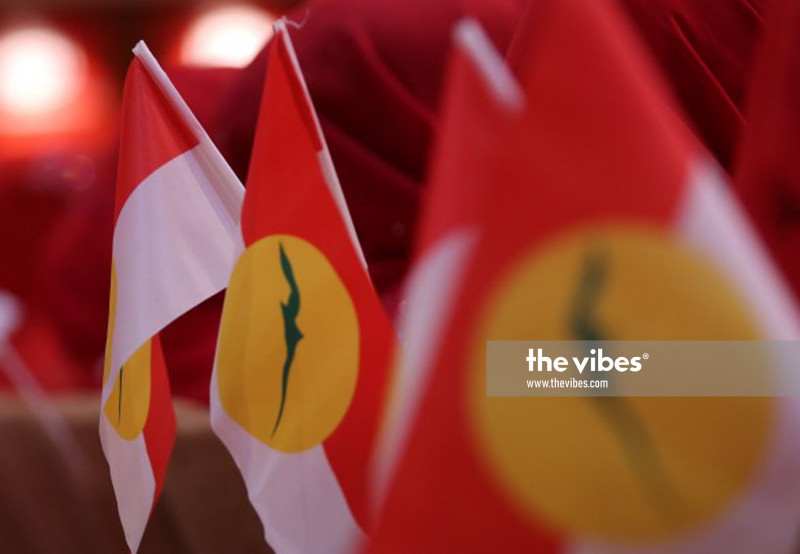
UMNO must ensure that its new initiative, Rumah Bangsa (National House), serves as a platform for Malay socioeconomic empowerment rather than fostering racial confrontation, says party vice-president Datuk Seri Wan Rosdy Wan Ismail.
Wan Rosdy emphasised that the initiative must remain free from narrow communal rhetoric to maintain harmony within Malaysia’s unity government.
“Umno must strike a delicate balance. The narrative must be about 'Malays for Malaysia', not 'Malays against other races',” he said in an interview with Mingguan Malaysia.
He added that as long as Rumah Bangsa focuses on socioeconomic issues rather than partisan agendas, cooperation with DAP and other non-Malay parties would not be affected.
Wan Rosdy described the platform as a neutral space for discussion, aimed at bridging a polarised Malay community currently divided into several political blocs.
“The agenda must also be specific,” he said, stressing that the platform should concentrate on the economy and education rather than electoral seat contests.
He contrasted Rumah Bangsa with the now-defunct Muafakat Nasional, which collapsed due to infighting and tactical disagreements.
“Rumah Bangsa, on the other hand, is structured as a platform for consultation. It is not an official political alliance to contest elections.”
On criticisms from Parti Islam Se-Malaysia (PAS), which labelled the initiative an “unsafe structure,” Wan Rosdy explained that the Islamic party likely viewed it as a potential political trap rather than a bridge to unity.
“However, the reality is that as long as Rumah Bangsa is perceived as an 'Umno project', parties like PAS will continue to see it through a political lens.”
In a political contrast, Perikatan Nasional held its first Supreme Council meeting under the leadership of Datuk Seri Dr Ahmad Samsuri Mokhtar, seen by political observers as a test of the coalition’s ability to stabilise after months of leadership uncertainty and internal perception battles.
Observers noted that the meeting, conducted smoothly without public disputes, marked a promising start for PN’s efforts to transition from reactive politics to an institutionalised model of governance.
Dr Sam, a technocrat, presided over the session with decisions accepted collectively by coalition members, signalling greater organisational discipline.
Early structural reforms included the appointment of three deputy secretaries-general and the inclusion of Gerakan and MIPP representatives, reflecting an attempt to broaden ethnic representation within the coalition’s decision-making body.
This step was widely interpreted as a move to dismantle long-held perceptions that Pas, as the operational lead, was insular or dominated solely by Malay interests.
The absence of the PAS president at the Supreme Council meeting was also viewed as a deliberate experiment in separating coalition leadership from party leadership.
Dr Sam, as chairman, now drives operational coordination while party leaders focus on strategic agendas.
Analysts suggested that this model could reduce dependency on individual figures and signal a shift toward governance by institutional processes rather than personalities.
PN has also indicated that state-level appointments for coalition chairpersons will be determined after comprehensive field visits, reflecting a commitment to grassroots engagement rather than top-down decisions.
This approach seeks to reinforce local ownership among supporters while ensuring decisions are based on operational performance, discipline, and suitability rather than political sentiment.
Political analysts caution that while these initial reforms are promising, the coalition’s credibility will ultimately be judged by its ability to translate early procedural discipline into consistent governance.
Effective communication, swift conflict resolution, and a clear focus on public priorities such as cost of living, income, employment, education, integrity, and administrative efficiency will be critical in shaping public confidence ahead of the 16th general election.
Wan Rosdy’s remarks on Umno and PN’s cautious institutional approach reflect a broader political climate in Malaysia, where unity, inclusivity, and effective administration are increasingly crucial in gaining public trust.
The challenge now lies in converting strategic planning and measured initial actions into tangible, long-term outcomes that demonstrate the coalition’s readiness to govern effectively. - March 15, 2026