
KUALA LUMPUR – Analysts and a Perikatan Nasional (PN) insider concur that it will be far more beneficial for Umno to venture out on its own in the next general election instead of remaining with its political allies of convenience in PN.
Lately, Bersatu and Umno have been trading barbs publicly, with various Umno leaders voicing their discontent against the administration of Prime Minister Tan Sri Muhyiddin Yassin, who is Bersatu president.
In December, Umno Perak engineered the ouster of Datuk Seri Ahmad Faizal Azumu, who is from Bersatu, as menteri besar – in what was seen as a tit-for-tat move for the post-election outcome of the Sabah state polls in September.
He was eventually succeeded by Umno’s Datuk Saarani Mohamad.
Many believe that the move was partially in response to Muhyiddin steamrolling over Umno’s candidate for Sabah chief minister, Datuk Seri Bung Moktar Radin, in favour of Bersatu’s Datuk Seri Hajiji Mohd Noor.
Perak Umno leaders had also claimed that Faizal was unfit for the position.
A PN insider, who wants to remain anonymous, told The Vibes that with all the fracas going on within the coalition, Muhyiddin should call for a general election some time in April, immediately after the current phase of movement control order ends.
“Muhyiddin only has enough cash to give a couple more handouts, then he will run out of funds. If he waits until the Covid-19 pandemic is over, with the vaccines being deployed and the voters no longer fearing the virus, he will have another headache.
“Also, in June, the government’s first-quarter report for the year will be tabled in Parliament. This is dangerous for him because financially the country will be in the red.
“Not only that, voting rights granted to 18-year-olds will be gazetted in the same month. And they don’t support the government,” said the source.
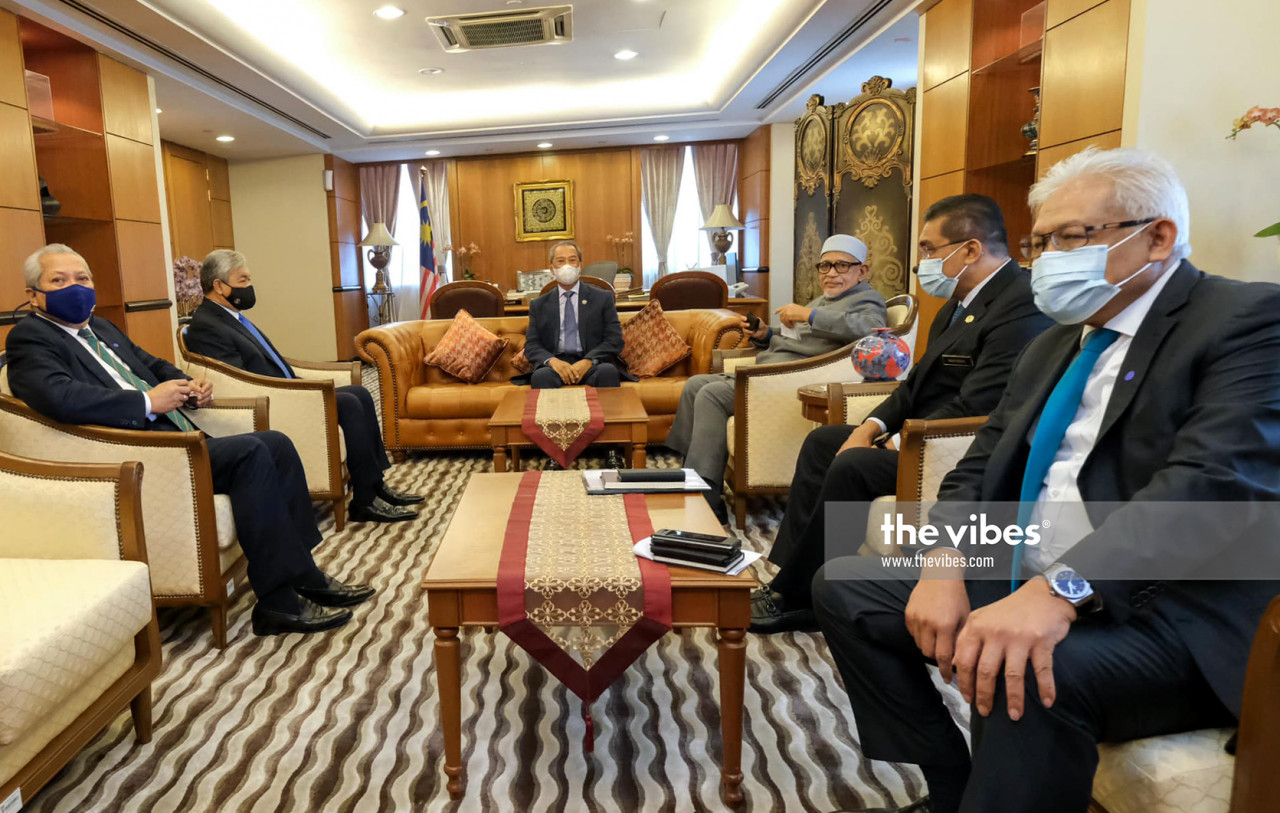
The insider believes that despite sleeping with Bersatu now, Umno will strike about two to three months before the election and declare that it will stand on its own, even as the party makes deals behind closed doors.
He said it will be better for Umno to work with Pakatan Harapan (PH), adding that the parties must quickly form a new narrative to convince their respective grassroots after decades of demonising one another – especially in the context of Umno and DAP, who have a bitter history of enmity.
Should Umno come out stronger in this election with the ability to form a government, it is highly likely that its current MPs who had defected to Bersatu – such as Datuk Seri Mustapa Mohamed and Datuk Seri Ronald Kiandee – may return to the party’s fold.
“This might lead to Umno and PH forming a very strong two-thirds majority.
“Traditionally, Umno does not contest in DAP-held seats and vice-versa. Umno’s strongholds are also generally in the rural Malay heartlands instead of urban centres, where PKR draws its strength.”
However, he added that Umno and PKR will have to make concessions.
These will likely entail that Umno leaders Datuk Seri Ahmad Zahid Hamidi, Datuk Seri Najib Razak, Datuk Seri Tengku Adnan Tengku Mansor and a few others must not contest.
At the same time, PKR president Datuk Seri Anwar Ibrahim must relinquish his dream of becoming prime minister.
Here, the source believes that a compromise will be reached where the country might see former finance minister and Gua Musang MP Tan Tengku Razaleigh Hamzah ascend to Malaysia’s highest political office.
Go alone first, play musical chairs later?
However, Singapore Institute of International Affairs senior fellow Oh Ei Sun thinks it will be political suicide for Umno to openly declare its affiliations with DAP and PH before the election.
He pointed out that it will be wiser for Umno to go at it alone and decide who it will ally with once the election is over, or it might face the fury of its own grassroot supporters who will not be keen to work with PH.
“I think Umno will actually fare better electorally by going into the election alone or just teaming up with PAS.
“This is because a formal alliance with PH will scare away many of its erstwhile conservative rural supporters, while it is unlikely to get urban seats concessions from its purported PH partners, who have little rural support and thus must hold on tight to their urban seats.
“After the election, however, any sort of combination and permutation between the various parties and factions with seats is possible, and Umno is no exception to this political musical-chairs game,” said Oh.
However, the danger to Umno working with PAS is rather obvious – of late, the Islamist outfit has been very chummy with the thorn in Umno’s side, Bersatu.
The academic noted that PAS finds Bersatu to be more accommodative to its creeping social intolerance agenda, and unless Umno can woo PAS, it risks facing the full wrath of PAS’ electoral might later.
This could see PAS lending support to Bersatu in constituencies where Muhyiddin’s party is battling against Umno.
The Islamist party could even join in where there are tussles between Umno and PH to force three-cornered fights.
Unlike the PN insider, Oh thinks that Muhyiddin might actually call for an election if he is very confident of PAS’ support for Bersatu.
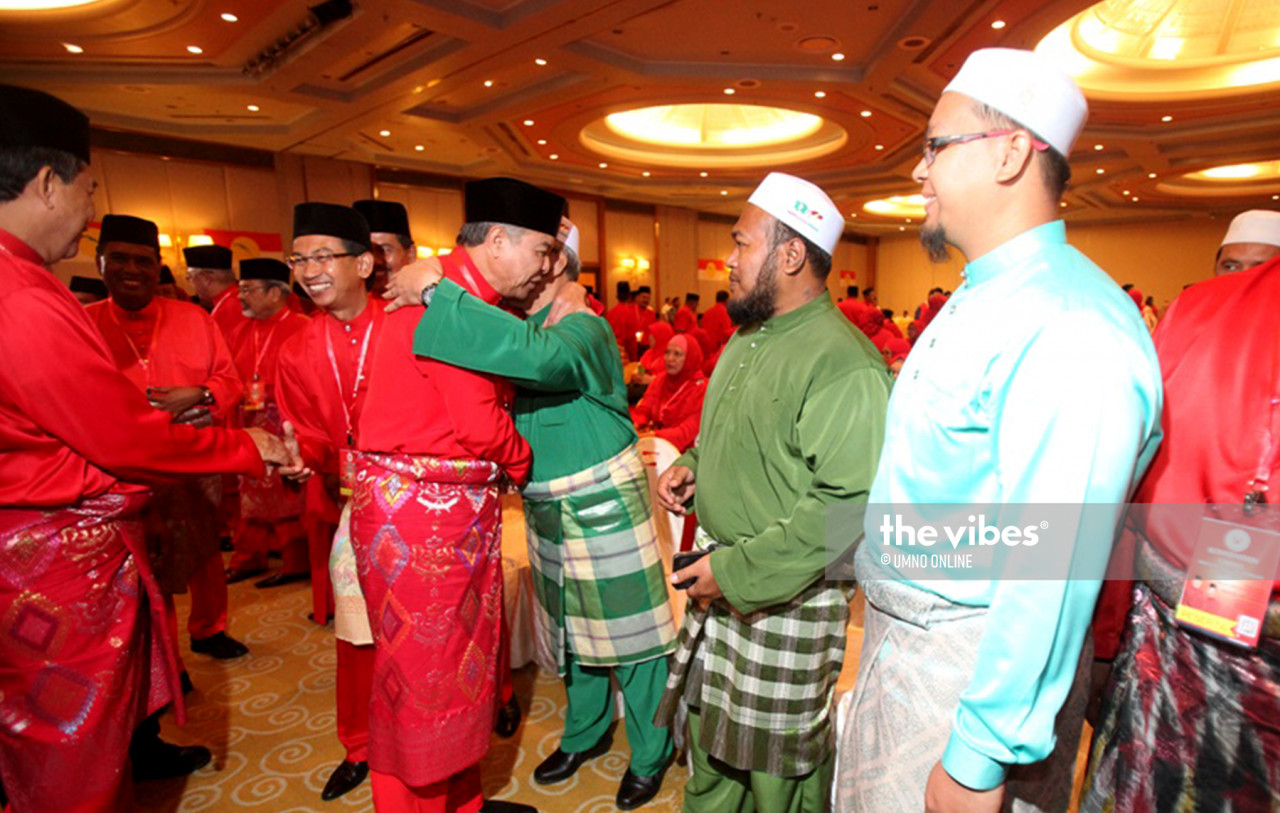
“This is because the urban, supposedly more progressive, young voters may not be as enthusiastic in coming out to vote due to their apathy towards the ‘circus politics’ in recent months, while the equally young but decidedly more conservative voters could be effectively mobilised by PAS to swarm polling stations in favour of whichever parties PAS directs them to support,” said Oh.
Bower Group Asia director Adib Zalkapli shared sentiments similar to both Oh and the PN insider, observing that the three parties have a single disadvantage if they decide to work together.
Unlike PH, PN parties practically share the same voter-base with Umno, leading these two to cannibalise one another in GE15.
“The reality is that Umno, Bersatu and PAS compete for the same voters and the same seats, so a pre-election alliance can be challenging. Perhaps a post-election coalition like the current ruling coalition that we saw formed almost two years after the general election is more feasible,” he said.
“Judging from the sentiments at the ongoing divisional meetings, it looks like Umno is not in favour of a pre-election coalition with Perikatan. It looks very likely that the party will enter the campaign alone and only think about entering any coalition after the election.” – The Vibes, January 4, 2021




.jpeg)