THE Attorney General has formally sought leave to appeal to the Federal Court over a Court of Appeal ruling that permitted the Malaysian Bar to challenge the prosecution’s decision to halt criminal proceedings against Deputy Prime Minister Datuk Seri Dr Ahmad Zahid Hamidi in the long-running Yayasan Akalbudi corruption case.
In a notice of motion filed yesterday, Attorney General Tan Sri Mohd Dusuki Mokhtar raised two fundamental legal questions which he contends require authoritative determination by the nation’s highest court.
The first concerns whether the Attorney General’s constitutional discretion under Article 145(3) of the Federal Constitution to institute, conduct or discontinue criminal proceedings may be subjected to judicial review.
Should the answer be in the affirmative, the Federal Court is also being asked to determine the legal threshold and conditions that must be satisfied before such a judicial review can be initiated.
The second issue centres on whether the two-stage legal test established by the Federal Court in the case of Sundra Rajoo Nadarajah v Minister of Foreign Affairs, Malaysia & Others [2021] constitutes binding ratio decidendi that must be followed by lower courts.
The Attorney General is also seeking a stay of all proceedings before the High Court pending the outcome of the application for leave to appeal.
Zahid, who is named as the proposed second respondent in the judicial review proceedings, had separately filed his own application for leave to appeal on 25 May.
The Deputy Prime Minister advanced five legal questions in support of his application under Section 96 of the Courts of Judicature Act 1964.
The latest legal manoeuvre follows a significant Court of Appeal ruling on 7 May, which allowed the Malaysian Bar’s bid to challenge the Attorney General’s decision of 4 September 2023 to discontinue proceedings against Zahid.
The appellate court held that the application was neither frivolous nor vexatious and that it raised arguable legal questions warranting a full hearing.
In the same ruling, the Court of Appeal granted the Bar Council leave to commence judicial review proceedings and overturned a High Court decision dated 27 June 2024.
The High Court had previously rejected the Bar Council’s application for leave, finding that it had failed to satisfy the necessary legal requirements for judicial review.
The Bar Council is also seeking a declaration that the decision by then High Court judge Datuk Collin Lawrence Sequerah, now a Federal Court judge, to grant Zahid a discharge not amounting to an acquittal (DNAA) on 47 charges involving criminal breach of trust, corruption and money laundering linked to Yayasan Akalbudi funds was null and void.
That ruling was made after prosecutors informed the court that the Attorney General’s Chambers intended to discontinue the proceedings in order to examine fresh evidence.
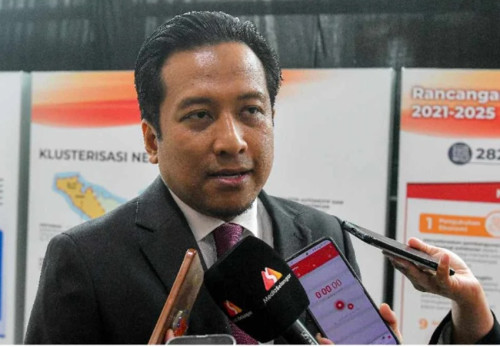
Speaking to Bernama, Mohd Dusuki said the appeal application raises critical constitutional and legal issues concerning the Public Prosecutor’s discretionary powers under Article 145(3) of the Federal Constitution.
"It will involve serious legal and constitutional issues that require clarification from the Federal Court.
"The Court of Appeal's decision will have implications for all cases involving the Public Prosecutor's discretionary powers under Article 145 of the Federal Constitution," he said.
He further argued that the Court of Appeal’s decision had generated uncertainty regarding the application of the “two-stage test” established in the Sundra Rajoo case, making Federal Court guidance necessary to settle the law.
The outcome of the appeal bid is expected to have implications extending well beyond Ahmad Zahid’s case, potentially shaping the future relationship between prosecutorial independence and judicial oversight in Malaysia’s constitutional framework. - June 6, 2026










.jpg)