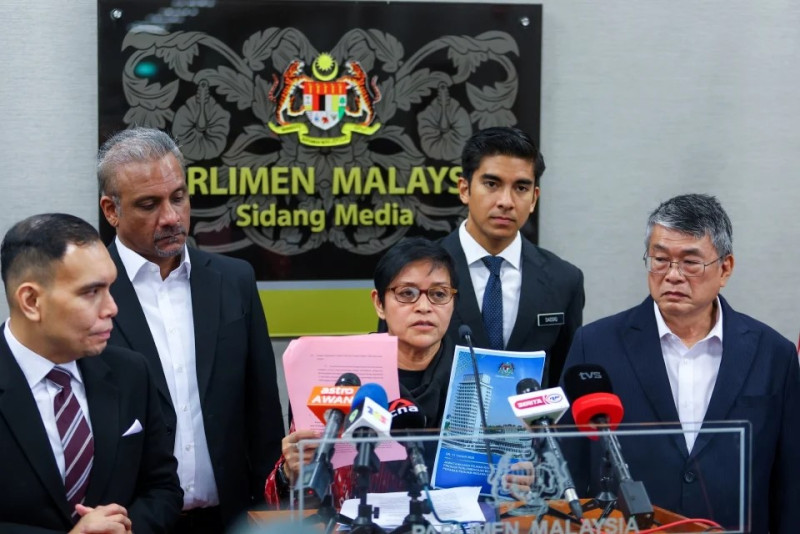
A BIPARTISAN Parliamentary Select Committee has proposed seven major enhancements to Malaysia's constitutional reform bill aimed at separating the roles of the Attorney General and the Public Prosecutor, with the recommendations designed to reinforce prosecutorial independence, transparency and institutional accountability.
Minister in the Prime Minister's Department (Law and Institutional Reform), Datuk Seri Azalina Othman Said, said the committee's recommendations significantly strengthen the proposed Constitutional (Amendment) Bill (No. 2) 2026 by introducing safeguards to insulate the appointment and tenure of the Public Prosecutor from executive influence.
Among the most significant proposals is that the Public Prosecutor should be appointed by the King of Malaysia on the advice of the Judicial and Legal Service Commission, without any involvement from the Prime Minister or the Cabinet.
The committee also recommended a more transparent appointment process by involving Parliament, under which the proposed candidate would be notified to Members of Parliament to enable them to provide their views to the Judicial and Legal Service Commission.
"The third recommendation is a fixed term of seven years without renewal or reappointment to strengthen institutional independence.
"Next is the requirement for the Public Prosecutor to submit an annual report to be tabled in Parliament to enhance institutional transparency and accountability.
"Another recommendation is the establishment of a specific code of ethics for the Public Prosecutor, whereby any breach of the code could constitute one of the grounds for removal from office.
"A provision allowing Parliament to enact further legislation relating to the appointment, removal and reporting responsibilities of the Public Prosecutor to ensure that this reform can continue to be strengthened over time.
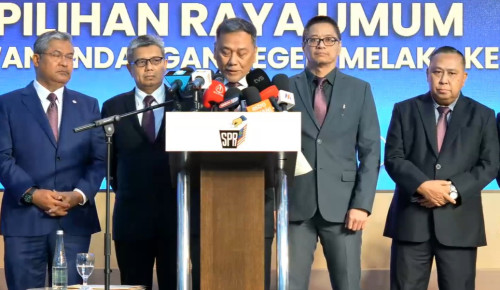
"A reaffirmation that the appointment of the Public Prosecutor should be made only from candidates recommended by the Judicial and Legal Service Commission to ensure that the appointment process remains institution-based and free from executive influence," she told a press conference at Parliament today.
The Constitutional (Amendment) Bill (No. 2) 2026 was referred to the Dewan Rakyat Select Committee on 3 March after lawmakers agreed that further scrutiny was required to refine the proposed separation of the Attorney General's advisory functions from the prosecutorial role.
When moving the Bill for its second reading, Azalina said the committee had been tasked with examining the legislation in detail, including mechanisms to ensure the Public Prosecutor remains accountable while operating independently, and to recommend any amendments deemed necessary.
She said the special committee, comprising Members of Parliament from both the government and opposition, held seven meetings and heard presentations from a broad range of stakeholders before finalising its recommendations.
"The committee also obtained feedback from various stakeholders, including non-governmental organisations (NGOs), professionals, academics, legal experts and civil society organisations.
"This approach enabled the committee to examine the proposal from multiple perspectives, including its constitutional implications, operational and administrative requirements, human resources, financial considerations and the experience of other countries that have implemented similar models," she said.
Azalina also revealed that she would meet opposition Members of Parliament later today to present the proposed amendments and seek their commitment to support the constitutional changes, which require a two-thirds parliamentary majority.
She said no timeline has yet been set for the Bill's return to the Dewan Rakyat, as discussions with the opposition bloc remain ongoing.
"I need to read out the amendments and secure a simple majority first. Then we will proceed with the constitutional amendment through the second reading, which requires a two-thirds majority, and then obtain another two-thirds majority at the third reading.
"I am still not certain (about the timeline). We are negotiating with the opposition, and I hope they will provide the level of support required because I believe the special committee worked very hard to reach a compromise.
"They (the opposition) were also represented on the special committee, not just government backbenchers," she said. - June 22, 2026