.png)
FERTILISER and food-related costs are expected to rise significantly, with fertiliser prices projected to increase by between 15 and 20 per cent, while food costs could rise by around 8 per cent, given Malaysia’s heavy reliance on imported inputs.
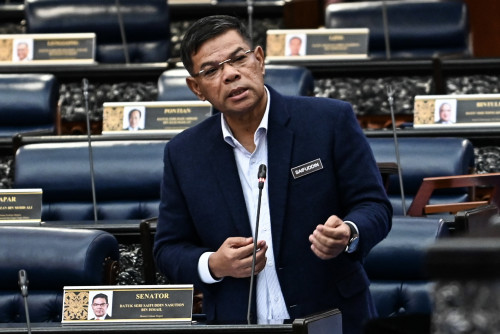
Economy Minister Akmal Nasrullah Mohd Nasir tells the Dewar Rakyat today that 63 per cent of the country’s fertiliser requirements are sourced from imports, leaving the agricultural sector particularly exposed to global disruptions.
Small and medium enterprises (SMEs) were also identified as highly vulnerable due to limited financial buffers, with cash flow pressures expected to intensify as input costs rise sharply.
“Therefore, the government is giving special attention to ensuring the security of essential goods supply, controlling the prices of basic goods, and improving the efficiency of distribution channels in order to reduce the impact of price increases on the people,” Akmal said.
He warned that labour market risks were also being closely monitored, driven not only by inflation but also weaker global demand, export pressures and business operational strain.
However, he said Malaysia’s labour market remained broadly stable, despite unemployment rising slightly from 2.9 per cent in April 2026 to 3.0 per cent in May, adding that the situation remains under close surveillance.
The government has set out a broad policy response to what it describes as a prolonged global supply crisis, with Akmal saying that escalating geopolitical tensions have disrupted energy markets, strained supply chains and driven up costs across multiple sectors.
He said the conflict involving the United States-Israel bloc and Iran since 27 February 2026 had triggered instability in global logistics, energy pricing and investor sentiment, forcing the government to prioritise cushioning the initial economic shock to households and businesses.
On energy security, he said fuel supply is currently sufficient until August 2026, with ongoing coordination between the government, Petronas and industry players to monitor stock levels and implement contingency measures.
He stressed that maintaining fuel stability is critical to ensuring the continued operation of public transport, logistics networks, businesses and essential services.
Rice stocks, including buffer reserves, remain adequate for five to six months, while supplies of essential food items such as chicken, eggs, fish, milk and fruit are sufficient for at least one month.
Market monitoring is being conducted through the PriceCatcher platform, covering 316 essential items across more than 2,000 retail outlets nationwide, supported by 850 price monitoring officers under the Domestic Trade Ministry, while enforcement against profiteering and smuggling has also been strengthened to prevent unjustified price increases amid global volatility.
The minister said crisis governance has been reinforced through the National Economic Action Council (MTEN), with some 120 decisions been made, where 27 were fully implemented and 93 currently in progress, reflecting what he described as active execution rather than symbolic policy announcements.
The government’s strategy is structured around four pillars: protecting citizens, stabilising supply and prices, supporting SMEs and industry, and strengthening long-term economic resilience.
Immediate measures include targeted cash transfers through STR and SARA, continued fuel subsidies under BUDI MADANI, and expanded “Jualan Rahmah” programmes to ease cost-of-living pressures.
Fuel subsidy reforms, adjusted quotas, agricultural support schemes and hybrid working arrangements for public servants have also been introduced to reduce operational strain and improve efficiency.
SME support includes RM5 billion in liquidity facilities, with over RM700 million already disbursed, alongside financing guarantees and rental relief measures for affected businesses.
Long-term reforms under the 13th Malaysia Plan aim to strengthen food security, accelerate energy transition efforts, expand renewable energy capacity and diversify industrial supply chains.
The minister said the crisis is expected to persist for one to two years, with gradual stabilisation of global energy markets likely from the third quarter of 2026, subject to geopolitical conditions. .- June 29, 2026