
THE six young men killed in the Jalan Karak Lama crash deserved mourning, not speculation.
But even before the full details of the accident were known, some Malaysians had already turned to social media with a familiar question — was the driver drunk?
The question itself may seem harmless. Drunk driving is a serious issue, and many lives have been lost because of irresponsible motorists.
But what followed revealed something more troubling: the rush by some people to attach a tragedy to race.
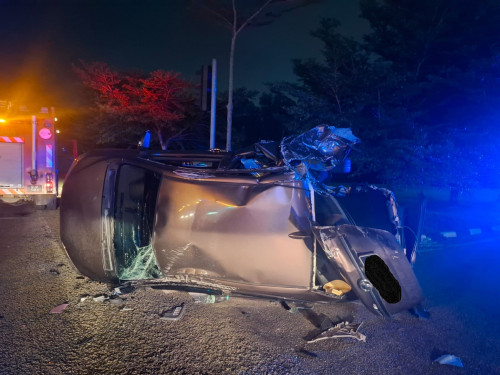
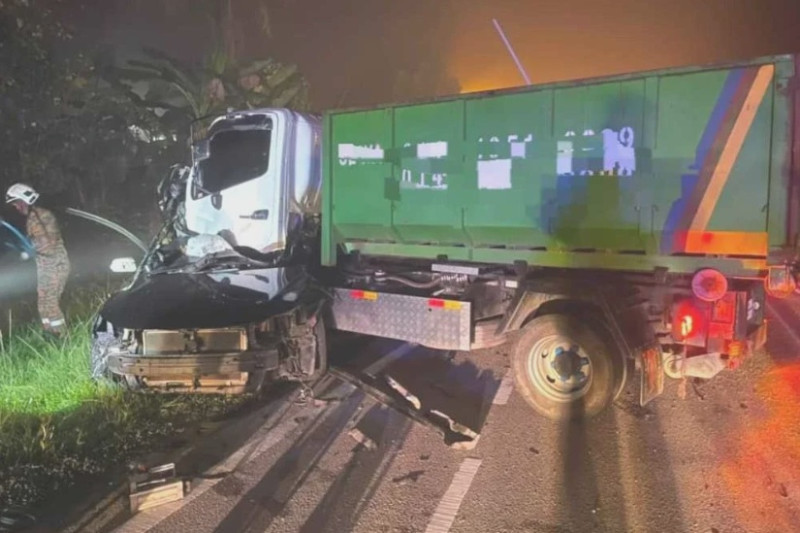
The six victims — V. Mugilan, 25; K. Dineshvaran, 22; K. Alaganathan, 21; A. Kanabati Raja, 19; S. Kiisven, 17; and M. Paranthaman, 16 — were killed when the vehicle they were travelling in collided head-on with a one-tonne lorry along Jalan Karak Lama near Bentong.
They were young Malaysians whose lives ended far too soon.
Yet, instead of sympathy, some chose to repeat an old stereotype — that Indians are associated with alcohol abuse.
This is not a new problem in Malaysia. Different communities have long been reduced to lazy labels: Indians portrayed through the lens of drinking, Chinese Malaysians through accusations linked to money lending, and Malays through their own set of negative assumptions.
These stereotypes survive because they are repeated casually, often without people stopping to consider the harm they cause.
A road accident is not a race issue.
People from all communities are involved in road tragedies. Malays, Chinese and Indians have all lost family members and loved ones because of crashes caused by various reasons — from reckless driving and speeding to negligence and, in some cases, driving under the influence.
But irresponsible behaviour does not belong to any particular race.
To suggest otherwise is not only unfair, it also distracts from the actual problem: how to make Malaysian roads safer and how to hold irresponsible drivers accountable.
There is also a deeper question about the way Malaysians respond to tragedy.

Why is there a need to find a racial angle even when people are grieving?
Behind every name in a tragedy report is a family receiving the worst phone call of their lives. A father losing a son. A mother losing a child. Friends losing someone they grew up with.
Their grief should not become a battleground for racial arguments.
This tendency becomes even more dangerous during election seasons, when race remains one of the easiest tools for politicians to exploit.
As political campaigns heat up, Malaysians are often exposed to narratives that divide communities and encourage people to view one another with suspicion.
But ordinary citizens also have a responsibility.
Rejecting racism is not only about condemning extreme remarks. It is also about challenging everyday assumptions that have become so normalised that many no longer question them.
A person’s ethnicity does not explain their actions. A tragedy does not reveal the character of an entire community.
The six young men who died on Jalan Karak Lama were not a racial statistic. They were individuals with families, dreams and futures that were cut short.
Before asking what race someone belongs to, perhaps the first question should simply be: how do we show compassion when another human being has lost their life? – July 26, 2026