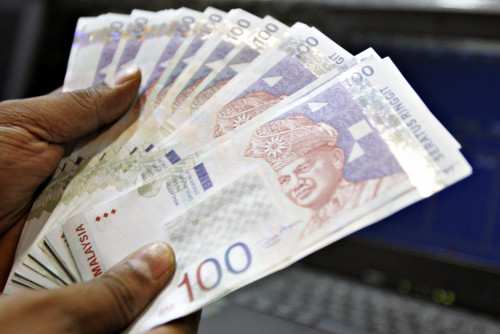
POLICE have frozen the bank accounts and financial assets of a second Malaysian pilot detained over a RM45 million drug seizure in Jakarta, alleging he helped a Malaysia Airlines co-pilot receive and transfer proceeds from drug sales.
Narcotics Criminal Investigation Department (NCID) director Datuk Hussein Omar Khan said the second pilot was suspected of acting as an intermediary between the Malaysia Airlines co-pilot arrested in Jakarta and the drug syndicate.
“He (the second pilot) was part of the syndicate involved in the flow of money from drug sales. He played a role in helping the co-pilot receive the money and transfer it,” he said.
Hussein said investigators were examining the pilot’s bank accounts and other financial records linked to him, but did not disclose the amount of money found.
The Malaysian man in his 30s was arrested in the Klang Valley on Sept 7 and is being detained for 60 days under the Dangerous Drugs (Special Preventive Measures) Act 1985.
Hussein stressed that assisting people involved in drug trafficking, including receiving drug proceeds or allowing bank accounts to be used for such purposes, would be regarded as involvement in drug trafficking and subject to action under the relevant laws.
“We did not detain him under Section 39B of the Dangerous Drugs Act, but under the special preventive measures for 60 days,” he said.
The detention period began on the day of his arrest and the case will subsequently be referred to the Advisory Board to determine whether he should be detained for a further period of up to two years.
The arrest brought to seven the number of Malaysians detained in Malaysia in connection with the case.
The investigation followed the arrest of a Malaysia Airlines co-pilot at Jakarta’s Soekarno-Hatta International Airport in July after he was found with 15 packages containing about 70,000 capsules suspected to be ecstasy and methamphetamine.
The drugs weighed about 25kg and were estimated to be worth RM45 million.
Police believe six other Malaysians detained in Malaysia, aged between 23 and 50, acted as suppliers and couriers for the co-pilot at different “upline” and “downline” levels of the drug distribution network. All six were also detained under the Dangerous Drugs (Special Preventive Measures) Act 1985.
Separately, drug syndicates are increasingly exploiting Malaysia as a processing and transit hub, using its strategic location, extensive road, air and sea networks and social visit passes to facilitate cross-border trafficking, police said.
Hussein said Malaysia’s proximity to the Golden Triangle, a major drug-producing and trafficking region in Southeast Asia, had long made the country attractive to local and international syndicates.
“Drug syndicates in Malaysia have long been established because its geographical location is near the Golden Triangle, which is a major route for drug distribution in Asia and to other continents.
“Malaysia’s ecosystem, which is well developed in terms of road networks, air and sea transport networks, including other services, is being fully exploited by local and international syndicates,” he said today.
He added syndicates were also abusing social visit passes to enter Malaysia to carry out illicit activities, further reinforcing the country’s role as a transit point for drug trafficking by land, air and sea.
Hussein was commenting on recent police operations against major drug syndicates, including the dismantling of a drug laboratory in Puncak Alam last Wednesday involving drugs worth RM2.4 billion.
Several recent cases have also involved Malaysians arrested with drugs at overseas airports.
In the latest case, Indian authorities arrested a Malaysian woman after she was allegedly found carrying 15kg of cannabis at Indira Gandhi International Airport in New Delhi. The woman had travelled on Batik Air flight OD205 from Kuala Lumpur International Airport to New Delhi on Sept 4. - September 12, 2026