
KUALA LUMPUR – It is a disgrace and reflects on the sad state of our nationhood when it takes another country to recognise and honour one of our own.
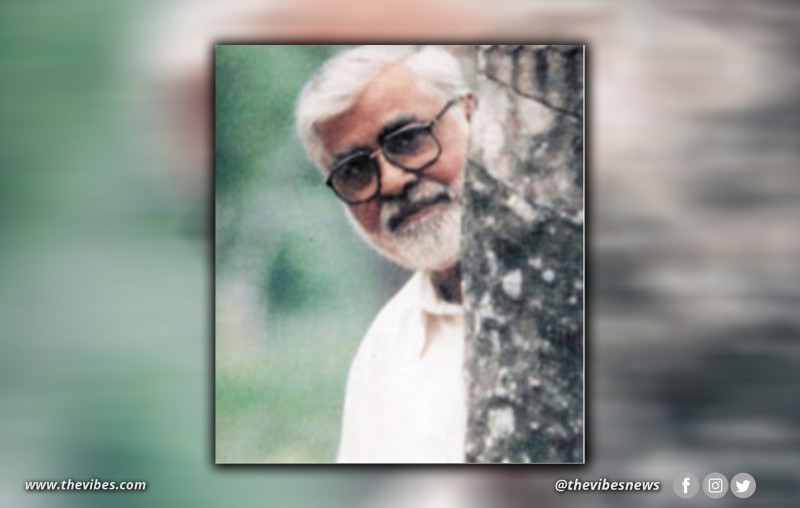
Such is the case of perhaps Malaysia’s most illustrious and iconic scientist: rubber and oil palm industry innovator, the late Tan Sri Dr B.C. Sekhar.
Sekhar was honoured in the Kerala state assembly in India yesterday when the state government announced that it will name one of its soon-to-be-established, fully autonomous inter-university centres and schools after Sekhar – affectionately known as the father of the Malaysian rubber industry. His work was critical in the modernisation of the rubber and palm oil industries.
State Finance Minister T.M. Thomas Isaac, tabling Kerala’s 2021-22 budget yesterday, revealed that Sekhar – the father of Petra chairman and group chief executive Datuk Dr Vinod Sekhar – is among 14 prominent scientific scholars from Kerala or of Kerala descent given the honour.
The others include physicist M.G.K. Menon and astronomer Vainu Bappu.
“A total of 30 inter-university centres and schools will be established within universities. The appointments to these institutions will be made from among experts at the national level through a search committee,” Isaac said.
“The schools will develop under the leadership of top experts in their respective fields.”
While Isaac did not specify which of these schools would be named after Sekhar, among the institutions proposed are the Inter University Centre for Policy Studies and Research; Inter Disciplinary School (IDS) of Data Science; IDS of Bioscience and Genetics; IDS of Energy Materials; and, IDS of Life Science.
Sekhar, who was born in the Ulu Bulu estate in Selangor on November 17, 1929, had devoted his life to the advancement of research and development in natural rubber, as well as palm oil.
He served as the first Asian chairman of the Malaysian Rubber Research Development Board (now known as the Malaysian Rubber Board), chairman of the Rubber Research Institute of Malaysia (RRIM), founder of both the Malaysian Rubber Development Corporation and the Rubber Industry Smallholders Development Authority, and was founder-chairman of the Palm Oil Research Institute of Malaysia, as well as a senior fellow of the Malaysian Academy of Science.
In the international arena, Sekhar was International Rubber Research and Development Board chairman and International Rubber Study Group (London) secretary-general, to name a few posts.
He was instrumental in setting up the Tun Abdul Razak Rubber Research Centre in Brickendonbury, the United Kingdom – named after Sekhar’s close friend, the second prime minister of Malaysia – which is regarded until today as the world’s premier rubber research centre.
His last deed of national service was to lobby then deputy prime minister Datuk Seri Najib Razak against converting the centre that bears Najib’s father’s name into a forward training base for Malaysian athletes competing in Europe – an idea that was intended to milk Malaysian taxpayers of almost half a billion ringgit.
Sekhar passed away on September 6, 2006 at the age of 77 without seeing his efforts pay off, with the government shelving the idea in July 2007.
In an immediate response, Vinod said the family are touched and honoured that his father is still remembered.
“My family and I are elated and proud to see dad receive this recognition. A nation of 1.2 billion people chose a Malaysian to honour.
“I hope the Malaysian government will finally recognise the many great Malaysians of all races who were incredible nation-builders. They may no longer be with us, but we must ensure their work and principles inspire future generations. It’s time we all look back to the true and real heroes of Malaysia for inspiration, to save and take our nation forward.”
Throughout his career, Sekhar remained undoubtedly the strongest advocate of the techno-economic superiority of natural rubber.
Among his many contributions, he engineered and promoted the Standard Malaysian Rubber Scheme, which is used worldwide among natural rubber producers and consumers today.
Perhaps the originator of the “good capitalism” philosophy, Sekhar played a major role in negotiating the conversion of the daily wage of RRIM plantation workers into a monthly wage, ensuring that they were not exploited as the global demand for rubber and palm oil products surged.
The towering Malaysian received multiple awards during his career, filed dozens of patents under his name, and published over 130 research papers.
However, in comparison to the Kerala government’s gesture, there is still no such honour for one of Malaysia’s most illustrious sons in his homeland. – The Vibes, January 16, 2021