.jpg)
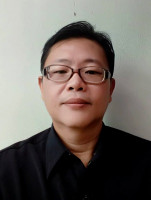
“WE are 30 years or more behind the peninsula in terms of development.”
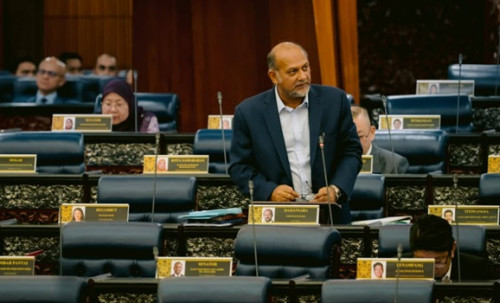
With these words, Datuk Joachim Gunsalam addresses the promises and challenges that resource-rich Sabah faces over not just its mainstay agriculture and oil industries, but also its yet-to-be-tapped industrial sector.
Gunsalam became deputy chief minister III and state industrial development minister after Gabungan Rakyat Sabah won the state election last September. He is also vice-president of Parti Bersatu Sabah, which is aligned with the federal Perikatan Nasional administration. He has been assemblyman for Kundasang since March 2004.
Having passed his first 100 days in office earlier this month, Gunsalam shares with NEIL CHAN the expectations that his ministry has to address moving forward.
Neil Chan: Within 100 days, can Datuk list the successes and promises that Datuk has accomplished thus far under the ministry?
Datuk Joachim Gunsalam: First of all, I actually never made any promises. Also, it’s just been a 100 days. A very short time to list any successes. If there were any programmes or successes, I cannot simply say that was our promise or initiative. Maybe it was initiated by the previous government, and we just followed through. If it was a success, then we’d have to thank the previous government for initiating certain policies.
However, we did recently launch the GoBiz e-commerce platform to assist local SMI (small and medium industry) entrepreneurs in marketing their products online.
Chan: In the remaining four years, what is Datuk’s plan (under the ministry) to develop the state?
Gunsalam: We will focus on improvements to the three industrial parks in the state – the Sipitang Oil and Gas Terminal, Lahad Datu Palm Oil Industrial Cluster (POIC), and Kota Kinabalu Industrial Park (KKIP).
We need good roads in the state, such as the Pan Borneo (Highway). Good water supply is also crucial in order to invite investors to come.
Also, a good amount of uninterrupted power supply. Both KKIP and Sipitang are okay in terms of power supply. But we have plans to improve the power supply at POIC Lahad Datu.
We also need to improve the internet connection in all these areas. Everything seems to be digitalised these days, so we need this connectivity. These are some of what we plan to do in the next four years.
This will need the necessary allocation, and I really hope the state government can allocate more for the ministry, for us to achieve this.
This is also in line with the new state administration’s (areas of focus) in developing Sabah, which are farming, tourism and industrial. These are the three “halatuju” (directions) for the state government.
Apart from that, we also hope to synchronise or consolidate the downstream industries, and we are trying to do this by consolidating or making reality certain policies, especially the Sabah Timber Master Plan.
This is necessary to improve the downstream industries. We need to have a big master plan and enough raw materials. There has to be a comprehensive master plan for Sabah timber in order for us to help the downstream (industries).
We also hope to have a palm oil board or council in Sabah. There are no regulatory policies for the palm oil industry, especially in Sabah.
Although there are lots of (oil palm) mills here, what we are trying to do is consolidate them, and we are talking to all the interested stakeholders on how we can improve them. We want to go downstream and do value-added commodities for export from Sabah, so that we get more revenue.
Without the council or the board, it’s a bit difficult for us to regulate, because everyone is doing their own thing. So, we don’t want this.
Same for the oil and gas sector. Sabah is a big producer of oil. The second-largest after Sarawak, and yet, in Sabah alone, we have four entities dealing separately with Petronas. We want to consolidate them and have one council, so that we can talk with one voice.
We also want to do the entrepreneurship council. There are a lot of (state) ministries aiding the SMEs, such as my ministry, the Rural Development Ministry, Agriculture and Fisheries Ministry, Youth and Sports Ministry, and a few others. There should be a council to define who needs help and the help given, so that there is uniformity and no duplication of work for the government. So, we hope to create that.
I believe all these councils can assist in adding value to our exports, so that Sabah can earn more revenue. I hope the formation of Invest Sabah as a one-stop centre can help spearhead further foreign or local investments in Sabah.
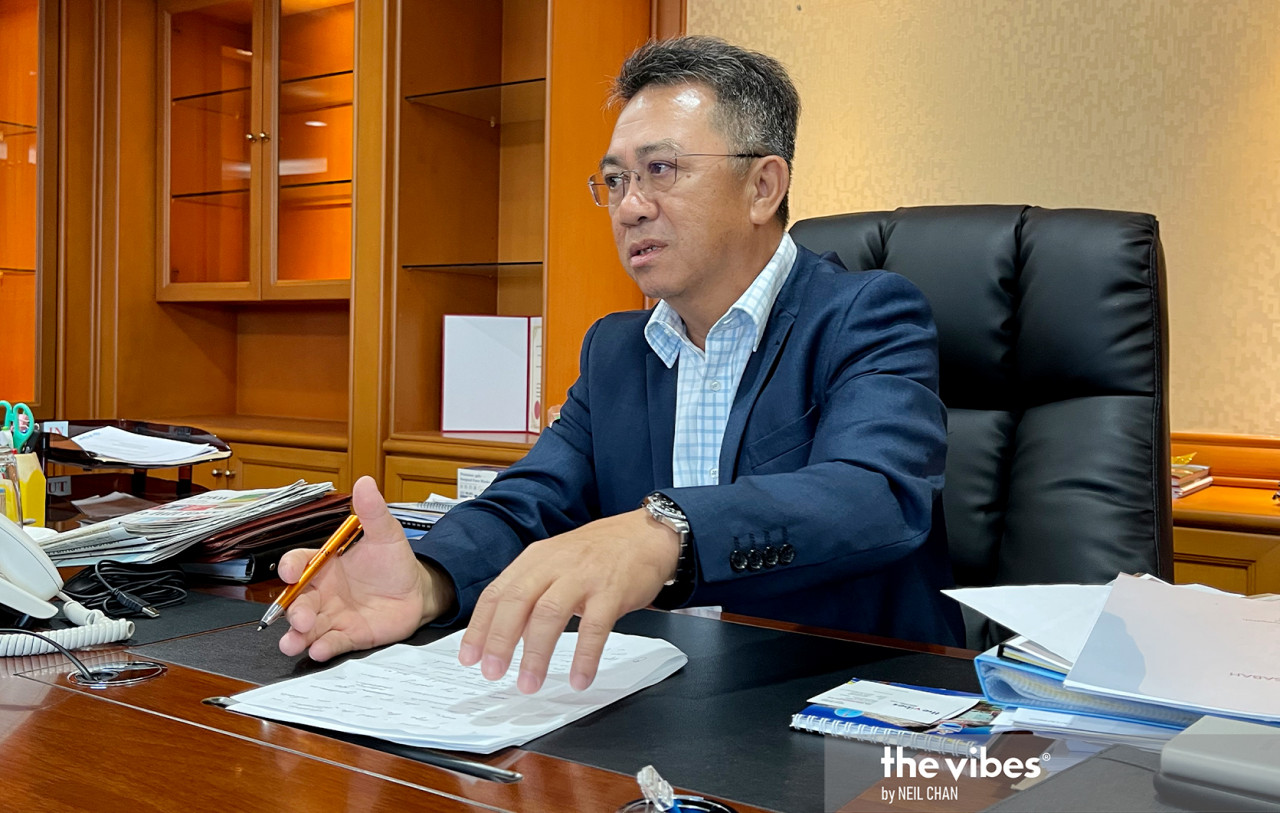
New councils for better productivity
Chan: Maybe Datuk can give an update on the status of some projects under the ministry that will be implemented in the near future?
Gunsalam: We just got the state budget approved on December 23, 2020. The implementation of programmes will begin early this year.
The implementation of projects under the 12th Malaysia Plan will also be started early this year. After this is launched, they are going to implement whatever has been planned for under the ministry.
It’s too early for me to update you on the progress status of the projects’ development at this moment.
This year, my ministry will focus on the establishment of a few councils as mentioned in my speech, namely the palm oil council, oil and gas council, and entrepreneurship council.
We have improvements planned for the three industrial parks, and also for entrepreneurship under the Department of Industrial Development and Research (DIDR). And from the Sedco (Sabah Economic Development Corp) group, we have some projects under them, but at the moment, it’s still very early (to announce).
Chan: Datuk may have some ideas of your own for the state, to share with our readers?
Gunsalam: The only idea I have is that we all need to work together for Sabah to prosper. We have to work especially with the federal government. We cannot be antagonistic with them, as we need them to give us more allocation.
Sabahans also shouldn’t isolate themselves too much. We need to be able to cooperate. All should work towards the common good for Sabah.
At the end of the day, it is Sabah we need to take care of and develop. So, cooperation is the only way to do it. All the political parties should forget about their differences and come together to develop the state.
Putrajaya has gained from Sabah
Chan: Datuk, you were reported as saying the oil and gas industry must increase its contribution to Sabah’s economy in order to sustainably support its population and boost value-added activities. You were also quoted as saying: “It is critical for the state to continue moving up the value chain in order to maximise the benefits derived from its hydrocarbon resources and create valuable spin-offs across the state, especially for the people.” You mention that to realise this vision, core infrastructure, including roads, highways, pipelines, and power and water supply, will require significant investment in order to facilitate increased downstream activities. Will this depend on the state government’s oil sales tax for funding?
Gunsalam: Definitely, it will depend on the state government’s fund. This fund will also depend on how much income we are getting in the next few years, and one of the biggest contributors will actually be oil and gas.
So yes, the sales tax on oil and gas will really be beneficial to the state government.
However, we cannot depend solely on the sales tax. I really hope the federal government can give more to Sabah for its development.
We are 30 years or more behind the peninsula in terms of development. So, in order for us to be on a par, the federal government needs to give us more for development. They cannot say, “since your population is only as much, we can only give you so much in funds”.
We have to look at Sabah as a very big land mass. So of course, we need more money to develop the state. In the future, if we develop Sabah more, there can be more for Malaysia’s coffers. It’s a two-way process of “if you give us more, we can give you back more”, and not solely dependent on oil and gas.
The federal government can probably ask Petronas to give more to Sabah, too. I’m not going to ask them for the 20% royalty, or not, but they can give us more. They have gained so much from mining oil and gas in Sabah, so they should naturally give more back to us.
To ask for the 20% royalty, which they can’t give; we can’t force them. But I believe they can give in other ways, too.
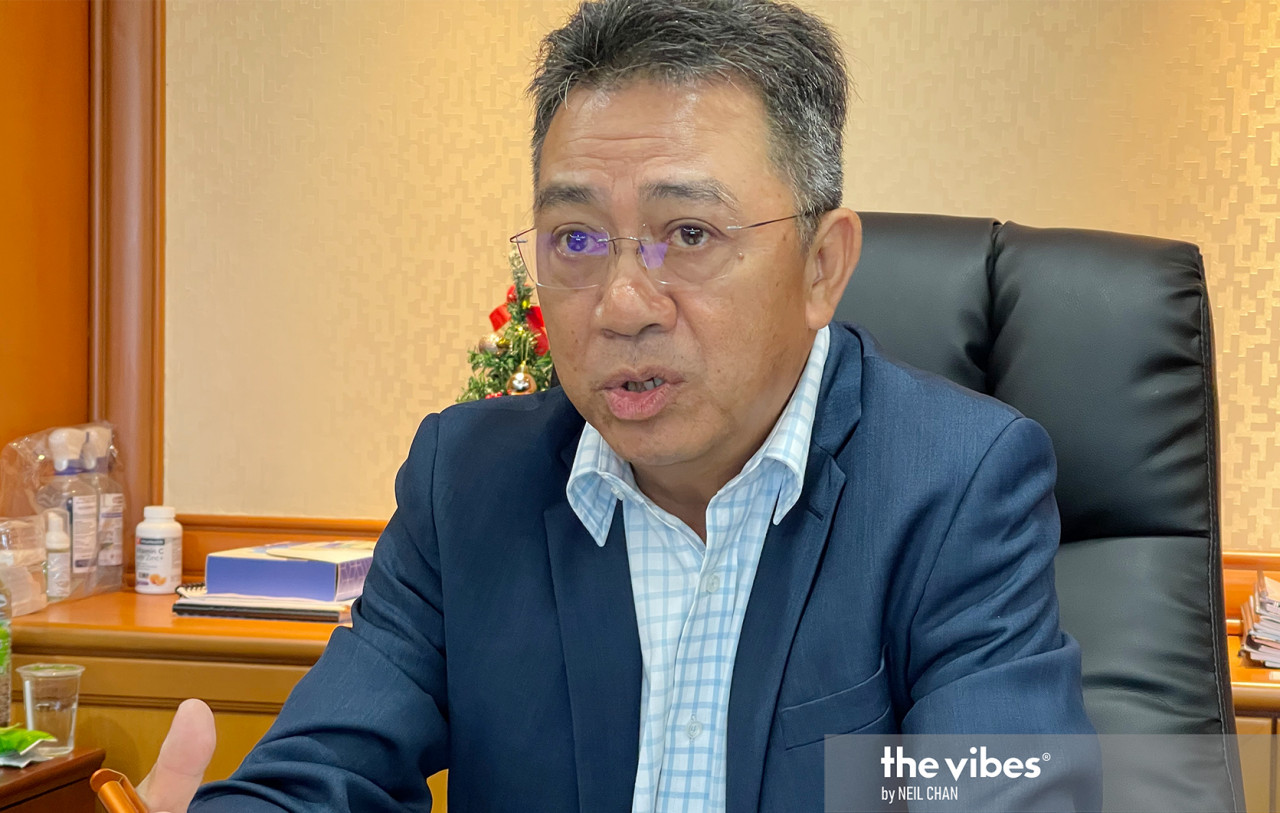
Chan: The Sabah government will reportedly look into the suggestion for a state palm oil board, to increase focus on the development of the industry and strengthen palm oil-related downstream activities. When can we possibly see the setting up of such a board? Has nominated assemblyman and POIC Sabah Sdn Bhd chairman Datuk Seri Yong Teck Lee gotten back to you on your suggestion for further discussions on the formation of a palm oil council to include the private sector or business community?
Gunsalam: Even right now, we have engaged with all our stakeholders and interested parties. We need to discuss with them first before forming anything. We need to know what is happening in the palm oil industry.
Everyone is saying that Sabah is not getting much revenue. How true is that? Yesterday, I had the chance to discuss with some people from the Malaysian Palm Oil Board, and they are saying 80% of the revenue is actually coming back to Sabah.
How true is that? So, before we can actually form a council or anything like that, we have to really study what is happening.
I have met a few times with Datuk Seri Yong Teck Lee, and since he was appointed POIC Lahad Datu chairman, we have discussed the idea of forming a palm oil council, which he was more into.
Our interest is the same, and we need to formulate some sort of policy on how we can actually maximise income for the state’s roughly 1.3 million hectares of plantation – which do not include smallholders.
If we tax crude palm oil, then the smallholders will also be affected. So, in order to help the smallholders, this is where the council can help formulate policies to assist them, and at the same time, get more from the palm oil industry.
So yes, we have started the ball rolling in trying to form the council, but I cannot predict when it will be formed.
Progress on SMI initiatives
Chan: The Sabah government also plans to expand the SMI Industry Product Centre, or SMI Shop, to other districts next year. This will enable SMI entrepreneurs to showcase and market their products conveniently. What’s the progress on this? How many districts or areas have these shops at the moment? How many more shops are to be set up this year?
Gunsalam: My ministry, through DIDR, will suggest to me a few districts that are suitable for the setting up of the Sabah Products Centre.
The selection process will be done as soon as possible. We might start with Beaufort, followed by a few other major districts. At the moment, DIDR already has one Product Centre at Wisma Tun Fuad Stephens.
Chan: On the launch of the GoBiz e-commerce platform to assist SMI entrepreneurs in marketing their products online, reportedly, the ministry has received more than 500 applications to participate, and more than 1,000 products have been identified. What is the progress on this? How much has been achieved? The platform has reportedly helped more than 155 Sabah SMI entrepreneurs. In what way?
Gunsalam: Out of the total applications received, 194 merchants have been registered, with 1,494 types of products, comprising food products, beverages, frozen food, homemade food, snacks, handicrafts, household items, medicare, personal items and personal care.
The total sales to date through the GoBiz e-commerce platform amount to more than RM8,200. This e-platform will help our local SMEs (small and medium enterprises) sell their products to Peninsular Malaysia, and globally in the near future.
The number of companies registered with the SME Product Centre (SPC) is 376, and the number of products in SPC is 1,771, according to size, weight, taste and pattern.
Total sales in 2020 for the Sabah Products Centre at DIDR amounted to RM53,000. – The Vibes, January 17, 2020