
KUALA LUMPUR – The next few months will test Tan Sri Muhyiddin Yassin’s resolve in addressing the country’s economic issues, according to a pundit, who said the prime minister may need to implement unpopular policies to get the economy back on track.
Asli Centre for Public Policy chairman Tan Sri Ramon Navaratnam said while the prime minister has performed reasonably well on the economic front in the year since the start of the first movement control order (MCO), there is still much room for improvement.
Chiefly, he said the government needs to involve the private sector more and to temporarily lift policy constraints that could keep investors away, such as Bumiputera policies.
These policies, which were first introduced as part of the New Economic Policy (NEP), have seen quotas imposed across a vast range of activities, including requirement for Bumiputera equity in companies and projects earmarked for Bumiputera companies or contractors, among others.
Ramon acknowledged that temporarily shelving these policies may require political determination on the part of Muhyiddin, who himself is facing pressure over his position as the head of the administration, but one that is necessary.

“The economy needs restructuring at a faster pace. There has to be radical changes to ensure the private sector has a bigger role to play. Whatever the government cannot do, pass it to the private sector,” he told The Vibes.
“The government should also relax the NEP and Bumiputera policies, at least temporarily, to allow more investors to come in, regardless of racial consideration. And, these structural reforms call for bold political will.”
Ramon said Muhyiddin could use his emergency powers to come up with an ordinance to bring about these economic reforms, which will see long-term gains and make investments more attractive.
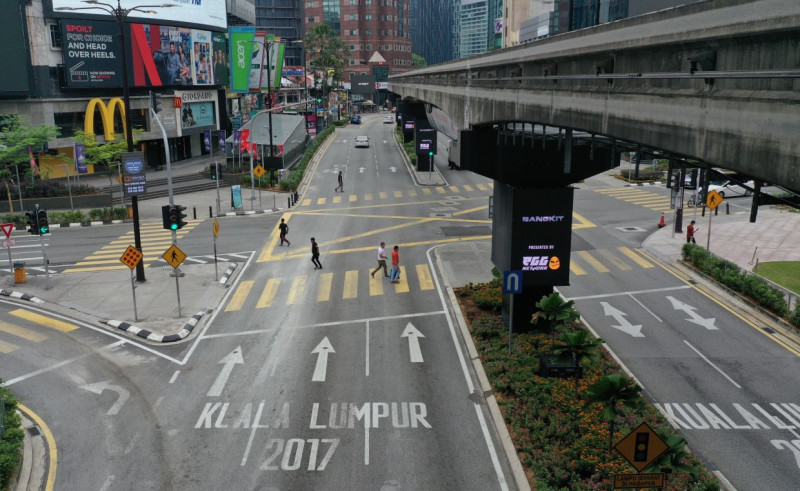
Today marks a year since the first MCO was implemented to attempt to curb the spread of Covid-19.
To cushion the impact on the economy and the rakyat, a total of RM340 billion in stimulus packages have been rolled out to date, the latest being the RM20 billion Strategic Programmes to Empower the People and Economy (Pemerkasa) announced yesterday.
Critical quarter ahead
While laudable, Ramon said the situation has come to an unsustainable point, where the government may not be able to provide any more financial assistance without causing further damage to the budget and national debt.
As such, he said the country cannot afford any slip up in the fight against Covid-19 in the coming months, as doing so may result in more lockdowns and force the roll-out of another stimulus package.
There has to be radical changes to ensure the private sector has a bigger role to play. Whatever the government cannot do, pass it to the private sector.
Ramon said most importantly, there must be no hiccups in the national vaccination programme, and enforcements on standard operating procedures (SOPs) must be at full force to keep the number of infections down.
“If the pandemic continues and we fail to keep the numbers low through vaccination, enforcement and abiding of SOPs, then I don’t think the economy can continue to bear the strain.
“Yes, I understand the economy is stimulated by these packages, but there are limits to what the government can do.”
Ramon added that the government must ensure what happened in the Sabah election last September – with lax adherence to SOPs and enforcement blamed for a subsequent exponential spike in cases nationwide since – does not repeat itself.
Herd immunity key to economy
Like Ramon, Sunway University Business School Professor of Economics Yeah Kim Leng said achieving herd immunity through the vaccination programme as soon as possible is vital, as it will ensure the economy can return to its normal state faster.
He said this can be accelerated by deploying more resources and seeking more assistance from the private healthcare system, to complement public hospitals.

“The next quarter will be a very key moment for the country in terms of rolling out the vaccines and the effort to contain the virus’ infection rate. Both of these have to happen concurrently to ensure economic activities can resume normally,” he told The Vibes.
Yeah suggested that vaccination priority also be given to those working in factories and construction sites, which have been identified as among the main sources of Covid-19 infections and clusters.
“Once we reach herd immunity, the public will then have greater confidence to continue their everyday lives without much fear of getting infected.”
On the stimulus packages announced to date, Yeah said the government should have roped in civil society groups and MPs from across the divide to assist it in identifying Malaysians who need the assistance most, claiming there is currently an implementation gap that many are falling through.
“Many Malaysians are not even aware of the aid being provided, unbeknownst to the government. The government needs to mobilise everyone it can count on, be it MPs, NGOs, charity organisations or religious bodies.
“In fact, all financial assistance should have been channelled through them, because they know their respective areas best.” – The Vibes, March 18, 2021