
KOTA KINABALU – Sabah’s leadership is being urged to drive the development of the state’s creative economy and build its own broadcasting platform, while also ensuring proper representation of the state in the national media landscape.
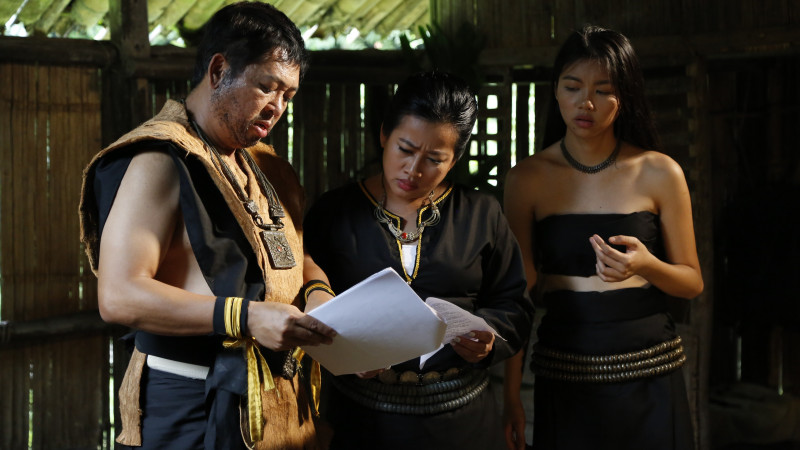
Independent film-maker and writer Nadira Ilana said the government needs to take the local creative economy seriously and help create opportunities.
She said many practitioners from Sabah have long faced uphill challenges, facing a dearth of affirmative action to promote the local sector.
“The Sabah government has been a mostly passive supporter of our creative economy, preferring to focus mostly on tourism and natural resources instead,” she said in an interview with The Vibes.
“Thus, our media practitioners have been left to fend for themselves.”
Nadira, who is a producer and director at Telan Bulan Films, lamented that there has been a brain drain, with young Sabahans in the arts forced to move to Kuala Lumpur for better opportunities.
“Even then, we are forced to aggressively compete with West Malaysians to tell Borneo stories, including Kaamatan and Gawai advertisements and films.
“‘Malay-washing’ is rampant, meaning East Malaysian content is tailored to peninsula audiences and Borneo characters are often exclusively played by more well-known peninsula actors.
She cited the instance of her peers in Sabah being required to fly to Kuala Lumpur to sign off on projects shot in Sabah due to ‘protocol’ – even during the Covid-19 pandemic.
“The film and media industries of Sabah and Sarawak lag behind even now, not because of a lack of trying but because we take for granted that the Malaysian identity and resources are dominated by the peninsula.

Nadira said authentic East Malaysian representation in the media is something she had been advocating for years.
“While things are now slowly improving, it would be a big help if there is political will for the sake of national unity, to speak to large corporations and studios to expand on what ‘Malaysian film and TV’ means beyond the peninsula.
She stressed that Sabah was still mainly steeped in its oral traditions around the time of Malaysia’s formation.
Much of the artistic fraternity had to adapt quickly to technological shifts.
“Modern forms like film, broadcast and popular media were relatively new technologies that required complex infrastructures, and we barely had asphalt roads then,” she said.
The 1970s was a pivotal time in forming Sabah’s media identity.
The late photographer Victor Wah made documentaries about Sabah for RTM, though no copies of them remain.
Tun Mustapha Harun, the chief minister during the early 1970s, introduced the ‘One Language, One Culture, One Religion’ policy. This forced native Sabahan languages to be restricted from radio and schools, making way for the Malay language.
Due to this, the Kadazan Cultural Association began to produce more KadazanDusun musical talents, which led to a whole new wave of contemporary Sabahan music that is still celebrated today.
Traditional knowledge, history getting lost
Nadira said it is important for national attitudes towards media content from Sabah and Sarawak to change.
“It’s not enough to simply fund Borneo projects if attitudes in the media industry towards East Malaysia-made content don’t change.
“While there are independent filmmakers and musicians from Sabah who are doing well in KL, I see a gap where they’re not being utilised by the state itself.
“Film and arts literacy in Sabah is generally quite poor because even at the institutions there tends to be more emphasis on the technicalities, but very little on theory or storytelling.
Besides not being exposed to a broader range of films, music and the arts, youth are not even given enough access to local traditional knowledge and history.
“In reality, Sabah is spending millions on producing film and animation students but no one has addressed that there aren’t enough jobs for them when they graduate.
Comparatively, Sarawak is ahead in terms establishing its own media industry.
“Sabah needs to follow in the footsteps of Sarawak in establishing a media industry that produces results.
“In an ideal world, we would not just have a Sabah TV station but Sabahans would be able to vie with our fellow Malaysians on equal footing – produce authentic Sabahan content for Astro, big brands or even for international broadcasters.
“Why just screen Sabahan films through DVDs or local cinemas? Why not for the world?
Countless stories, voices in Sabah
Nadira stressed that the Sabah government should be involved in not just funding the infrastructure but also ensuring that jobs are created.
“We are part of Borneo, the island that has inspired countless stories and yet Sabahans struggle to imagine ourselves in mainstream media, in having a voice in Malaysia.
“We owe this to ourselves to create and meet that demand, not just for our economy, but because the ultimate cost is that Sabah’s identity and heritage may very soon be gone forever,” she said.
There is an opportunity to cater to an overwhelming demand for local media content among the East Malaysian audience.
In an article titled ‘Media and belonging to the nation in Sabah, East Malaysia’ by Dr. Fausto Barlocco in 2009, it was asserted that Malaysians from Sabah and Sarawak were dismissive of peninsula-made media programmes because they largely could not identify with them. The situation remains the same today.
According to the article, certain broadcast programmes were regarded as government propaganda and rejected on the basis of their perceived imposition on indigenous people to either become like the ‘Malaysian’ majority or be marginalised.
It reported that when asked about their television viewing preferences, “villagers consistently, across distinctions of age or gender, indicated negative opinions about Malay TV dramas, implying that they were made by Malays to cater for the tastes of the Malays, and only representing their lives and their experiences.”
Sabah treated as ‘stepchild’
In 2012, the Borneo Post had reported that many Sabah artistes believed a Sabah-based TV channel would be the best platform to nurture singing talents.
The report featured local artist Jimmy Palikat saying that his single ‘Tanak Kampung’ took more than a year to reach out to the whole country because there is no platform to promote it, unlike songs from the peninsula that could easily be promoted on national TV and radio.
Jimmy said it was not fair to treat Sabahans like a ‘stepchild’ of the Malaysia music industry, especially when they are just as talented as performers from the peninsula.
Sabahan director, P. Dik Ganai said Sabah and Sarawak film-makers should be treated equally by TV stations based in the peninsula.
He said many TV channels treat Sabah and Sarawak as “options” due to the long distance from West Malaysia. He said the proposal to have a Sabah network is important because of the demand for Sabah-based TV channels.
It is time for the government to help by giving the green light for such an initiative, he said.
DJ Othoe, formerly a disc jockey at a national radio station, was also reported then as saying that a Sabah-based TV channel would be able to showcase the state.
He said the government should be part of the proposal as the TV channel would also help policymakers to spread government information to the public. – The Vibes, March 28, 2021