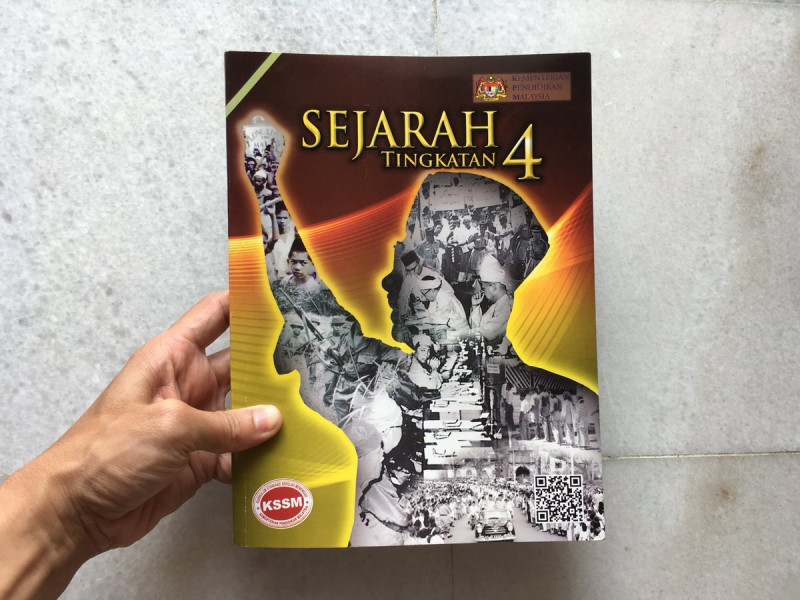
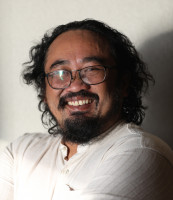
KOTA KINABALU – A member of the federal panel that reviews history books for secondary schools has come out in defence of his team’s work, saying racial propaganda should not be part of the new curriculum.
Assoc Prof Bilcher Bala said the syllabus for the National Secondary School Standard Curriculum (KSSM) avoids points of propaganda in support of any race or religion.
History should focus on factual events, and not race, he stressed when commenting on fellow historian Ranjit Singh Malhi’s recent statement that the latest edition of the secondary school textbooks are exceedingly Malay- and Islam-centric, and focus less on other races.
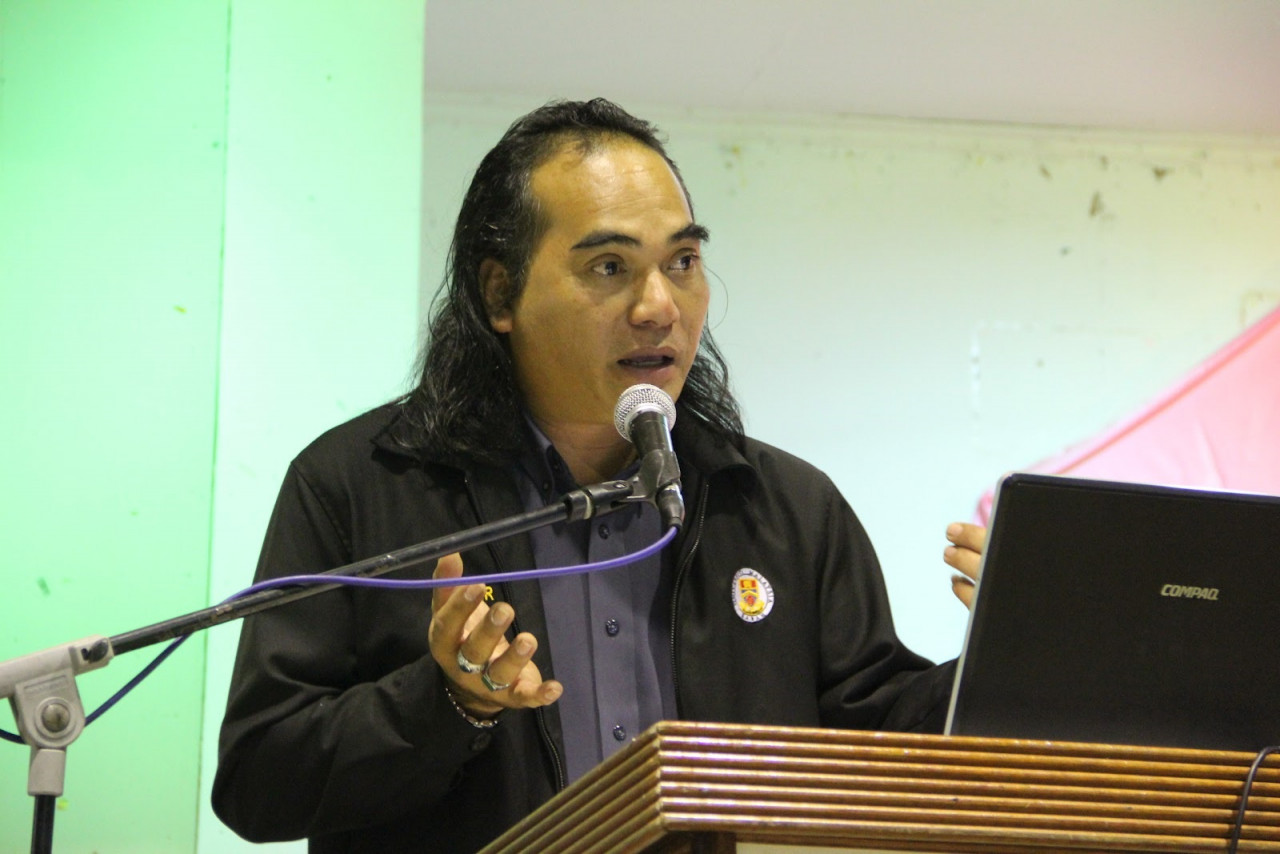
Bilcher, a historian at Universiti Malaysia Sabah, reviews Sabah and Sarawak history in the new KSSM syllabus.
He has said the now defunct Integrated Secondary School Curriculum (KBSM), whose review panel included Ranjit as a member, placed little emphasis on East Malaysia.
Despite four revisions of the KBSM syllabus in 1990, 1998, 2002 and 2003, Sabah and Sarawak’s histories were given only three pages – all dedicated to politics – in the Form 5 textbook.
The three pages are in the fourth chapter, which is 19 pages long.
Some 17 years of historical facts on Sabah and Sarawak were omitted from the syllabus, said Bilcher, adding that history textbooks before KBSM were more comprehensive.
He said the 17 years are important because it was the period when the British brought development to the two Malaysian states.
Among others, KBSM also made no mention of Sabah attaining self-rule from the British on August 31, 1963, and Sarawak attaining it on July 22 the same year, he said.
And, it stated Malaysia’s independence day as August 31, 1957, although Sabah and Sarawak were not part of this.
Malaysia was formed only on September 16, 1963, following the merger of Sabah, Sarawak, Singapore and the Federation of Malaya. Singapore left Malaysia in 1965 and attained self-rule.
Bilcher noted that Ranjit was involved in all four revisions of the KBSM syllabus, but was not roped into the KSSM review panel.
The KSSM syllabus was created when Tan Sri Muhyiddin Yassin, currently the prime minister, served as education minister in 2011.
“Sabah and Sarawak leaders played important roles in Malaysia’s formation on September 16, 1963, but these were not reflected in the textbooks, giving the impression that the birth of the country was the doing of only Malaya’s leaders,” said Bilcher.
“This appears to belittle the roles played by leaders from Sabah and Sarawak, as well as Singapore, towards the creation of Malaysia.
“Without the consent of these regions, Malaysia would not have become a reality on September 16, 1963.”
-WIKIPEDIA.jpg)
East Malaysian ethnic identities not reflected
According to Bilcher, details on the spread of religion in both Sabah and Sarawak were also missing from the textbooks, creating the impression that East Malaysians were pagans or animists – or worse still, living on trees.
“Pages 196 and 197 in the Form 1 textbook detailed how ethnic groups in Sabah were pagans, and only noted that the Bajaus and Malay-Bruneians embraced Islam in stages in the 16th century.”
As for race, the old syllabus made no mention of the Rungus, Kadazandusun and Murut, who became Christians in the 19th century, while Page 197 stated that the Kadazandusun Murut people were recorded as only practising animism, he said.
The Education Ministry introduced a new syllabus, called the Primary School Standard Curriculum (KSSR), in 2011, and subsequently, the Malaysia Education Development Plan 2013-2025 was formulated. It contained the move to introduce the revised KSSM and KSSR in 2017.
Bilcher said the older KBSM textbooks were full of Malay and Islamic propaganda, while a chunk of Sabah and Sarawak’s histories was again omitted.
As KSSM ensures coverage for “a new kind of history”, he said, new experts are needed to review it.
KBSM only talked about Umno, Malays and Islam, while KSSM gives (greater) balance, and talks about anything that is part of our history; there are no words of praise for any race, party, religion or others (in KSSM).
He said KSSM highlights what existed in the past.
“The right and left wings, communists and nationalists, Malays, Chinese and Kadazandusun – all are in now.”
Earlier this week, Free Malaysia Today reported Ranjit as saying the textbooks, which are used by Forms 1 to 5 students, are centred around Malays and Islam, exclude key facts pertaining to nation-building, and add information that is distorted and exaggerated.
The adjunct professor at Asia Pacific University of Technology and Innovation said with the current textbooks, youth are not being taught the “real” and “inclusive” history of Malaysia, but fed a narrative that is selective and skewed towards establishing Islamic and Malay dominance based on the divisive “Ketuanan Melayu” concept.
“For example, unlike earlier textbooks, the current history textbooks downplay the important roles and contributions of the Malaysian Chinese and Indian communities to the economic and infrastructure development of the nation.”
He said the role of Indians in developing the rubber industry, and the Chinese in the tin mining boom, is reduced to merely two to three sentences in the Form 3 textbook.
The impact of Hindu-Buddhist civilisation on Malay culture, language, literature and government is also largely ignored in the syllabus, he added. – The Vibes, April 17, 2021
Editor’s note: Assoc Prof Bilcher Bala has since issued an apology to fellow historian Ranjit Singh Malhi, saying he mistakenly linked the latter to the KBSM syllabus








.JPG)