
KUALA LUMPUR – Three renowned economic experts have criticised Prime Minister Tan Sri Muhyiddin Yassin’s federal administration for exercising emergency powers during the Covid-19 pandemic, saying that it is detrimental to the economy.
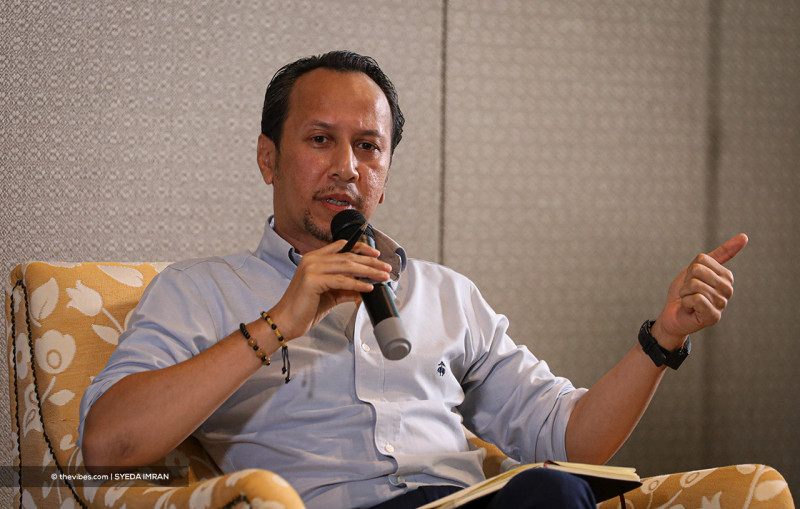
DM Analytics founder and former adviser to the prime minister Muhammed Abdul Khalid told a press conference organised by End the Emergency Committee that emergency rule itself is not a bad thing if it is managed and administered responsibly, with reforms and the benefit to the public in mind.
“Besides declaring the emergency, the implementation and administration of the emergency is ineffective.
“If the declaration was a problem but the implementation to curb the pandemic or the economic management was effective by not being bipartisan, but instead a complete reform of the system, then you can say it worked.
“But the results showed the opposite. Not only did we lose public confidence as well as foreign and domestic investor confidence, the administration (of the emergency and the pandemic) is not effective. I fully support ending the emergency and for Parliament to convene,” said Muhammed.
No comparison to 1969
He also explained that one should not compare the current emergency called by Muhyiddin to the emergency announced by Tun Abdul Razak in 1969 because Razak never formed a cabinet when he declared the emergency to heal racial tensions.
During that time, Malaysia’s second prime minister had established the National Operations Council (Mageran) with a very small team that was advised by the larger and more inclusive National Consultative Council.
Muhammed said the consultative councillors had diverse backgrounds and included professors, civil servants, members of teachers’ and workers’ unions, and representatives from all political parties barring DAP, which refused to send anyone in protest.
“It was very inclusive and from this concept two critical policies were born – the New Economic Policy and the Rukun Negara. So, this changed the national fabric for social stability and unity. This was an emergency with a suspended Parliament, but it had a good outcome.
“An emergency is not necessarily dangerous, as long as it is implemented well without any ulterior motives, but instead based on good and sincere intentions,” said Muhammed.
The former Khazanah Research Institute director noted that the Perikatan Nasional administration had wasted a lot of opportunities to conduct reforms in various government institutions and policies.
He added that no one would really want reforms during good times but during bad times, it is the best opportunity to correct any mistakes in the system, such as social protection for gig economy workers, fixing disparity in income, the taxing system, improving the country’s social system, and improving online education and price control, among others.
Muhammed also disagreed that Malaysia is similar to around 70 other countries that had implemented emergency rule, as these nations had not suspended their Parliaments.

Loss of confidence
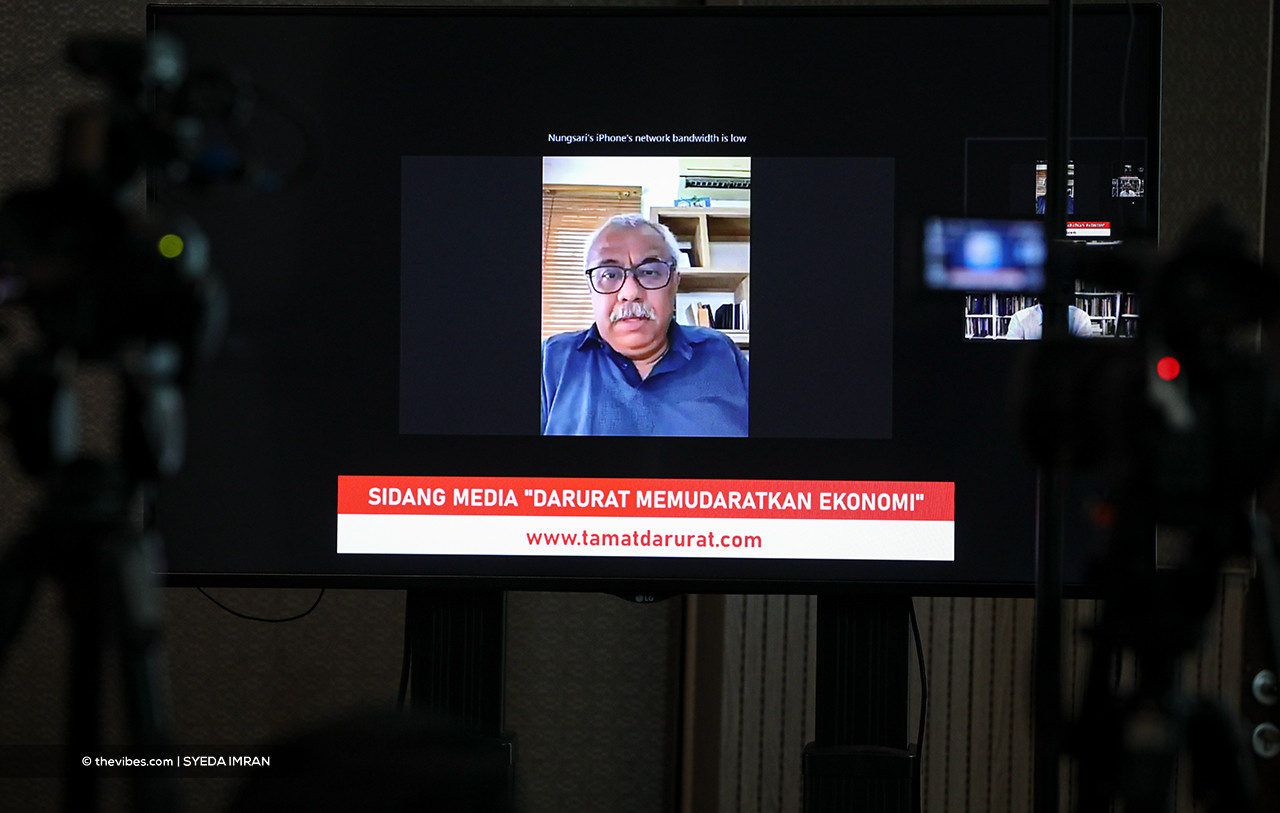
Former Malaysian Aviation Commission executive chairman Nungsari Ahmad Radhi observed that the emergency rule has weakened domestic and foreign investor confidence and, by extension, the capital and cash markets as well.
This, in turn, has impacted the job market, where investors prefer to play it safe until things level out, leaving youths relatively jobless or under-employed, and doing work not equitable to their education, skill sets and expertise.
Another adverse effect of this wait-and-see mindset among Malaysians is consumers’ loss of confidence and lower spending power as they hunker down to protect their financial stability.
Khazanah Research Institute senior adviser Prof Jomo Kwame Sundaram told the press conference that most of the five emergencies declared in the annals of Malaysian history were to benefit whomever was ruling the country at that point in time.
Recalling the 1948 emergency when Malaysia was still under British rule, Jomo said that was to protect British interest as the crown’s Malaya dominion was the most profitable land in the empire post-World War II, including the United Kingdom itself.
He said the 1969 emergency was similar in that it was declared to protect the then ruling Parti Perikatan under Tun Abdul Razak from collapse following the May 13 racial riots that year.
Jomo also panned the movement control order, citing that it had failed the Malaysian economy after comparing results with other East Asian nations such as South Korea, Taiwan, China and Japan.
He observed that these nations did not implement a lockdown but took the more pragmatic stance of testing their populations to curb the spread of the pandemic, which led to growth in their respective economies. – The Vibes, April 19, 2021












.jpeg)