KOTA KINABALU – The story of the Malaysia Agreement 1963 (MA63) and Sabah and Sarawak’s rights has come a long way from being discussed by lawmakers in Parliament and the two states’ assemblies.
It took the country over 50 years to revisit the deal that made possible the merger between the Federation of Malaya, Sabah, Sarawak and Singapore to form Malaysia 58 years ago – and not on August 31, 1957.
The birth of Malaysia is on September 16, 1963, not Malaya’s independence day.
MA63 is an international treaty registered with the United Nations in September 1970, bearing the registration number 10760.
In 1965, Singapore separated from the federation. For some, the departure made MA63 no longer valid, as Singapore was one of its signatories.
The passage of the Malaysia Act in 1963 gave effect to MA63.
Risk of talking MA63
There is no denying that the abolished Internal Security Act (ISA) in 2011 opened the floodgates for MA63 discussions.
By simply talking about it during the ISA era, one could end up in jail. For those in the media fraternity, there existed an unwritten rule to avoid the topic or risk running into trouble with the authorities.
Most devastating is that lessons on MA63 in schools were so vague that many Malaysians appeared to have minimal understanding of the agreement.
Racial riots
The May 13, 1969 incident marks the first breach of state rights, with a state of emergency imposed nationwide due to the Sino-Malay sectarian violence.
Unlike Covid-19, which spread all over Malaysia, a country that is split by the South China Sea, there were no racial riots in the two Borneo states. Yet, the emergency rule was implemented in Sabah and Sarawak, too.
It saw the marine borders of Sabah and Sarawak reduced to just three nautical miles from up to the continental shelf.
The motion to lift the emergency was made in 2011, paving the way for the Territorial Sea Act 2012 as its replacement.
Sabah Deputy Chief Minister Datuk Seri Jeffrey Kitingan has expressed opposition to this act, as it would allow the federal government to assert control over Sabah and Sarawak’s territorial borders.
The waters off Sabah are rich in oil and gas.
But, note that the implementation of the emergency was soon followed by the signing of the Petroleum Development Agreement in 1976 – two years after the Petroleum Development Act 1974 was passed – and the cabotage policy in 1981.
Both have impeded Sabah’s economic development.
Special grant
A review of the special grant for Sabah was due in 1974 as mandated every five years under the terms of MA63 and Article 112D of the federal constitution, but the federal government failed to carry it out.
Among the reasons given for this was the death of then deputy prime minister Tun Dr Ismail Abdul Rahman Ismail, who led the review committee.
The response that the federal government offered to Sabah for not undertaking the review was that “the Federation is not in (a) financial position for there to be a review”.
The state entitlement began with RM20 million in 1969, and rose to RM26.7 million in 1973. From 1974, the federal government paid Sabah a fixed amount.
Under the terms of the agreement, or Part IV of the 10th Schedule of the constitution, 40%, or two-fifths, of the net revenue from the taxes collected by the federal government will be the annual entitlement for Sabah.
The annual payment should be paid in staggered amounts.
As for the remaining 60%, the federal government gets to manage the funds in return for providing security for Sabah.
Declassified information from London on the telex conversations between the leaders in 1963 shows that then deputy prime minister Tun Abdul Razak Hussein broke the Malaysia impasse by offering a 60:40 mechanism to Sabah chief minister Tun Fuad Stephens.
Fuad was reluctant to be part of Malaysia until the 60:40 formula was proposed.
The formation of Malaysia in 1963 also saw Sabah losing control over health, education and transport.
Fuad’s death in plane crash
From 1974 to 1976, Sabah signed over its oil and gas rights to Petronas, following the Double Six Tragedy on June 6, 1976, barely two months after the state election.
Two years prior, the Petroleum Development Act 1974 was passed in Parliament, and all states were made to comply with the law.
This included compelling Sabah and Sarawak to hand over rights on oil and gas extraction to the national oil company, and receive a royalty.
Under the Sabah terms, the state was supposed to get a 5% oil royalty.
The deal was rejected by then chief minister Tun Mustapha Datu Harun.
Then Petronas chairman Tan Sri Tengku Razaleigh Hamzah even flew to Sabah, only to be told by Mustapha to return home.
When Mustapha’s Usno was toppled in the April 14 state election, Berjaya took over, and the negotiations restarted with new chief minister Fuad.
On a flight home after a meeting with Tengku Razaleigh, Fuad’s airplane crashed, killing him and several Sabah ministers.
The stance that the state government took on the oil and gas agreement afterwards is not known, as Tan Sri Harris Salleh took on the chief minister’s post.
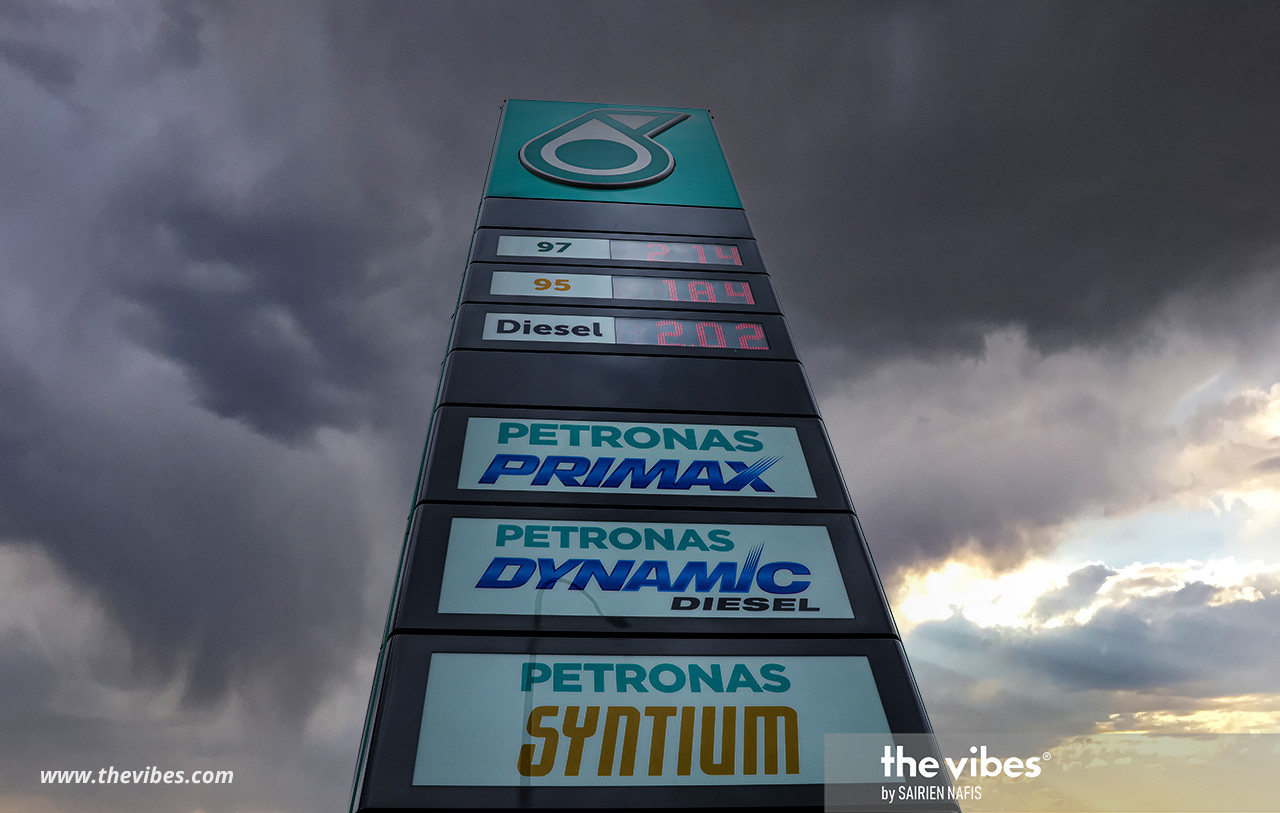
The Sabah government later signed the oil and gas deal, giving away the state’s rights to Petronas.
There have been growing calls to increase the royalty amount, but these have failed to effect change. The matter was also deemed “wang ehsan” by previous Sabah governments.
It was not until the 26-month rule by the Warisan-Pakatan Harapan-Upko pact starting May 2018 that the state began to formulate laws and introduced a sales tax on petroleum products, similar to what Sarawak had done.
Sarawak has also gone to court after Petronas refused to pay a 5% sales tax – and the state won.
From ‘territories’ to ‘states’
The year 1976 saw Sabah and Sarawak downgraded from territories to mere states, equal to those in the Federation of Malaya.
The amendment took place in Parliament and involved the tweaking of Article 1(2) of the constitution.
The constitutional amendment bill was passed by a landslide – 130 to nine – in the second reading on July 13, 1976.
When Malaysia was formed on September 16, 1963, it read:
“The States of the Federation shall be –
(a) the States of Malaya, namely, Johore, Kedah, Kelantan, Malacca, Negeri Sembilan, Pahang, Penang, Perak, Perlis, Selangor and Trengganu; and,
(b) the Borneo States, namely, Sabah and Sarawak; and,
(c) the State of Singapore.”
Sabah and Sarawak inked MA63 as equals to the Federation of Malaya. That, according to an activist, ensured safeguards to Sabah and Sarawak’s position in Malaysia.
But after the amendment on August 27, 1976, Article 1(2) read:
“The States of the Federation shall be Johore, Kedah, Kelantan, Malacca, Negeri Sembilan, Pahang, Penang, Perak, Perlis, Sabah, Sarawak, Selangor and Terengganu.”
After Singapore left on August 9, 1965, the last phrase “the state of Singapore” was dropped.
MA63 activist Zainnal Ajamain said there should be no amendment to the constitution regarding the two Borneo states’ position without the approval of their state assemblies and heads of state.
It is also noted that Sabah and Sarawak were not signatories to the Federation of Malaya, but to Malaysia.
Zainnal said the 1976 amendment on the special position of the Borneo states’ status violated the constitution, and is, therefore, invalid.
The PH government attempted to revert to the original version, but failed on April 9, 2019.
Only 138 MPs voted for the amendment, with 59 abstaining. No one voted against it, but the bill did not get the two-thirds majority needed for approval.
Rise of secessionist movement
The result of the breaches was a rise in the secessionist movement.
In 1991, a crackdown was launched under ISA against Sabah politicians.
Seven people were arrested, including Jeffrey and Datuk Seri Maximus Ongkili, who are now state ministers. They were arrested under Op Talkak.
The two were accused of plotting the secession of Sabah from Malaysia.
After being released, and in recent times, Jeffrey has spoken about his arrest, and noted that he did not plot a secession, but instead, talked about state rights.
The state agriculture and fisheries minister noted that former prime minister Tun Dr Mahathir Mohamad was not happy with him digging into matters related to state rights.
Based on news reports at the time, Parti Bersatu Sabah demanded a 50:50 share of the petroleum royalty from the federal government, instead of the 5% as stated in the oil and gas agreement.
After the abolition of ISA in 2011, the Sabah and Sarawak Keluar Malaysia (Sabah and Sarawak Leave Malaysia) movement was established to demand the return of state rights.
The group appeared to be active on social media, fighting for Sabah’s right to secede from the United Kingdom, the former colonial government that had ruled over North Borneo, as Sabah was known before forming Malaysia.
The federal government demanded an end to regionalism groups.
Creation of review panels
The story of MA63 entering mainstream politics started with Datuk Seri Anifah Aman, who was foreign minister from 2009 to 2018, and also the brother of former Sabah chief minister Musa Aman (2003-2018).
At that time, many Sabah political parties were using the issue of MA63 and state rights to garner support from voters, but were strongly denied by the then Barisan Nasional government.
They included Sabah Star led by Jeffrey, SAPP, Warisan and many others.
The matter also became widely discussed among Sabahans.
Anifah had set up a MySabah group and pushed for the creation of an MA63 review panel.
Then prime minister Datuk Seri Najib Razak consented, and the committee was formed with Anifah co-chairing it along with then law minister Datuk Nancy Shukri from Sarawak.
But, Sarawak under the control of chief minister Tan Sri Adenan Satem (2014-2017) appeared to be making its own effort to get its rights back.
A team of lawyers was sent to London to study the matter before Adenan’s death in January 2017, and his successor, Datuk Abang Johari Openg, promised to continue to pursue the issue.
Sabah, too, sent a team to London under the MySabah group, and it is understood that a resolution was reached.
Anifah noted that the first priority was to get back the wealth from the state’s resources.
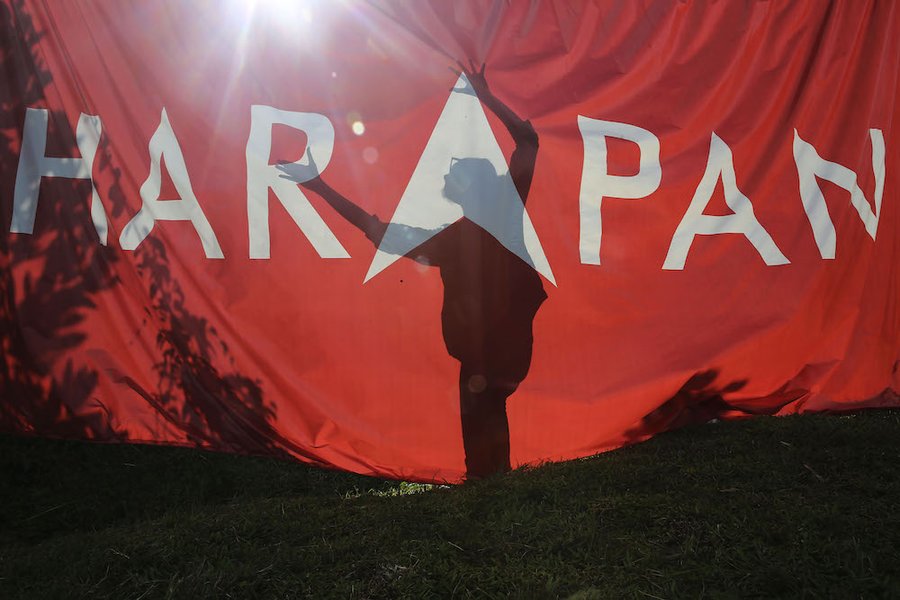
Pakatan promise not kept
In 2015, Najib announced the devolution of powers back to the Borneo states on Malaysia Day.
It was to take place in the education sector first, with Sabahans and Sarawakians prioritised as teachers over those from the peninsula.
After the 2018 general election, another review panel was formed under the PH government, and 17 of the 21 Sabah demands were agreed on.
The demands include the return of Pulau Sipadan and Pulau Ligitan in Semporna to Sabah, and management of the two islands under the state was made in 2019.
However, the PH promise to increasing Sabah’s oil royalty from 5% to 20% – as listed in the coalition’s manifesto – was not kept.
Still, the special grant that Sabah was getting as a fixed amount since 1974 was doubled from RM26.7 million to RM53 million.
After the fall of the PH administration, yet another review panel was formed, this time by Ongkili, a minister in the Prime Minister’s Department who is a former ISA detainee.
As a result of a meeting between the committee members recently, Ongkili announced the return of the two islands once more, saying the move by PH previously was not done right.
Sarawak, on the other hand, gets full rights to gas distribution. – The Vibes, April 25, 2021
Additional reporting by Rebecca Chong