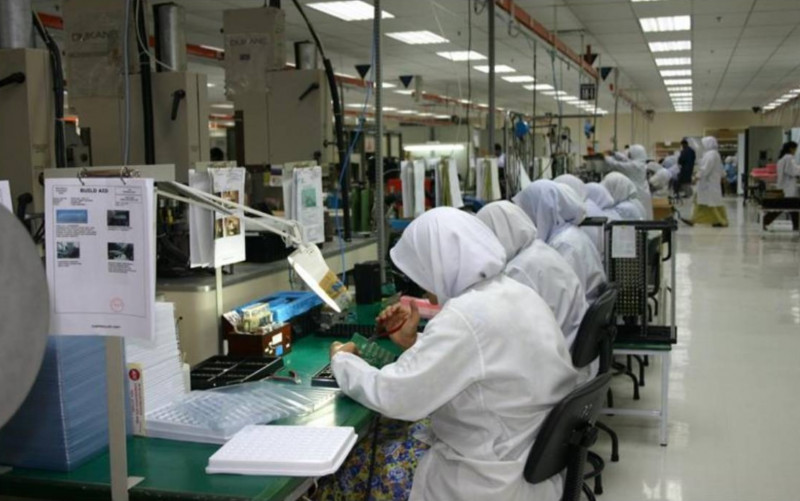

KUALA LUMPUR – Businesses that embrace the fourth industrial revolution (IR 4.0) must not do so at the expense of jobs, said seasoned entrepreneur Datuk Dr Vinod Sekhar.
The PETRA Group chairman and chief executive said while it is understandable that companies want to profit by digitising and automating their businesses as much as possible, it is their socio-economic responsibility to ensure they do not create unemployment.
Instead, Sekhar said, companies need to upskill their labour force to protect jobs, and warned that allowing the gap between the rich and poor to widen could lead to societies failing.
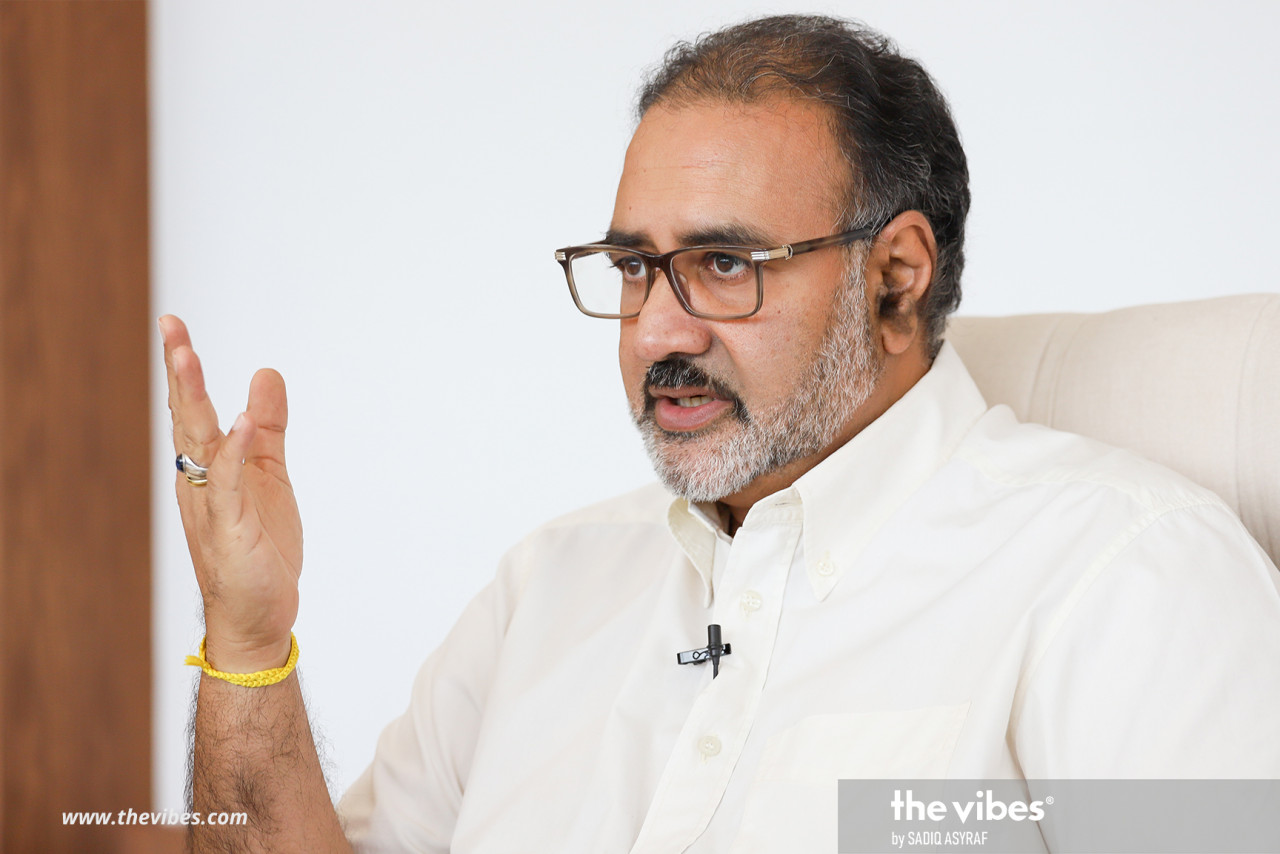
“I’m a social capitalist, which means I make money. But in making money, I need to lift people up. When people make money, they have money to spend, and companies can make money too,” he said in a webinar in conjunction with the 5th Selangor Asean Business Conference 2021, titled Creating and Nurturing IR 4.0 Champions today.
“I have to play a role in lifting people out of poverty, and in letting people into workplaces, so they have wealth and money to spend.
“The reality is we must not get too caught up by the whole idea that everything is about digitalisation and automation.”
Sekhar was asked if the current Covid-19 pandemic and ensuing movement restrictions have prompted and accelerated the pace towards reducing dependency on human labour.
The philanthropist pointed out that countries in Southeast Asia have a large population base, many with extreme needs, while there is also a wide gap of wealth and poverty.
“Unless we deal with those things, then none of the others matter.”
According to Sekhar, now, more than ever, economic leadership is required in addressing the societal needs of communities.
He stressed that businesses should no longer pass off this responsibility to the government and non-profit organisations (NGOs), especially in the current challenging climate.
“Gone are the days of businessmen like me saying I’m not involved in dealing with societal development, that I have paid taxes, and it is for the government and NGOs to do the job.
“I make my money off society, off an environment, off a region and off a community that I work out of, so I have to be involved.”
Government should incentivise private sector, but not interfere
On what role the government can play to assist the private sector in championing IR 4.0, Sekhar said it needs to incentivise companies into adopting changes, as well as help keep alive smaller businesses that are gravely affected by the pandemic.
However, he said, that should be as far as the government gets involved in the private sector, noting the lack of business-mindedness among those in the public office.
“The problem with governments is that they feel they are entrepreneurs. That’s why in Malaysia we have so many government-linked companies. But they cannot be nimble.
“They don’t have the mindset to pivot. They will take a month to do a piece of document that we can do in a day. What they need is to incentivise the private sector, then get out of the way.”
Sekhar said it is the government’s responsibility to provide incentives to drive innovation and create the required paradigm shift for IR 4.0.
In particular, he stressed that assistance needs to be provided to small and medium enterprises (SMEs), which he describes as being the heart and engine of the country’s economy.
Comparing SMEs to a vehicle, and the current pandemic situation to an empty gas tank, he said it is incumbent that the government provides the necessary aid to keep the engine in working condition.
“Say we are out of petrol. We need to maintain the engine, make sure it’s humming. Otherwise, the engine will crack and it won’t matter then if a petrol tanker arrives, because you still need to build a new engine.
“But if we can keep the engine humming and maintain it, once the petrol tanker arrives and refills the gas, then we can take-off. That’s what we need to do now, maintain the engine, which is the SMEs.
“The pandemic will be over; the market and sky will open. So, the best thing for the government to do now is to prepare our engines for take-off, and that is by digitisation and upskilling of workforce.”

Reliable connectivity infrastructure key, provide grant for IR4.0 solutions
Institution of Engineer Indonesia president Heru Dewanto said other than incentivising the private sector, one of the government’s key roles is to establish a reliable and affordable connectivity infrastructure.
This is especially key to drive a country in its push for IR 4.0, in particular the private sector, and in implementing the internet of things (IoT) at scale.
“Additionally, the government must create a collaborative ecosystem among industry players, technology providers and government authorities to solve specific industrial challenges,” said Heru.
“The development cost to this can then be incentivised as a tax shelter or be tax deductible.”
He said governments should also provide grants and other incentives for the developing and prototyping of IR 4.0 solutions, and these technologies should be used to solve global issues as defined under the United Nations Sustainable Development Goals 2030.
Having said that, Heru does not believe the adoption of IR 4.0 among Southeast Asian countries will happen immediately, pointing out to how many industrial operations are still done manually.
“It will take some time. Despite the optimism shown by various quarters, we have to be realistic of what is going on now. Even IoT, for example, is still at an early stage here in the region.”
Meanwhile, Indonesia’s PT Awina Sinergi International business adviser Ichsan Ichsan said as the world moves towards IR 4.0, one sector that must not be forgotten is agriculture.
He noted that since the start of the pandemic early last year, the sector is one of the strongest growing, demonstrating that the production of crop and livestock will continue to be a key business segment globally.
“This is highlighted by Ethiopia’s rise to become one of the main agriculture production countries by adopting IR 4.0. This is proof how countries can be more sustainable by incorporating it (IR4.0).” – The Vibes, May 4, 2021