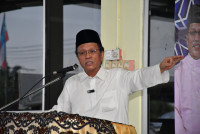

BUTTERWORTH – The Plantation Industries and Commodities Ministry says its number one priority over the next ten years is sustainable management of the nation’s forest reserves and natural resources.
Minister Datuk Mohd Khairuddin Aman Razali said that under the commodities blueprint plan for 2021 until 2030, the federal government would ensure that best sustainability practises are adopted by companies participating in the strategic commodities sector.
“We share the same objective as NGOs on sustainability, particularly for oil palm, rubber and timber,” said Khairuddin.
Earlier, he attended a dialogue session with Penang timber operators, which was organised by the Malaysian Timber Council at the Light Hotel here.
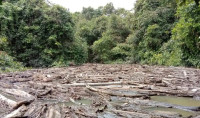
Asked to elaborate on the constant complaints from NGOs about logging in forests up north, Khairuddin said that all projects approved were done within the levels permissible by international permissible benchmarks.
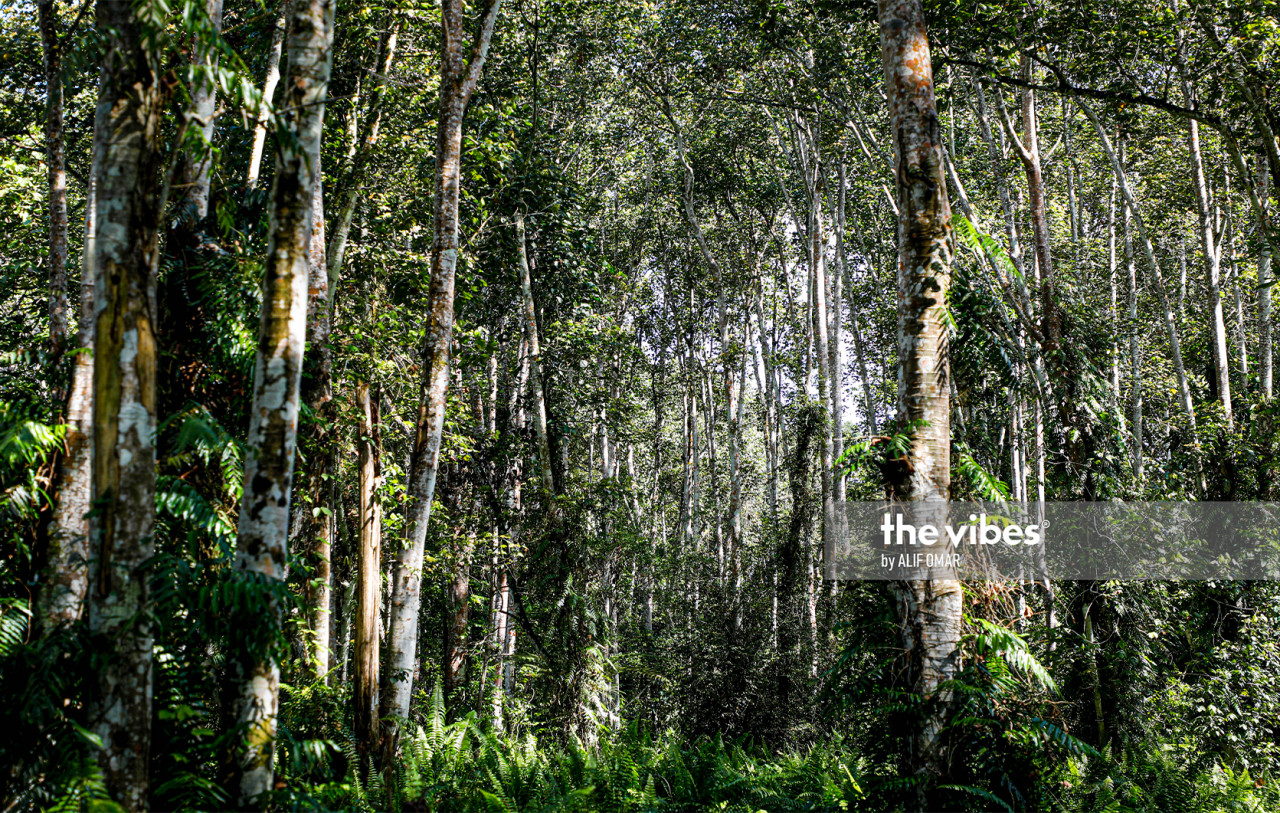
“Our forest reserves have exceeded the world standards. And only 5% of our permanent forest reserves were given concessions for special logging rights.
“Over 60% of our forest reserves remain unlogged. We are logging by the permissible levels of the international authorities.”
He also said that the country has the Malaysian Timber Council governing the issue of the industry where only operators with certificates can export the timber and wood.
On top of this, he said that the ministry supports efforts to replant up to 100 million trees of various species in the next decade.
Khairuddin claimed such commitments rendered untrue claims that Malaysia’s deforestation rate is at an alarming level, adding that logging is also not a reason behind claims of climate change affecting the country.
On concerns raised by palm oil exporters over access to the Indian market due to the alarming surge in Covid-19 cases on the subcontinent, Khairuddin said the importers there were only taking in crude palm oil (CPO), which he feels will not be drastically affected by the pandemic there.
“It is too soon to judge the impact from the Covid-19 (surge) in India. But I think our exporters will not be affected. What is of concern now is an acute shortage of the commodity due to Covid-19, hence the high prices for it in the global market.”
He said that the country was slowly restoring the normal flow of supply and demand for its cargo operations, as it takes time to recover from the global standstill caused by the pandemic.
On Penang’s timber sector, Khairuddin said that the state contributed 5.3% or RM1.16 billion of the country’s exports last year.
He said the council was pushing for the setting up of incubators for furniture designs and for more youth to be involved in the sector.
“It is worthwhile to be involved in the timber business. Last year despite the pandemic, the country exported RM22.1 billion worth of timber and its products.”
He also suggested that the ministry establishes Penang as a hub for timber in view that its operators are struggling with high operational costs.
The hub will help address the issues afflicting the timber exports in Penang, he said. – The Vibes, May 7, 2021