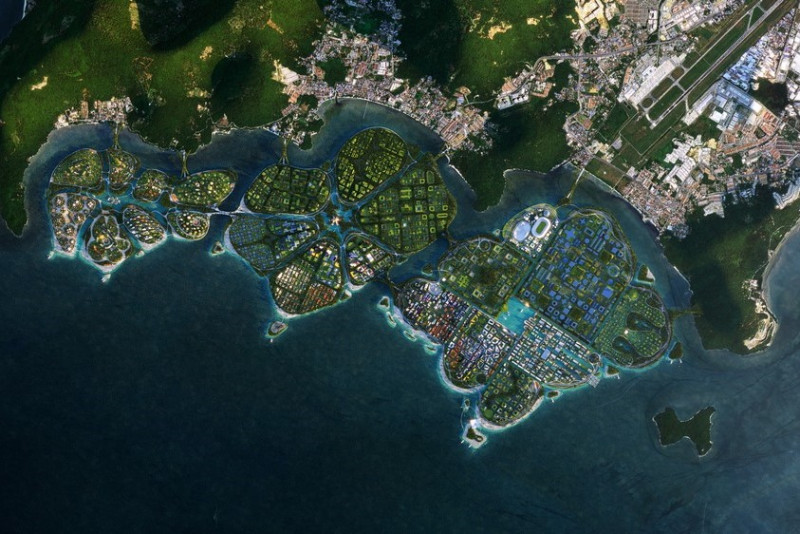

KUALA LUMPUR – A spate of highly worrying reclamation megaprojects have emerged of late on both sides of the Straits of Malacca, triggering alarm among ecologists, conservation activists, and the general public in both Indonesia and Malaysia.
Facing a difficult battle against government bureaucracy and corporate power to oppose these billion-dollar ventures, a number of NGOs on both sides have banded together to raise awareness of the irreversible environmental repercussions the projects will have.
Martin Hadiwinata, coordinator of Indonesian NGO Ekomarin, believes that coastal reclamation in one Asean country has the potential to affect other nations in the inter-governmental organisation.
The effects of one project on other nations may not be direct, but Martin stressed that they are inevitably there.
A major factor is that such projects affect the water quality of oceans, as well as the flow of water currents.
This would of course have an impact on the environment and marine ecosystem, which in turn, would have consequences on fishing communities in the region.
“The effects may not be direct, but in some situations, a change in one place would affect other areas.
“So if they reclaim land somewhere in the Straits of Malacca, it would have consequences on other areas in the waterway, like Sumatra,” Martin said in an interview with The Vibes.
The United Nations’ Food and Agriculture Organisation (FAO), Martin said, came up with the Voluntary Guidelines for Securing Sustainable Small Scale Fisheries.
The guidelines are created with the aim of highlighting the rights of those involved in the fishing industry. They include a recommendation that governments should consult fishermen before initiating large-scale reclamation projects.
However, in the case of Malaysia, local fishermen were not consulted for large-scale reclamation projects.
He said that though Malaysia was not initially involved when FAO was coming up with the guidelines, the country was drawn into it because it is an important issue.
Martin, who was previously chief executive of Kesatuan Nelayan Tradisional Indonesia (KNTI/Union of Indonesian Traditional Fishermen), is working with various Malaysian NGOs in a joint effort to combat land reclamation in the region.
In 2019, an online petition, “Stop Stealing Our Seas” was created through this joint initiative of NGOs from the two countries.
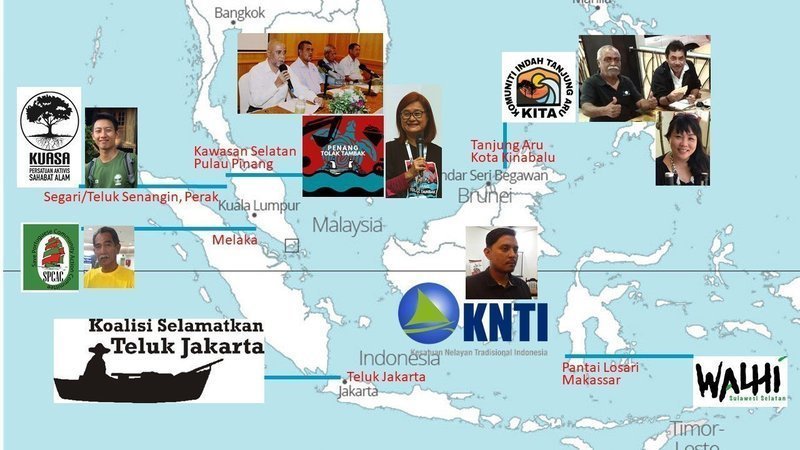
The petition is endorsed by KNTI, Penang Tolak Tambak (Penang Rejects Reclamation), Koalisi Selamatkan Teluk Jakarta (Coalition to Save Jakarta Bay), Persatuan Aktivis Sahabat Alam Perak (Perak Environmental Activists’ Association), the Save Portuguese Community Action Committee in Melaka, Komuniti Indah Tanjung Aru (Beautiful Tanjung Aru Community) in Sabah, and Wahana Lingkungan Hidup Indonesia’s (Indonesian Forum for Living Environment) South Sulawesi chapter.
Besides the ecological and social impact of land reclamation projects in Malaysia and Indonesia, the Malaysian NGOs and Indonesians have another motivation for wanting to work together.
“We (Indonesia and Malaysia) are in the same region and have similar democratic situations.
“We can work together and learn lessons from each other, too,” Martin said.
Some of the massive reclamation projects in Indonesia and Malaysia that are being opposed and are alarming environmentalists and the public are at Losari Beach at Makassar, southern Sulawesi; Tg Aru in Kota Kinabalu, Sabah; Jakarta Bay, Java; the Melaka waterfront; Segari/Senangin Bay, Perak; and, Permatang Damar Laut, an island in southern Penang. – The Vibes, May 23, 2021