
KUALA LUMPUR – A virologist and coronavirus expert has offered a “startling and unusual” viewpoint on the presently circulating pre-pandemic viruses that are going undetected in the country.
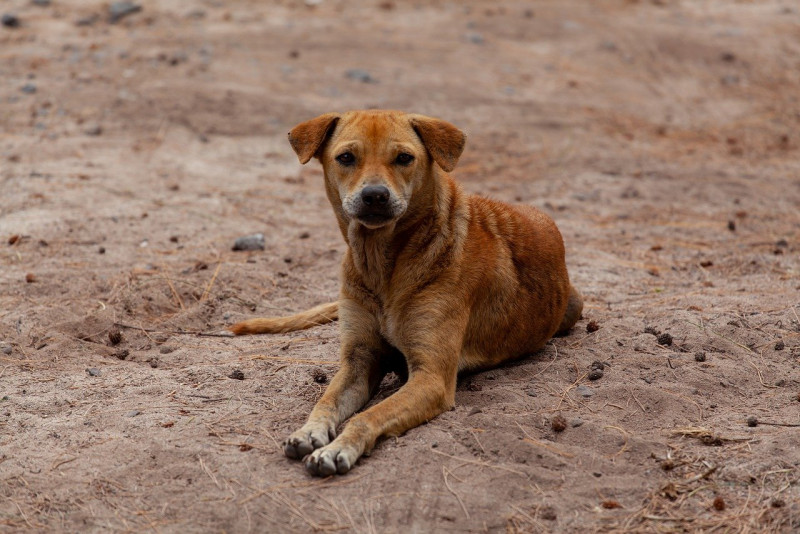
Prof Sunil K. Lal told The Vibes today that reports of the canine-coronavirus found in children in Sibu and Kapit indicate signs of a new virus (alpha-coronavirus) that may have crossed the species barrier from dogs to humans.
Prof Sunil, who is a professor of microbiology at Monash University Malaysia, explained that all coronaviruses are derived from bats and can be classified into alpha-, beta-, gamma- and delta-coronaviruses.
“Both SARS-CoV and SARS-CoV-2 are beta-coronaviruses as they infect humans. Delta-coronaviruses infect birds and some mammals, gamma-coronaviruses infect both animals and humans, whereas alpha-coronaviruses infect cats and dogs,” he said.
A report first published in the prestigious American-based Clinical Infectious Diseases journal as recently as Thursday has not only attracted attention of researchers worldwide, but both secular and science media journalists as well.
It highlighted a study by Duke University’s Global Health Institute saying that the canine-coronavirus was found in 2017 and 2018 among a group of pneumonia-hit paediatric patients in Sarawak.
The study team suspected that the dog virus had caused their illness as opposed to being merely present in the patients’ airways – but could not conclusively prove it as coronaviruses were understudied for many years as they were mainly associated with colds.
However, Prof Sunil believes that the isolates found in the children at Sibu and Kapit may have been a “natural spillover” case of alpha-coronavirus into the indigenous ethnic groups who dwell in rural villages where human and animal interactions are quite frequent.
“This virus may be evolving and is probably going undetected in Sarawak,” he cautioned.
“It is high time we initiated a nationwide screening for alpha-coronaviruses in Malaysia,” he said.
“Four years have already passed since its first detection and we have all learnt by now that these viruses evolve quite rapidly in their new human hosts,” he added. – The Vibes, May 23, 2021