.jpg)

SANDAKAN - There is more to Selingan Island than just sand and coconut trees.
Located some 40km from the Sandakan town, it is the biggest of three islands in Malaysia that were gazetted in 1977 to be protected for 1,000 years.
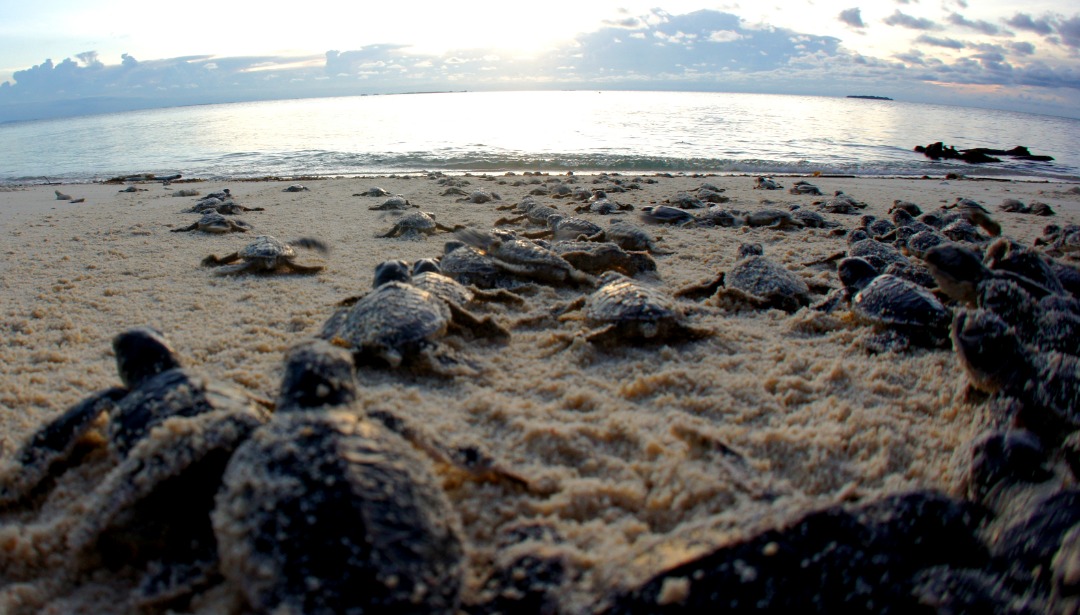
Selingan houses the country’s first turtle hatchery, which was established in 1966, funded entirely by the Sabah government.
The conservation efforts received a shot in the arm on May 31, 1996, when Malaysia and the Philippines signed a Memorandum of Agreement (MOA) declaring the islands in both countries as Turtle Islands Heritage Protected Area (TIHPA).
This effort, which combines work on Selingan with six other islands in the Philippines, is part of the transboundary protected area for turtles in the Sulu Sea, which is the first of its kind in the world.
“Apart from Selingan, the other islands are Bakkungan Kecil and Gulisan, which are now called the Turtle Island Park, and fully managed by the Sabah Parks,” said its director, Dr Maklarin Lakim.
Of the three, Maklarin added, only Selingan opens its doors for overnight stays, and it has received some 800,000 visitors in the past 47 years.
“The turtle conservation programme in Sabah is the oldest in the world, and we can proudly say we have the most detailed statistics and researches,” he added.
“Although we open doors to allow visitors to come in and witness turtles laying eggs, we also observe strict conservation practices.”
To date, Maklarin estimated 16 million turtle eggs have hatched in Selingan.
Maklarin, however, noted that although turtle conservation efforts in Sabah have produced notable success stories, there are also threats that it faces.
Beach erosion is one of the challenges Sabah Parks faces; climate change promotes frequent storm and sea waves that erode the beaches.
Sabah Parks also suffers from eggs theft, mostly committed by people from neighbouring countries.
He said it happens when Sabah Parks is not able to guard the beach due to staff shortage and security reason.
The stolen turtle eggs would be sold in the Philippines.
There is also a lack of public awareness in turtle biology and conservation.
“We also have people killing turtles for collection. This is sad as it would not have happened if the awareness was there,” he said.
Maklarin also noted that sea pollution with plastic materials is killing the turtles and reducing its population.
“Marine turtles require a vast and borderless sea area to forage. Extensive migration exposes them to various dangers,” he added.
“However, within marine park areas in Sabah, turtles are fully protected under the Parks Enactment 1984. Moreover, throughout Sabah it is protected under the Wildlife Conservation Enactment 2007.
“Currently we have six marine parks in Sabah providing a home for turtles to forage, take shelter and lay eggs on beaches. We aim to expand the sea coverage of our marine parks in Sabah, so that sanctuary of marine turtle could be enhanced.”
Maklarin said lack of funding is also an issue that affects research and infrastructure development.
“However, we are coping as we receive additional funds through the private company that operates our chalets… we share the profit,” he added
“All tourists who enter the park also pay their conservation fee (entrance ticket), diving fee. Sometimes we work with NGOs for collaborative research, using their research funds.”
Turtle nests adoption programme
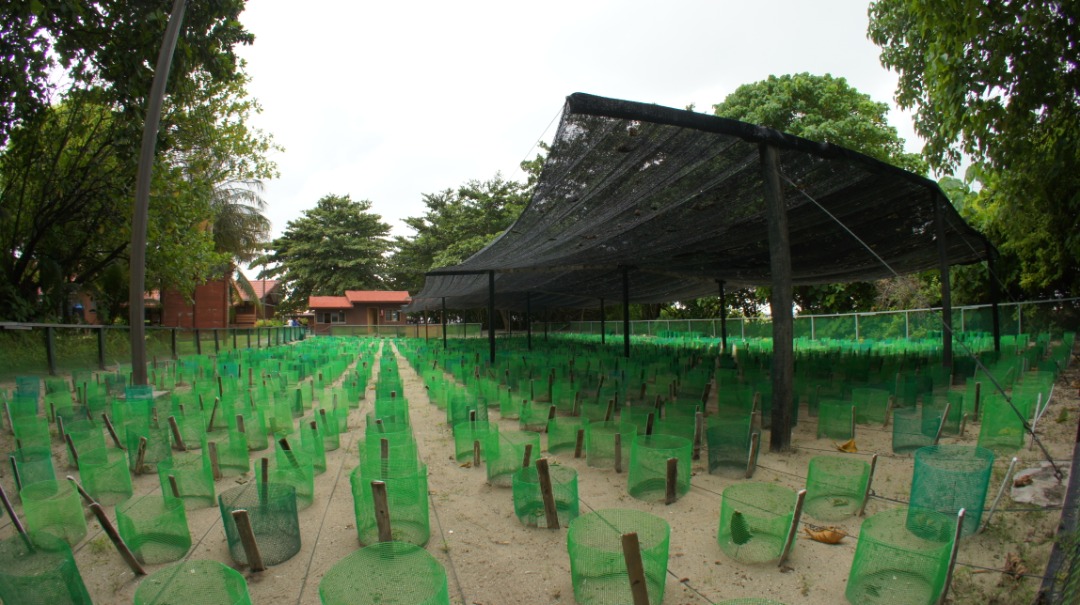
Recently, the Duchess of Kent Sandakan Hospital director, Dr Francis Paul received an email from the Sabah Turtle Islands Park to inform that the green turtle nest that he had adopted with 66 eggs had produced 43 hatchlings and were released to the sea on the same night.
The message was posted by participants of the Turtle Nests Adoption Programme, which allows people to adopt a nest for RM100.
Those who adopt nests will get a certification of adoption, an exclusive Turtle Nests Adoption T-shirt, and they will have their names listed on the nest.
Adopters will be informed about their nest via e-mail, once the eggs hatch.
The Turtle Nests Adoption program was introduced in 2017 for public awareness, and to encourage participation in turtle conservation.
“This educational adopting nests programme is aimed at highlighting to our young generation the importance of balance in nature, and ways to create a positive impact through their involvement,” he said.
“Besides, this program is one of the best ways to create awareness among people to protect the turtles’ nature and the existence of their species for a long period of time by taking good care of the eggs through support from people with their involvement in this programme.
“It has been receiving great support from tourists and locals.”
To date, the programme has been participated by 1,457 participants, mostly from outside Malaysia. – The Vibes, October 17, 2020.