


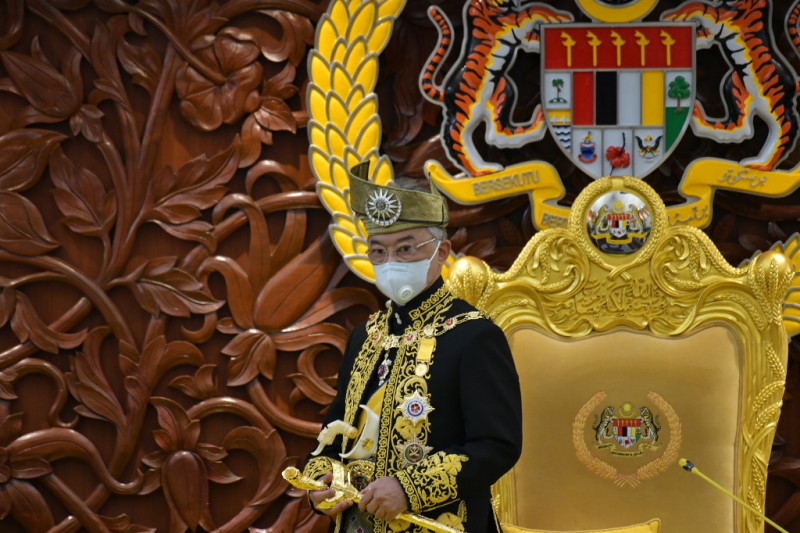

KUALA LUMPUR – The Yang di-Pertuan Agong is “well within his rights” to make clear his intentions for Parliament to convene before the emergency proclamation ends on August 1.
This was spelt out in a joint statement issued by the two parliamentary speakers yesterday, saying they have mooted the idea to Prime Minister Tan Sri Muhyiddin Yassin after the duo’s audience with the Agong on Tuesday.
They had said during their audience, the Agong was of the view that a sitting should be held before August 1.
Previously, statements from Istana Negara indicated that the Agong wanted Parliament convened “as soon as possible”.
Following that, Minister in the Prime Minister’s Department (Parliament and Law) Datuk Seri Takiyuddin Hassan had jumped on the unspecified timeline, harping on the word “soon” and reiterating Muhyiddin’s National Recovery Plan that had Parliament convening in September or October.
Soon after, police reports were lodged against Takiyuddin, prompting police to open an investigation into the matter.
It did not end there. Attorney-General Tan Sri Idrus Harun attempted to solidify a legal narrative whereby the Agong is a constitutional monarch who only acts on the advice of his cabinet, even during emergencies.
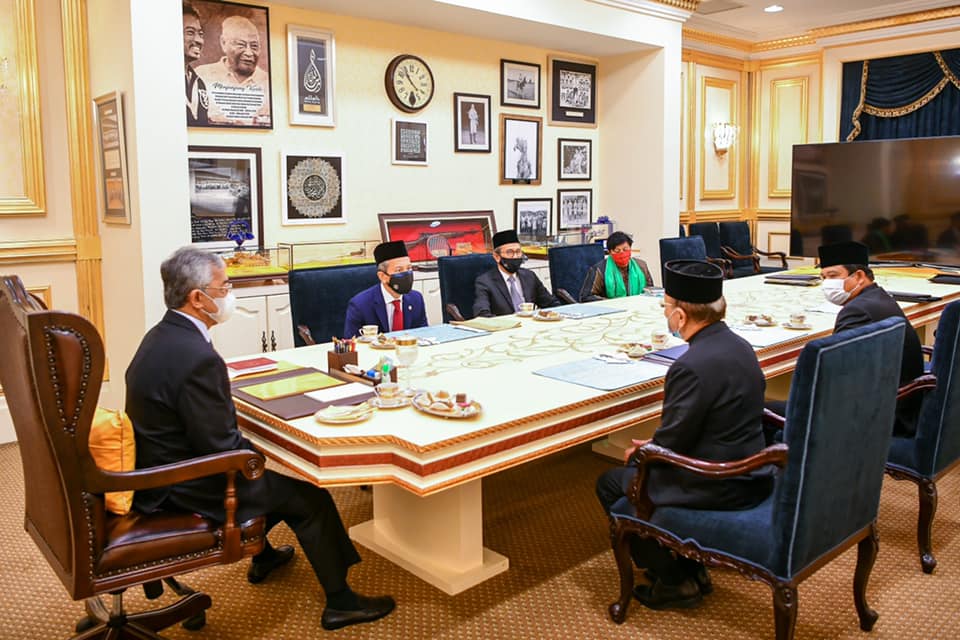
To strengthen this narrative, Idrus went beyond citing federal constitution articles and case laws, even picking excerpts from the Reid Commission Report filed in 1957.
But, Dewan Rakyat Speaker Datuk Azhar Azizan Harun and Dewan Negara President Tan Sri Rais Yatim’s statement yesterday, which clearly showed that the Agong has given a timeframe for when Parliament should convene, waters down Idrus’ arguments.
Idrus’ view is not without basis, as he cites Article 40 of the federal constitution that states the Agong acts only upon the advice of the executive.
Senior lawyer Datuk Seri Rajan Navaratnam told The Vibes that, under a state of emergency, Article 150 might be a more relevant legal provision to look at as it relates specifically to an emergency.
“There are a number of provisions under Article 150, which relate to the relationship between the Agong and executive powers, but the relevant ones state that the Agong is the one who issues a proclamation of emergency and promulgates emergency ordinances.
“The monarchy has used its powers to promulgate emergency ordinances during this current emergency, but the one relevant to settle the debate as to whether the Agong may decide when Parliament convenes seems to be Article 14 of the Emergency (Essential Powers) Ordinance 2021.”
Section 14 specifically states that Parliament “shall be summoned, prorogued and dissolved on a date as the Yang di-Pertuan Agong thinks appropriate”.
“It is my view that the Agong has the power to summon and convene Parliament as His Majesty deems fit. Further, the said section uses the word ‘shall’ and, therefore, its application, in law, is mandatory,” Rajan added.

Meanwhile, lawyer V. Vemal Arasan, on the relationship between the monarch and the executive, particularly in light of the statements related by both speakers, said with an emergency at play, the guidance and advice of the Agong “is ever more important”.
He said based on recent statements issued by Istana Negara concerning the Agong, the monarch is acting within his powers.
“What His Majesty is doing is well within his powers.
“The manipulation of the Agong’s statements on the lack of a date concerning when Parliament should convene can be viewed as the executive thinking the monarchy is a mere rubber stamp,” Vemal told The Vibes.
As to the Agong not setting a date, he believes it is the right move as there are many variables that are only within the cabinet’s control.
“For example, the vaccination of all parliamentary staff, which is of utmost importance.” – The Vibes, July 1, 2021










_Datuk_Rusdi_Mohd_Isa._Facebook_pic..png)
