KUALA LUMPUR – The National Fourth Industrial Revolution Policy (National 4IR Policy) launched today is set to transform Malaysia into a high-income nation driven by the most advanced fourth industrial revolution (IR 4.0) technology and digitalisation.
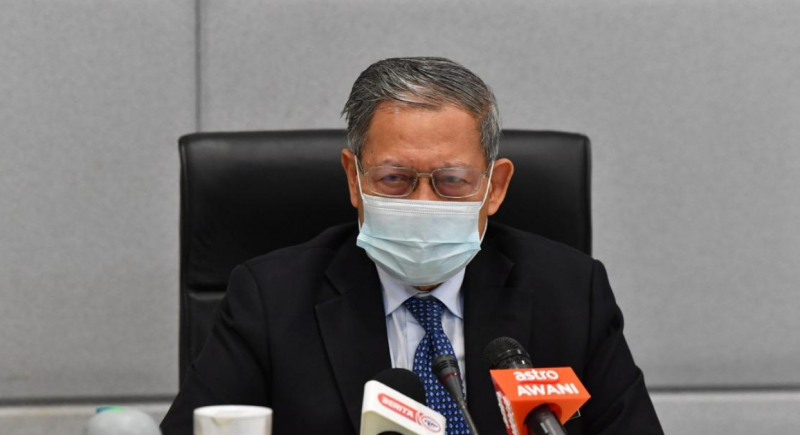
Minister in the Prime Minister's Department (Economic Affairs) Datuk Seri Mustapa Mohamed said through the policy, the Malaysia Well-being Index (MyWI) is targeted to increase to 136.5 in 2030 compared with 124.4 recorded in 2018.
He said Malaysia has also targeted to position itself among the top 20 ranking in the Global Innovation Index in 2030 as well as achieve a 30% increase in productivity encompassing all sectors, from the level achieved in 2020.
“Through the National 4IR Policy, the people, businesses and government are able to capitalise on the growth opportunities and address the prevailing risks from IR 4.0,” he said in his speech during the virtual launch of the National 4IR Policy, together with Science, Technology and Innovation Minister Khairy Jamaluddin.
He said the emergence of new technologies such as robotics, artificial intelligence (AI), and the internet of things (IoT) have changed the way the world operates.
“The 4IR technology has also helped to fight the Covid-19 pandemic globally,” he said.
Based on the Economic Planning Unit (EPU), the National 4IR Policy will comprehensively propel integrated efforts in transforming socio-economic development through the use of advanced IR 4.0technology.
Mustapa said the policy comprised four core thrusts, targeting three main groups, namely people, businesses and government.
The four thrusts, he said, comprised preparing the people with knowledge and skill sets related to IR 4.0, shape the country with connectivity through digital infrastructure development, provide appropriate and flexible rules in line with technology change, and expedite innovation and adaptation of IR 4.0 technology.
These thrusts would become the guidelines for the ministries and agencies in drafting programmes related to IR 4.0 and would be implemented and guided by 16 strategies, 32 national initiatives and 60 sectoral initiatives that have been identified, he said.
“To reduce the potential social risks from IR 4.0, elements of trust, inclusivity, cybersecurity, ethics, and value will be incorporated in all initiatives,” he added.
The policy will also be formulated based on humanity so that technology would be beneficial without “sacrificing” human, social and cultural values in tandem with the objective of the Shared Prosperity Vision 2030 to improve the well-being of the people and achieve economic growth that is inclusive, balanced and sustainable.
Meanwhile, Khairy said compared to previous industrial revolutions, IR 4.0 is not only about machines, technology and systems, but covers a combination of physical and digital aspects which opens up opportunities for the government, businesses and people to benefit from technological advancement to ensure the country remains competitive.
Towards this end, he said the government has identified five core technologies to develop local capabilities, namely AI, IoT, blockchain and distributed ledger technology, advanced materials supported by cloud computing, and big data analytics.
In efforts to ensure the technology development functions as an enabler for the transformation of IR 4.0, Khairy said the Science, Technology and Innovation Ministry is in the process of developing the roadmap for electrical and electronics, vaccine, blockchain, hydrogen economy, nanotechnology, AI, robotics, advanced materials as well as research and development, commercialisation, innovation, and economy.
To increase the usage of IR 4.0 technology, he has proposed a future by design approach such as venture builder to be applied within an ecosystem development that is conducive and inclusive including supply and value chains to enable industries to create high-value products to meet the needs of local and global markets.
He said even though Malaysia is not the most advanced country in the adoption of technology, the country is also not the most backward.
For the record, since 1999, Malaysia has led the research on Nipah 9 Virus biomolecular genetics which became the world reference, becomes the world leader in semiconductor chip manufacturing and is now in third place in world ranking as a hub for solar power and green technology. – Bernama, July 1, 2021