
KUALA LUMPUR – There has been much debate of late on whether it is legally appropriate for the nation’s reigning royalty to have their own privy council for direct advice on certain points of law, separate from the Attorney-General’s Chambers (AGC).
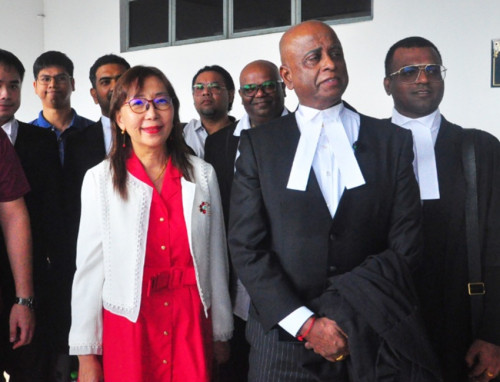
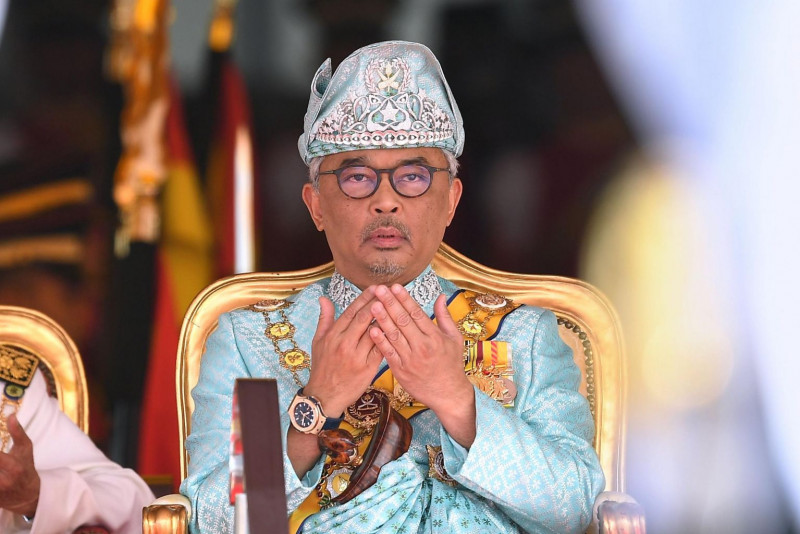
A senior lawyer has proffered that the federal constitution actually provides the Yang di-Pertuan Agong with this option, and it is for him to refer to at his discretion.
Datuk Seri Rajan Navaratnam pointed out that Article 40(3) of the constitution enables federal law to make provision for requiring the Agong to act after consultation with or on the recommendation of any person or body of persons other than the cabinet.
This is specifically in the exercise of any of the king’s functions other than “functions exercisable in his discretion” and “functions with respect to the exercise of which provision is made in any other article”.
“Therefore, it is entirely within the purview of the Agong to seek consultation from others, and not necessarily from the cabinet only,” Rajan said in an interview with The Vibes.
Thus, he contends that even if the privy council is established and advises the Agong, the monarch will not necessarily be bound by such recommendations, given that it will be to His Majesty’s discretion.
Furthermore, while there are those who contend that the constitution provides a manner in which the Agong can seek the advice of the Federal Court on constitutional queries, it may not be practical when matters are urgent.
It is true that Article 130 allows for the Agong to refer any opinion or question as to the effect of any provision of the constitution to the Federal Court, but the subject matter at hand must be approached in a practical sense.
“There have been or may be situations where the Agong may be called upon to exercise his discretion expeditiously or urgently for the benefit of the nation, and His Majesty may not be able to wait for a determination by the Federal Court in arriving at a decision,” Rajan said.
This debate on whether such an independent privy council can be formed was sparked when the attorney-general’s impartiality was brought into question.
Rajan further explained that this may be due to the fact that sometimes, there are those who disagree with the advice given by the AGC and Article 145(2) of the constitution.
Article 145(2) renders the attorney-general the duty to advise the Agong, cabinet or any minister on legal matters, which may from time to time be referred or assigned to him by the monarch or cabinet.
The attorney-general is also tasked under the provision with performing “such other duties of a legal character” referred or assigned to him, and to discharge the functions conferred on him by or under the constitution or any other written law.
.jpg)
Differing views, Rajan stressed, should not infer a lack of impartiality.
“I believe that the attorney-general will remain impartial.
“Merely not agreeing with the views and advice rendered by the attorney-general does not infer that he has not been impartial.”
The concern here, Rajan said, is that the attorney-general’s impartiality is brought into question as he is tasked with advising the king and cabinet simultaneously.
“However, it must be borne in mind that while this article makes it mandatory for the attorney-general to advise the Agong, the matter must first be referred or assigned to the attorney-general by the Agong.
“There is no obligation imposed on the Agong that his Majesty must refer or assign to the attorney-general on any legal matters.
“In other words, the Agong has discretion.”
The call for a privy council for the king, and by extension, the Conference of Rulers, emerged after several quarters questioned the impartiality of Attorney-General Tan Sri Idrus Harun in advising the Agong on matters relating to the emergency declared over Covid-19, as well as the position of the prime minister.
This came after Idrus on June 25 said the monarch must act only on the advice of the cabinet, and on July 8 backed Tan Sri Muhyiddin Yassin as prime minister despite Umno’s withdrawal of support.
The proposed privy council would therefore provide advice that can counter the attorney-general should there be conflicting views between Istana Negara and the executive body. – The Vibes, July 21, 2021











.jpeg)