
KUALA LUMPUR – Adversely impacted by the Covid-19 pandemic, only 30% of Kuala Lumpur’s cash-strapped urban poor have enough money to meet their daily living expenses, a United Nations (UN) study has found.
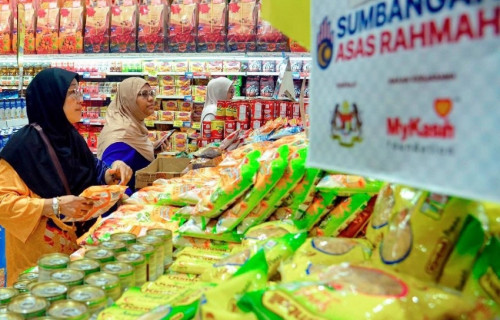
Many have had to change their diet, consuming more snacks, instant noodles, eggs, vegetables and canned sardines, instead of rice and other more costly protein foods like meat and fish.
The ‘Families on the Edge’ report commissioned by Unicef (UN Children’s Fund) and UNFPA (UN Populations Fund) was done to highlight the impact of the Covid-19 crisis on the livelihood and wellbeing of low-income families in the capital city after the end of the first movement control order (MCO).
“While these families have continued to be more resilient in facing the challenges, many are pessimistic for the future,” said Dr Mohamad Abdul Khaled of DM Analytics – the research firm hired to conduct the study involving 500 heads of households living in 16 low-cost flats.
“Only 14% of the heads of household expect their financial status to be better in the next six months. The majority of the families are more vulnerable to future shocks,” he said.
“Female-headed households affected by disability are the hardest hit,” he added at an online presentation of the report today.
Although the report highlighted that low-income urban families have shown signs of recovery, they have yet to regain their pre-pandemic conditions. The recovery has in fact been partial, uneven and uncertain, he said.
For example, the median household income has increased by 23% between May 2020 and September 2020 to RM2,233 but it is still about 10% lower compared to last year.
Also, a sizable number of workers remain unprotected with 45% of those currently working not having an account with the Employment Provident Fund (EPF) or Social Security Organisation (Socso). Households led by women and those with disabilities make up the bulk of these at 51% (no EPF) and 73% (no Socso) respectively.
Psychological tensions are also brewing with one in 5 heads of households and one in 3 of female-headed households reporting feeling depressed; expressing fear, worry, anxiety, anger and stress over the economic uncertainty and financial conditions.
More children not attending school
Mohamad had also pointed out that new challenges have emerged, especially on education and their mental health, where 7% of upper secondary-age children in these families reported not returning to school.
“Nearly one in 5 parents reported that their children have lost interest in school, and the incidence is high among children from female-headed households at one in 4,” he said.
“A significant proportion of the families reported difficulties in meeting the cost associated with school attendance, such as face masks for their children,” he said.
Government assistance, Mohamad noted, is still required. A large majority of self-employed heads of households are still in the dark about the availability of such assistance.
“Only 2% applied for the Prihatin Special Grant. Families feel that they will continue needing Covid-19-related aid and assistance, particularly cash as well as job opportunities,” he said. – The Vibes, October 30, 2020